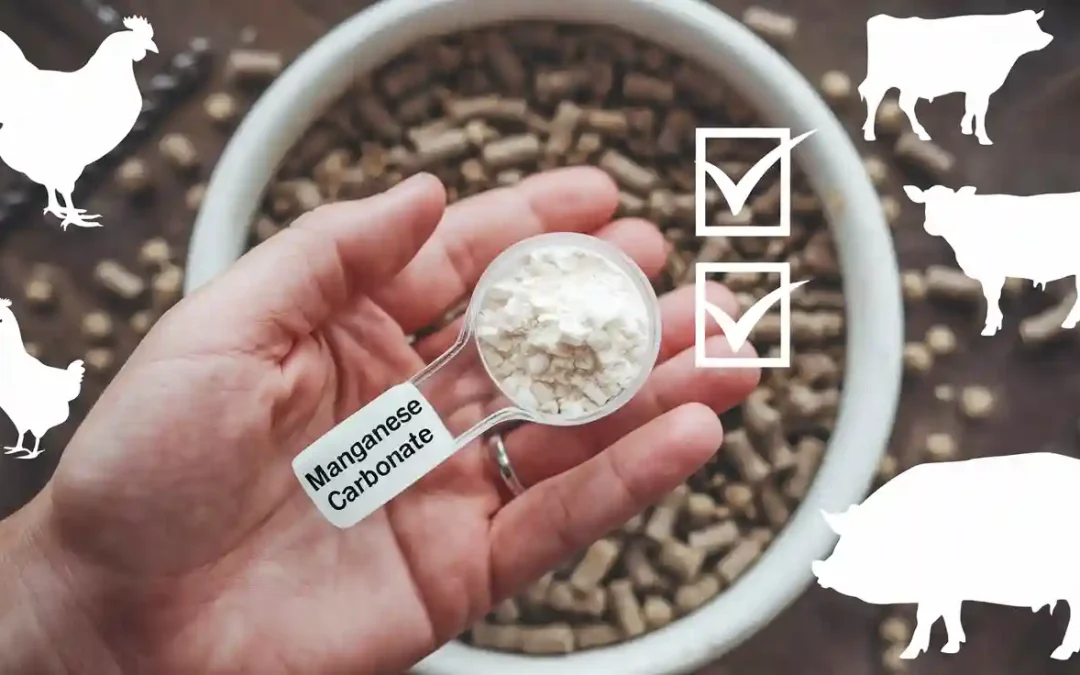
Choosing manganese carbonate for animal feed needs careful checking. You must pick feed grade manganese carbonate for animal health and growth. Feed grade products are more pure. They have the best particle size. They are easier for animals to use. This helps bones grow strong. It also lowers health problems.
- Animals stay healthier
- Animals grow better and faster
- Animals can reproduce better
Feed grade manganese carbonate is not the same as fertilizer grade. Feed grade meets strict safety rules for animals to eat.
- Pick feed grade manganese carbonate for animal feed. It is safer and cleaner than fertilizer grade.
- Look at the purity of manganese carbonate. It should have at least 44% manganese. This helps keep animals healthy.
- Choose the right particle size for each animal. Fine particles are best for poultry. Coarse particles are better for bigger animals.
- Think about bioavailability when picking manganese sources. Some foods can stop animals from absorbing manganese. This can hurt their health.
- Always check product quality with a Certificate of Analysis. This makes sure the manganese carbonate is safe and pure.
Selection Criteria
Purity Standards
When picking feed grade manganese carbonate, purity is very important. High purity makes sure animals get enough manganese. It also keeps harmful stuff out of their food. Rules say feed grade must have at least 44% manganese. Always look at the label or ask for a certificate of analysis.
- High purity means less bad stuff in the feed.
- Nickel is an impurity you need to watch. Even tiny amounts can hurt animals. Nickel can make animals sensitive.
- Most other impurities are not dangerous. But nickel should stay very low.
- Feed grade manganese carbonate follows strict safety rules. You can trust it for animal nutrition.
Tip: Pick feed grade manganese carbonate, not fertilizer grade. Feed grade is safer and more pure. It helps animals stay healthy and grow better.
Particle Size
Particle size changes how well animals use manganese. The right size mixes well and helps digestion. Feed grade manganese carbonate comes in different mesh sizes for different animals.
- Poultry need fine particles between 200 and 325 mesh. Birds can digest small particles easier.
- Bigger animals like cattle or pigs need coarser particles, between 100 and 200 mesh. They can handle bigger particles and still absorb manganese.
- Same particle size stops settling in feed. It makes sure every animal gets the right amount.
Pick the particle size that matches the animal you feed. This helps animals get more manganese and stay healthy.
Bioavailability
Bioavailability means how much manganese animals can use from feed. Not all manganese is absorbed the same way. Feed grade manganese carbonate gives a steady source, but some things change how much animals absorb.
- Manganese in natural sources like mother’s milk is easy to digest. Animals can absorb up to 90%.
- Synthetic sources like manganese carbonate for animal feed have lower bioavailability, about 10%.
- Diets with lots of phytic or oxalic acid, like soy or grains, block manganese absorption.
- High calcium and phosphorus in food can lower manganese uptake, especially in ruminants.
- The gut matters too. Diets high in starch make the gut more alkaline. This lowers manganese absorption compared to raw meat diets.
Think about these things when picking feed grade manganese carbonate. Change the diet and minerals to help animals absorb more manganese and stay healthy.
Note: The species, age, and diet change how much manganese animals absorb. Talk to a nutrition expert to make the best feed for your animals.
Feed Grade Manganese Carbonate
Safety Across Species
You need to pick feed grade manganese carbonate for animal feed. Do not use fertilizer grade. Feed grade meets strict safety and purity rules. Fertilizer grade can have impurities that hurt animals. These impurities may cause health issues and make your feed less valuable.
Feed grade manganese carbonate gives animals a safe source of manganese. It helps stop manganese deficiency in livestock. Rules say you must add trace minerals like manganese to animal feed. These rules keep animals healthy and help the livestock industry grow.
It is important to know the risks of using the wrong type or too much manganese. Animals can get movement problems, weak muscles, and act differently if they get too much manganese. Some animals may forget things, learn slowly, or get nerve damage. Other problems can happen too:
Iron deficiency, because manganese can block iron absorption.
Slow growth and poor appetite.
Damage to the brain, kidneys, or liver.
Trouble with reproduction and the immune system.
You must give the right amount of manganese for each species. Poultry, cattle, pigs, and other animals need different amounts. Feed grade manganese carbonate helps you control the dose and keep animals healthy.
Note: Always use the recommended levels for manganese in animal feed. Too much or too little can hurt animal health and performance.
Quality Assurance
You need to trust your supplier when buying feed grade manganese carbonate. Quality assurance keeps your animals and business safe. Good manufacturers follow strict steps to make sure every batch is safe and pure.
Look for these quality checks:
Each shipment has a Certificate of Analysis (CoA). This paper shows lab test results and proves the product meets rules.
Manufacturers use a traceability system. This system links each batch to its raw materials and steps.
The purification process follows ASTM and FDA rules for purity and safety.
Third-party certifications give extra trust. These show the supplier meets high standards for quality, safety, and the environment.
Benefit of Certification | Description |
|---|---|
Quality Assurance | Makes sure strict quality rules are followed, so the product is reliable. |
Safety Compliance | Shows suppliers meet safety rules, lowering risks in animal feed. |
Environmental Standards | Proves suppliers follow environmental rules, helping the planet. |
You should always ask for papers and certification before you buy. This helps you avoid unsafe or low-quality products. Good feed grade manganese carbonate helps animal nutrition, health, and growth.
Animal Feed Formulations
Species Requirements
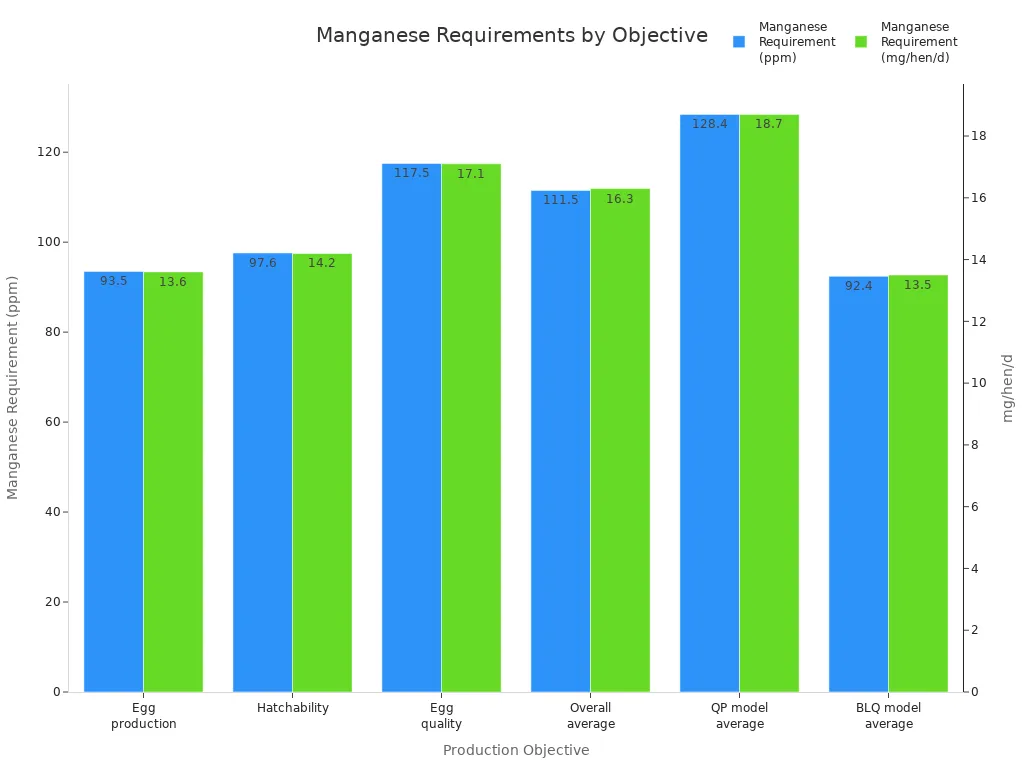
You need to match feed to each animal’s needs. Different animals need different amounts of manganese. Manganese helps animals grow, lay eggs, and stay healthy. Poultry need more manganese than pigs or cows. The table below shows how much manganese egg-laying hens need for different goals:
Production Objective | Manganese Requirement (ppm) | Manganese Requirement (mg/hen/d) |
|---|---|---|
Average for egg production | 93.5 | 13.6 |
Average for hatchability | 97.6 | 14.2 |
Average for egg quality | 117.5 | 17.1 |
Overall average | 111.5 | 16.3 |
QP model average | 128.4 | 18.7 |
BLQ model average | 92.4 | 13.5 |
Always check what your animals need before picking manganese carbonate. This helps you give them the right nutrition and keep them healthy.
Age and Diet Compatibility
Young animals and older animals use manganese differently. Young animals need more manganese to grow and build bones. Older animals can have problems if they get too much manganese. Too much can hurt their nerves. You need to change feed for animals of different ages.
What animals eat also changes how much manganese they need. Lots of grains or soy in the diet can block manganese. Iron, copper, or molybdenum in food can also lower manganese. Check the whole diet and change manganese carbonate to make sure animals get enough for good health.
Product Evaluation
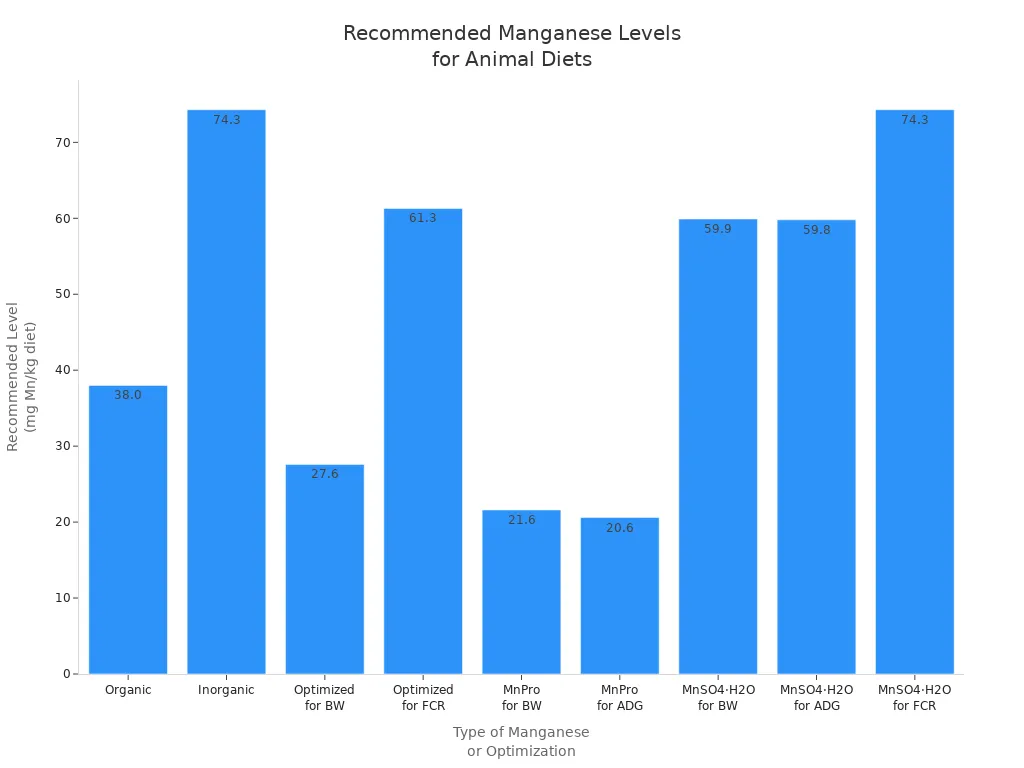
Check every product before you add it to animal feed. Look at the label for manganese amount and purity. Compare the recommended levels for each type of manganese:
Type of Manganese | Recommended Level (mg Mn/kg diet) |
|---|---|
Organic | 38.0 |
Inorganic | 74.3 |
Optimized for BW | 27.6 |
Optimized for FCR | 61.3 |
MnPro for BW | 21.6 |
MnPro for ADG | 20.6 |
MnSO4·H2O for BW | 59.9 |
MnSO4·H2O for ADG | 59.8 |
MnSO4·H2O for FCR | 74.3 |
Tip: Watch how your animals do and change feed if needed. If animals eat less or grow slowly, check manganese levels. Too much or too little can cause problems. This helps you keep animals healthy and working well.
When picking manganese carbonate for animal feed, focus on feed grade. Purity and bioavailability are also important. These things help animals use manganese better. They also make feed work better. Choosing high bioavailability helps animal health. Pure products are good for animals. Fewer anti-nutritional factors help animals use nutrients.
High bioavailability helps animals grow and build strong bones.
Pure manganese gives balanced nutrition and is easier to digest.
Less anti-nutritional stuff means animals use more nutrients.
Some mistakes can stop animals from getting enough manganese. Use this table to help avoid these problems:
Mistake | Solution |
|---|---|
Failing to Evaluate Mineral Needs | Test feed and water; talk to a nutritionist. |
Over- or Under-Supplementing | Follow the right dose; change it if needed. |
Neglecting the Mineral Mixture Quality | Pick good mixtures; check the ingredients. |
Inconsistent Usage | Use manganese mixtures often to stop health problems. |
Before buying, look at the label. Ask for a certificate of analysis. Make sure the product is feed grade. This helps your animals get the right manganese. It keeps them healthy and strong.
FAQ
What is the main benefit of using feed grade manganese carbonate?
Feed grade manganese carbonate gives animals safe manganese. It does not have bad impurities. This helps animals stay healthy. It also helps them grow strong.
How do you store manganese carbonate for animal feed?
Keep manganese carbonate in a cool, dry spot. Use closed containers to keep out water. This keeps the manganese good for animal feed.
Can you mix manganese carbonate with other minerals in feed?
You can mix manganese carbonate with other minerals. Check all mineral amounts in the feed. Too much manganese or other minerals can hurt animals.
How do you know if your animals need more manganese?
Look for slow growth or weak bones in animals. Poor egg laying is another sign. These may mean animals need more manganese. You can test feed and water to check levels.
Is manganese toxicity a risk in animal feed?
You can stop manganese toxicity by using the right amount. Too much manganese can hurt animals. Always follow the rules for each animal and change feed if needed.
Related Products

manganese dioxide

manganese carbonate

manganese sand
Related Posts

I am Edward lee, founder of manganesesupply( btlnewmaterial) , with more than 15 years experience in manganese products R&D and international sales, I helped more than 50+ corporates and am devoted to providing solutions to clients business.