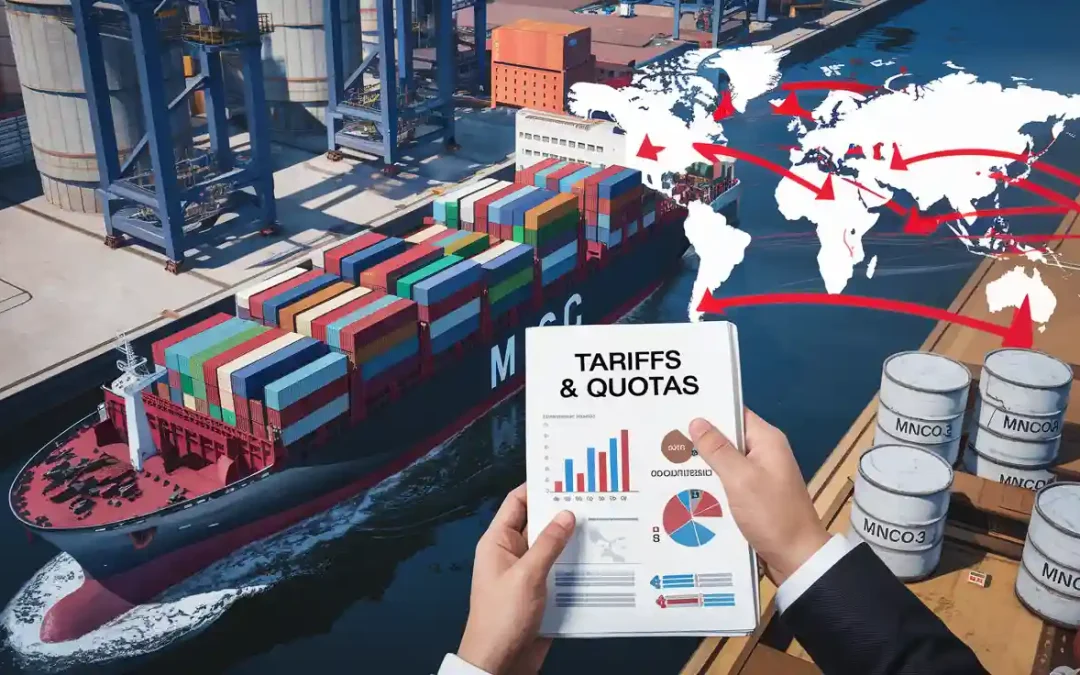
Tariffs and quotas from China change how you get MnCO₃. Prices go up or down fast. Export rules mess up global supply chains.
You wait longer for shipments.
Industries that need important minerals hurry to change plans.
Trade Policies make you think about new ways to buy.
Global supply chains move as buyers search for other suppliers. You see that global supply chains are harder to predict.
Tariffs can make MnCO₃ cost more very fast. Always look at the newest trade rules before you buy. This helps you not pay extra money you did not expect.
China’s export quotas control how much MnCO₃ can be sold. Order soon so you get what you need before quotas are full.
Keep learning about China’s trade rules. Check for changes often so you can change your buying plan and stay ahead.
Make good connections with suppliers in China. This lets you hear about export rules quickly and helps you not wait too long.
Use more than one supplier. Find other places besides China to buy from. This lowers your risk if export rules change suddenly.
Tariffs and Export Volume
Tariffs and Pricing
You see tariffs change the price of MnCO₃ when you buy from china. When china sets higher tariffs, you pay more for each export. This makes your costs go up fast. You notice that trade policies from china often target minerals like MnCO₃. These trade policies can shift overnight. You must watch for new trade rules because they can change your budget.
Tip: Always check the latest trade policies before you place an order.
If you ignore these changes, you risk paying more than you planned. You also see that economic pressure from tariffs can push you to look for other suppliers. When china raises tariffs, you may need to compare prices from other countries. This helps you keep your costs low and avoid surprises.
Impact on Competitiveness
You compete with buyers from other countries. When china changes export tariffs, you must act fast. If china lowers tariffs, you get cheaper MnCO₃ and can offer better prices to your customers. If china raises tariffs, your products cost more. You lose your edge in the market.
You watch trade policies every week.
You adjust your export plans to match new rules.
You track economic trends in china to predict future changes.
A table can help you see how tariffs affect your competitiveness:
Tariff Level | Your Cost | Market Position |
|---|---|---|
Low | Lower | Strong |
High | Higher | Weak |
You use trade data to plan your next move. You know that china uses trade policies to protect its own economic interests. You must stay alert and ready to change your export strategy. This keeps you ahead in a fast-moving market.
Quotas and China Export Restrictions
Quota Limits
China changes export restrictions every year. China uses export quotas to control MnCO₃ leaving the country. If China sets a strict quota, you get less MnCO₃. You need to order early because quotas fill up fast.
China’s export restrictions often need a license. You must have a license to buy MnCO₃ from China. Sometimes, you wait weeks to get approved. You watch for new rules because they can stop your shipment.
China’s export restrictions change often. New rules come almost every year. In 2023, China added controls on minerals like germanium, gallium, graphite, and antimony. These new rules show China can limit exports quickly.
You compare new China export restrictions with old ones. You see a pattern. China used quotas and restrictions before. In 2010, China stopped rare earth exports to Japan. You learn China uses quotas and restrictions as a tool.
Here is a table that shows the difference between new and old China export restrictions:
Recent Policy Changes | Historical Trends |
|---|---|
Export controls on germanium, gallium, graphite, and antimony announced in 2023-2025 | Historical use of mineral exports as a geopolitical tool, e.g., 2010 rare earth embargo against Japan |
Licensing requirements for end-use of exports implemented in July 2023 | Previous instances of leveraging mineral dominance for political pressure |
Retaliatory tariffs and additional export controls in response to U.S. actions | Continuation of strategic economic statecraft seen in past policies |
China’s export restrictions and quotas can change your business plan. You need to check for new quota limits every month.
Supply Chain Effects
China’s export restrictions cause problems for your supply chain. When China sets new rules, you get less MnCO₃. You need to find other suppliers.
Global buyers hurry to buy MnCO₃ before new China export restrictions start. Prices go up because supply drops. You wait longer for shipments.
China’s export restrictions can cause shortages. Factories slow down when they cannot get enough MnCO₃. Other buyers say they must change their production plans.
Note: Always check for new China export restrictions before signing a contract.
China’s export restrictions do not only affect you. They change the whole market. Buyers in Europe, America, and Asia compete for limited supply.
China’s export restrictions make you think about risk. You plan for delays. You look for backup suppliers. You watch news about new restrictions every week.
China’s export restrictions can happen fast. You must stay alert. Export quotas and restrictions from China shape the global supply chain for MnCO₃.
Trade Policies and Rare Earth Export Policy
Policy Strategy
China uses trade policy as a smart tool. The rare earth export policy changes a lot. China makes strict rules to control MnCO₃ and rare earth exports. Licensing and environmental laws help limit what leaves the country. You must follow these rules to buy from China.
China’s policy protects resources and keeps its strong market. When more people want rare earths, China changes its rules fast. China’s laws and rules match its big goals.
Quotas and licenses are part of China’s rare earth export policy. You need a license to buy under China’s law. Sometimes, you wait for approval because rules slow exports.
Tip: Check China’s rare earth export policy every month.
China uses policy to control prices and supply. China’s rules make it tough for other countries to compete. You must change your buying plans when China changes its policy.
Global Market Impact
China’s rare earth export policy affects the whole world. When China changes its rules, many industries react. Tech, defense, and energy companies need rare earths. When China makes rules tighter, there are shortages.
Recent data shows China sent out 60.3% more rare earths in June. The value went up by 30.8%. In the first half of the year, China exported 32,569.2 tons, up 11.9%. China’s policy matches global demand.
You feel China’s policy in your supply chain. When China changes rules, you pay more for MnCO₃. You look for new suppliers.
Here is a table that shows how China’s rare earth export policy affects buyers:
Policy Change | Effect on Buyers | Strategic Response |
|---|---|---|
Export Quotas | Limited supply | Seek alternatives |
Licensing Regulations | Delayed shipments | Adjust procurement |
Price Controls | Higher costs | Change buying strategy |
China’s rare earth export policy gives it strong power. You must watch for new rules from China. When China changes its policy, global competition gets harder. You need to plan for supply and change your strategy when China updates its rare earth export policy.
Practical Implications for Export
For Exporters
You face new challenges when you export MnCO₃ from china. Tariffs and quotas change often. You must act quickly to protect your business.
Here are steps you can take:
Adjust transfer pricing. You need to think about tariff risks when you set prices. This helps you follow customs rules and avoid surprises.
Reconfigure supply chains. You can change your supply chain to lower the impact of tariffs from china. You may need to update contracts or find new partners.
Diversify markets. You should look for new buyers outside regions affected by china’s export restrictions. This reduces your risk and keeps your business strong.
Tip: Always check customs updates from china before you ship. You can avoid delays and extra costs.
For Importers
You must watch china’s export policies closely. Customs rules change fast. You need to plan for delays and higher costs.
You can build strong relationships with suppliers in china. This helps you get updates about export quotas and restrictions.
You should keep backup suppliers in other countries. If china changes export rules, you can switch quickly.
You must prepare documents for customs. This speeds up your shipments and lowers the risk of problems at the border.
Track global trends in export controls.
Review customs paperwork before every shipment.
Stay in touch with your supply chain partners.
For Global Buyers
You see risks when you buy MnCO₃ from china. Export controls can disrupt your supply chain. You may pay more or wait longer for shipments.
Here is a table that shows the main risks you face:
Risk Type | Description |
|---|---|
Export controls from china can stop global shipments and slow production. | |
Increased Costs | Stricter export rules from china raise your costs for MnCO₃. |
Uncertainty in Procurement | Changing export policies make it hard to plan for global orders. |
Many industries feel the impact of china’s export policies. You see changes in global supply for military contractors, aerospace manufacturers, automotive, and clean energy companies.
You must watch customs news from china every week. You need to plan for global shortages and price changes.
Note: Stay alert for new export restrictions from china. Quick action helps you keep your global supply chain safe.
You notice tariffs, quotas, and export control law from China change MnCO₃ exports fast. Export control law can make things cost more. It can also mean you get less MnCO₃. Sometimes, you need to look for new partners. Learning about export control law is very important. The law changes often and affects your business. You have to follow export control law. This helps you avoid delays and keeps your supply chain working well.
Knowing export control law helps you do better in global trade.
Add extra safety stock so you do not run out.
Use different suppliers and get MnCO₃ from many places.
Make new supplier friends outside of China.
Work with others or spend money to keep your supply safe.
FAQ
What is an export license application, and why do you need it for MnCO₃?
You need to fill out an export license application to send MnCO₃ from China. This step checks if you follow the trade law and environmental rules. If you do not get approval, you cannot export. Always check the newest rules before you begin.
How do environmental regulations in China affect MnCO₃ export?
China has strict environmental rules for mining and processing. These rules can lower how much rare earths get processed. You might see fewer exports when factories must follow new rules. Watch for updates so you do not face delays.
Why does China use quotas and tariffs for export control?
China uses quotas and tariffs to control how much gets exported. This helps China have more power in world markets. You might pay more or get less supply. You need to plan ahead to keep your business safe.
How does foreign trade law impact your export plans?
Foreign trade law in China sets the export rules. You must follow these rules to avoid trouble. If you break the law, you could lose your right to export. Always read the law before you ship.
What role does rare earth processing capacity play in global supply?
China is a leader in rare earth processing capacity. This gives China more power in world trade. When China changes export rules, supply chains can change. You should find other suppliers to lower your risk.
Related Products

manganese dioxide

manganese carbonate

manganese sand
Related Posts

I am Edward lee, founder of manganesesupply( btlnewmaterial) , with more than 15 years experience in manganese products R&D and international sales, I helped more than 50+ corporates and am devoted to providing solutions to clients business.