Manganese dioxide (MnO₂) is one of the most important manganese compounds used worldwide. It plays a critical role in multiple industries such as batteries, steelmaking, glass, ceramics, and water treatment. In recent years, however, the global demand for manganese dioxide has grown faster than expected, largely because of the shift toward electric vehicles (EVs) and renewable energy storage, both of which rely on battery technologies that use manganese.
This blog explores the global demand for manganese from manganese dioxide, including the key industries driving growth, regional consumption patterns, and the balance between supply and demand. We also look at sustainability issues and the outlook for the coming decade.
1. Overview of Manganese Dioxide
Manganese dioxide occurs naturally in minerals such as pyrolusite, but it is also produced synthetically through electrolytic and chemical processes. Depending on its source and production method, MnO₂ varies in purity, which directly influences its applications.
Battery-grade MnO₂ requires extremely high purity (over 99%) to ensure stability in alkaline batteries, lithium-manganese dioxide (Li-MnO₂) batteries, and lithium-ion batteries that use manganese-based cathodes.
Industrial-grade MnO₂ is used in steelmaking, glass decolorization, ceramics, pigments, and fertilizers.
According to the US Geological Survey (USGS, 2023), global manganese ore production exceeded 20 million metric tons in 2022, with a significant share processed into manganese dioxide for industrial use.
2. Global Demand Drivers
a) Battery Industry (Primary Driver)
The single largest driver of global manganese dioxide demand today is the battery industry.
Alkaline batteries: Still account for a major share of demand for electrolytic manganese dioxide (EMD). According to Roskill (2022), alkaline batteries consume over 250,000 tons of MnO₂ annually.
Lithium-manganese dioxide (Li-MnO₂) batteries: Widely used in medical devices, cameras, and power tools.
Lithium-ion batteries with manganese cathodes (NMC, LMO): The global EV market heavily depends on manganese.
According to BloombergNEF (2023), global EV sales are expected to reach 40 million units annually by 2030, up from around 10 million in 2022. Each EV battery requires significant manganese content, driving strong demand for high-purity manganese dioxide and manganese sulfate.
Key Data:
Roskill forecasts global demand for electrolytic manganese dioxide (EMD) to grow at ~6–7% CAGR between 2023–2030.
By 2030, the battery sector could represent over 60% of manganese dioxide demand, compared to less than 30% today.
b) Steel and Metallurgical Uses
Manganese has long been a critical alloying element in steel production. While manganese dioxide itself is not the primary additive, it is an important raw material in the production of refined manganese products used for steel desulfurization and deoxidation.
According to the World Steel Association (2023), global crude steel production reached 1.88 billion metric tons in 2022.
Each ton of steel requires 7–10 kg of manganese, meaning steel consumes over 13–15 million tons of manganese annually.
MnO₂ is used in upstream processing to produce these alloys.
Although steel demand is growing more slowly than the battery sector, the sheer volume makes it a stable and significant driver.
c) Glass, Ceramics, and Chemical Uses
MnO₂ is widely used in smaller but steady-demand industries:
Glass industry: Used to remove green tint caused by iron impurities.
Ceramics & pigments: Provides black and brown colors in glazes.
Chemical industry: Used in fertilizers and as a catalyst.
According to IMARC Group (2023), the global glass manufacturing market is projected to reach $180 billion by 2028, indirectly supporting manganese dioxide demand.
3. Regional Analysis of Demand
Asia-Pacific (Largest Market)
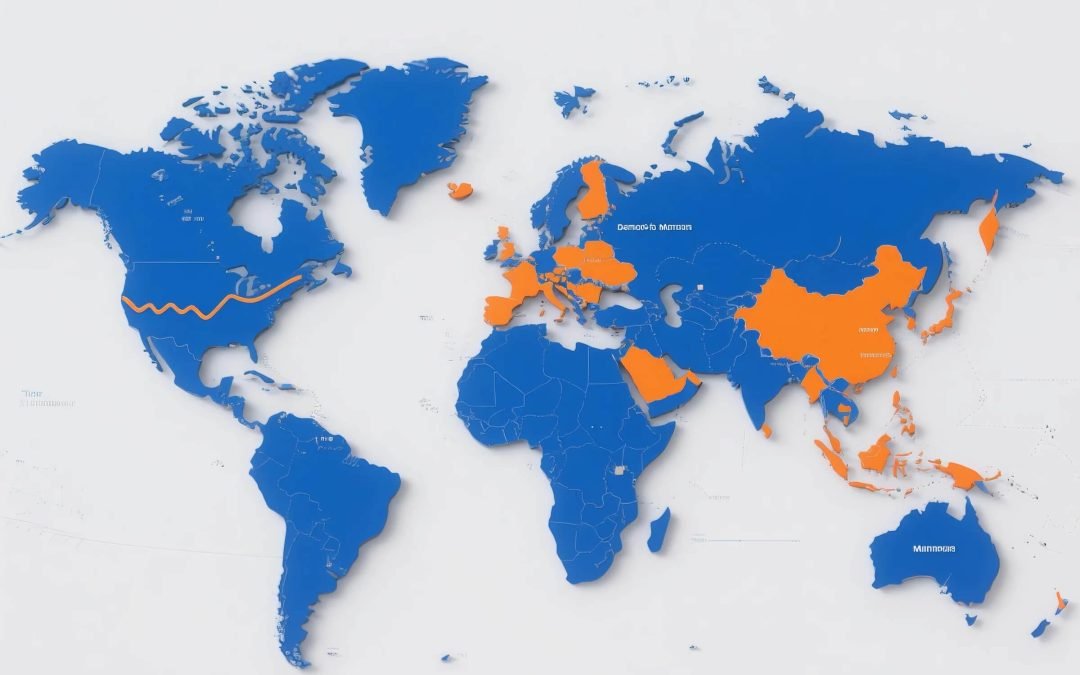
China is the world’s largest consumer of manganese dioxide, accounting for over 40% of global demand. Its dominance in steel production and leadership in the EV battery supply chain make it the main driver.
India is also growing, with strong infrastructure demand and rising EV adoption.
Japan and South Korea play critical roles in high-tech battery production, further boosting demand for high-purity MnO₂.
Supporting Data:
China produced over 1 billion tons of steel in 2022 (World Steel Association).
China’s EV sales exceeded 6 million units in 2022 (China Association of Automobile Manufacturers).
North America
The U.S. is focused on securing a domestic supply of battery-grade manganese, as it currently relies heavily on imports.
EV adoption in the U.S. is growing rapidly, with sales expected to surpass 50% of new car sales by 2030 (IEA, 2023).
Government incentives under the Inflation Reduction Act are accelerating manganese demand for local battery production.
Europe
Europe is a leader in EV adoption, with countries like Norway, Germany, and the Netherlands pushing toward electrification.
European Union regulations require automakers to meet strict carbon reduction targets, directly boosting battery demand.
The EU is investing heavily in manganese processing to reduce dependence on Chinese imports.
Supporting Data:
EV market share in Europe reached 23% of new car sales in 2022 (European Automobile Manufacturers Association).
EU has identified manganese as a critical raw material (European Commission, 2023).
Emerging Markets (Southeast Asia, Africa, Latin America)
Southeast Asia is seeing growing demand for steel and infrastructure.
Africa is both a supplier and emerging consumer, with South Africa and Gabon producing significant manganese ore.
Latin America, especially Brazil, is expanding in steel and battery materials.
4. Supply vs. Demand Balance
Supply Sources
Major producers of manganese ore and manganese dioxide include:
South Africa – largest ore exporter.
China – leading MnO₂ refiner and battery material supplier.
Australia – major ore producer.
Gabon – significant ore reserves.
Supply Challenges
High-purity manganese dioxide (HPMSM) is in short supply relative to demand.
The International Energy Agency (IEA, 2022) estimates global demand for battery-grade manganese will increase sevenfold by 2030.
The U.S. and EU currently import nearly 100% of their high-purity manganese products, making them vulnerable to supply risks.
Price Trends
According to Fastmarkets (2023), electrolytic manganese dioxide prices have shown volatility, ranging between $2,200–$3,000 per ton in recent years.
Demand growth from batteries is expected to keep prices elevated.
5. Environmental and Sustainability Aspects
Traditional mining and chemical processing of manganese dioxide have environmental impacts, including energy consumption and waste generation.
Electrolytic methods are widely used but require significant electricity.
Bioleaching and green chemistry approaches are being tested to reduce emissions.
Battery manufacturers are pushing for low-carbon manganese sourcing.
6. Future Outlook (2025–2035)
Global demand for manganese dioxide is expected to grow at 5–7% CAGR through 2030 (Roskill, 2022).
By 2035, the battery sector could consume over 70% of MnO₂ demand.
Supply chain diversification will be critical, with new refining projects underway in the U.S., Europe, and Australia.
Conclusion
Manganese dioxide is more than just a traditional industrial material—it is now at the center of the global transition to clean energy. The strongest growth comes from the battery industry, especially EVs, followed by steel, glass, and chemical uses. While Asia-Pacific leads in consumption, North America and Europe are quickly building domestic supply chains.
The challenge ahead lies in balancing growing demand with sustainable and reliable supply. For manganese dioxide producers and suppliers, the coming decade offers significant opportunities, provided they can meet the market’s increasing need for high-purity, eco-friendly manganese products.
Related Products

manganese dioxide

manganese carbonate

manganese sand
Related Posts

I am Edward lee, founder of manganesesupply( btlnewmaterial) , with more than 15 years experience in manganese products R&D and international sales, I helped more than 50+ corporates and am devoted to providing solutions to clients business.