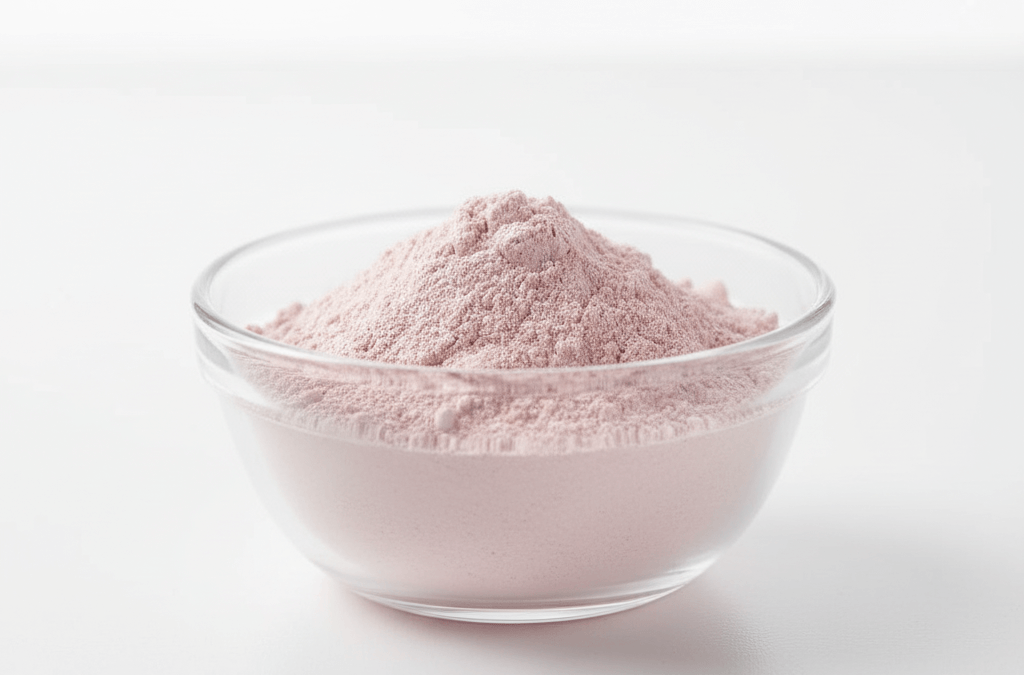
Manganese carbonate (chemical formula MnCO₃, CAS No. 598-62-9) is an essential inorganic chemical with diverse industrial applications. In the United States, its demand is growing due to its role in energy storage, agriculture, and ceramics.
From EV battery materials to animal feed supplements, manganese carbonate is increasingly relevant to U.S. industries seeking reliable, high-quality supply chains. This article provides U.S. buyers with a comprehensive view of MnCO₃ properties, grades, applications, safety, and market dynamics.
???? Key Takeaways
High-purity MnCO₃ (≥99.9%) is critical for U.S. battery materials and electronics.
Feed and fertilizer grade MnCO₃ supports U.S. agriculture, especially in animal nutrition and soil enrichment.
Technical grade MnCO₃ is widely used in ceramics, pigments, and as a chemical intermediate.
Global demand is rising at ~3.6% CAGR, with U.S. growth driven by EV batteries and sustainable agriculture.
Buyers should check purity, heavy metals, particle size, and compliance certifications (ASTM, REACH, RoHS, EPA).
Chemical Identity
| Property | Value |
|---|---|
| Formula | MnCO₃ |
| Molar Mass | 114.95 g/mol (American Elements) |
| Appearance | Light pink to light brown crystalline powder |
| CAS No. | 598-62-9 |
| Mineral Form | Rhodochrosite |
Physical & Chemical Properties
Physical Properties
Crystal Structure
Manganese carbonate crystallizes in a rhombohedral (also described as hexagonal-rhombohedral) structure.Density (Specific Gravity)
Typical reported density is about 3.12 g/cm³
Some sources list “specific gravity” in different contexts; e.g., ProChem reports a value of ~3.7 for a high purity product. ProChem, Inc.
Melting / Decomposition Point
MnCO₃ does not melt cleanly; it decomposes when heated. The decomposition (loss of CO₂) begins around 200 °C under many conditions.
Under more extreme conditions (e.g. high temperatures, inert/vacuum), further transformations to more reduced oxides occur. MDPI
Solubility
Insoluble in water under normal conditions.
Soluble in dilute acids (produces Mn²⁺ salts).
Color
Naturally occurs as pink (rhodochrosite) crystal. Impure or industrial forms are light brown to pale pink. Micron Metals+1
Other Physical Properties
Appearance: odorless powder. Micron Metals
Hygroscopicity: some grades show hygroscopic behavior (absorbing moisture) depending on impurities and particle size.
Chemical Properties
Stability and Decomposition
At elevated temperature (~200 °C and above), MnCO₃ decomposes, releasing CO₂ and forming manganese oxide (MnO or other oxide depending on oxygen availability).
Under vacuum or inert atmosphere, transformations may go further. For instance, heating under vacuum can yield MnO; if oxygen is supplied, further oxides like Mn₂O₃ or Mn₃O₄ might form depending on temperature. MDPI
Reactivity with Acids
MnCO₃ reacts with dilute acids to produce soluble manganese(II) salts + CO₂. Classical carbonate acid reaction.
Oxidation Behavior
In air (presence of O₂), at high temperatures, oxidation can occur in parallel with decomposition, affecting oxidation state of resultant oxides.
Solubility Product & pH Behavior
The solubility product (K_sp) is very small; for MnCO₃ the K_sp is ≈ 2.24 × 10⁻¹¹.
In aqueous conditions, at pH 7-9, carbonate/bicarbonate equilibria dominate; at higher pH, carbonate ion species control, etc. The equilibrium between MnCO₃(s) and aqueous Mn²⁺ depends strongly on pH and redox potential (Eh).
Industrial Grades & Specifications
U.S. buyers often evaluate manganese carbonate based on grade, purity, and compliance standards.
| Grade | Mn Content / Purity | U.S. Applications | Notes |
|---|---|---|---|
| Technical / Industrial Grade | 95–98% MnCO₃ | Ceramics, pigments, chemical intermediates | Cost-effective, tolerates more impurities. |
| Agrochemical / Feed Grade | Equivalent to 44–46% Mn as nutrient value | Fertilizers, soil enrichment, feed additives | Must meet EPA & USDA limits for heavy metals. |
| High Purity / Battery Grade | ≥99.9% purity | Lithium-ion battery cathodes, electronics, catalysts | Must comply with ASTM battery material standards. |
Applications of MnCO₃ in the U.S. Market
Agriculture & Feed
Mn is an essential micronutrient for crops such as soybeans and corn.
Used in fertilizers where soil is Mn-deficient.
Added to animal feed for cattle, poultry, and swine.
According to USDA soil surveys, Mn deficiency affects up to 10% of U.S. agricultural soils.
Ceramics & Pigments
MnCO₃ is added to ceramic glazes for brown, pink, and purple hues.
Acts as a flux, enhancing color depth.
Widely used by U.S. ceramic tile and pottery manufacturers.
Battery & Energy Storage
Critical precursor for lithium manganese oxide (LMO) cathodes.
High-purity MnCO₃ is calcined to MnO/Mn₃O₄, then processed into cathode materials.
The U.S. EV battery market is forecast to reach USD 38.3 billion by 2030, creating direct demand for MnCO₃. (Source: U.S. DOE Energy Storage Grand Challenge).
Chemical Intermediates
Converted into manganese dioxide, manganese sulfate, and other salts.
Used in catalysts, dyes, and metallurgical processes.
Safety, Handling & Compliance
Health: Dust inhalation may cause respiratory irritation; long-term Mn exposure can affect the nervous system.
Storage: Store in cool, dry, ventilated areas; avoid contact with acids.
Regulatory standards:
OSHA: Permissible exposure limit (PEL) for Mn compounds is 5 mg/m³ (respirable).
EPA & USDA: Strict limits on heavy metals in feed and fertilizers.
ASTM & REACH: Apply for high-purity and battery-grade material.
Market Insights (Global vs. U.S.)
| Region | Major Applications | Market CAGR (2025–2033) |
|---|---|---|
| USA | Batteries, feed additives, high-purity electronics | ~4.1% |
| Asia-Pacific | Fertilizers, ceramics, industrial chemicals | ~3.5% |
| EU | Battery precursors, specialty chemicals, pigments | ~3.8% |
The global manganese carbonate market was valued at USD 503.4 million (2024), projected to reach USD 559.9 million by 2033 (Global Market Statistics).
U.S. demand is outpacing global growth due to EV, agriculture, and domestic supply chain initiatives.
Why Work with a Reliable Supplier
For U.S. buyers, sourcing from a direct factory supplier offers:
Stable quality with controlled impurities (low Pb, Fe, Cu).
Custom packaging (25kg bags, 1-ton super sacks, export-grade drums).
Certifications: COA, SDS, REACH, RoHS, ISO.
Competitive pricing from Asian manufacturers with U.S. logistics expertise.
Conclusion
Manganese carbonate (MnCO₃) is far more than a pink powder—it is a critical raw material for U.S. agriculture, ceramics, and especially battery technology. Its unique properties—low solubility, controlled decomposition, and ability to serve as a Mn precursor—make it indispensable across industries.
Related Products

manganese dioxide

manganese carbonate

manganese sand
Related Posts

I am Edward lee, founder of manganesesupply( btlnewmaterial) , with more than 15 years experience in manganese products R&D and international sales, I helped more than 50+ corporates and am devoted to providing solutions to clients business.