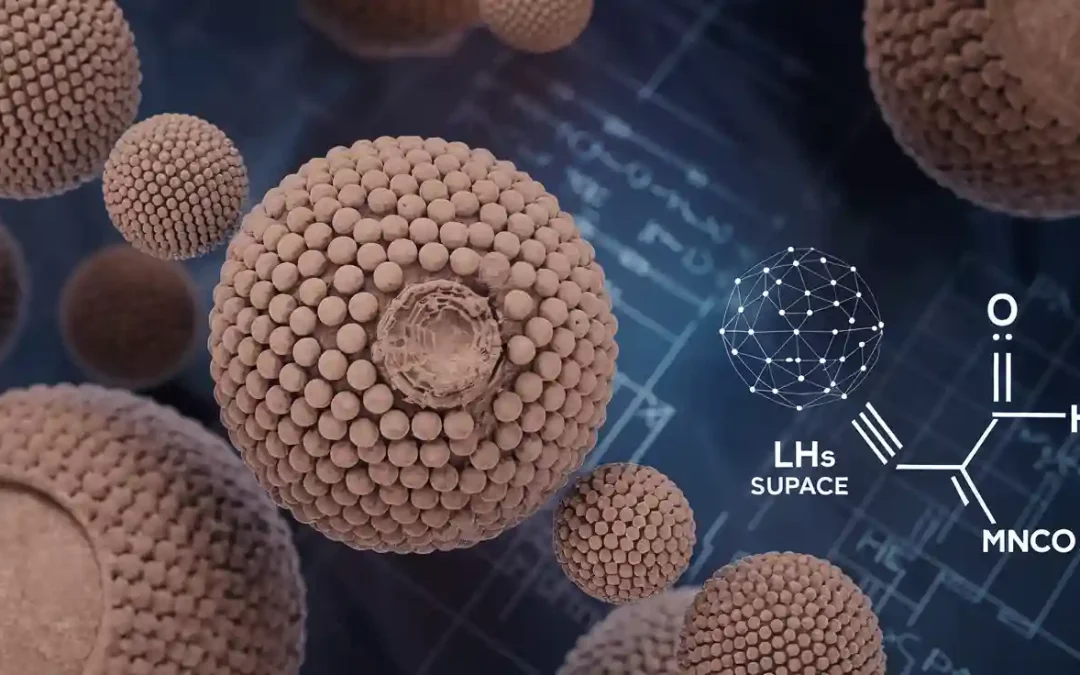
You can make MnCO₃ work better by looking at particle size and surface area. Small particles have more surface area. This helps them react and adsorb more. Mixing fine and coarse particles keeps things stable. It also helps you control how the material acts.
- A big surface area gives you better results in real life.
- Watching particle size closely makes MnCO₃ stronger and work better.
- Smaller MnCO₃ particles have more surface area. This helps them react faster and better.
- Mixing small and big particles makes MnCO₃ more stable. It stops clumping and keeps reactivity high.
- More surface area lets MnCO₃ hold more gas. This helps in batteries and water cleaning.
- Always check particle size and surface area often. This helps your projects work well and saves time and materials.
Particle Size in MnCO₃
- Smaller MnCO₃ particles have more surface area. This helps them react faster and better.
- Mixing small and big particles makes MnCO₃ more stable. It stops clumping and keeps reactivity high.
- More surface area lets MnCO₃ hold more gas. This helps in batteries and water cleaning.
- Always check particle size and surface area often. This helps your projects work well and saves time and materials.
Particle Size in MnCO₃
Why Particle Size Matters
It is important to look at particle size when using MnCO₃. Particle size changes how MnCO₃ acts in different ways. Small particles have more surface area. This lets MnCO₃ touch other things more. It helps reactions happen faster and work better. Big particles have less surface area. They react slower and do not work as well.
Tip: Always check the particle size before you use MnCO₃ in your project. This step helps you avoid problems and get the best results.
You can use a table to see how different particle sizes work:
Particle Size | Surface Area | Reactivity | Stability |
|---|---|---|---|
Small | High | Fast | May clump |
Medium | Moderate | Balanced | Stable |
Large | Low | Slow | Very stable |
Effects on Reactivity
Particle size changes how MnCO₃ reacts with other chemicals. Small particles make MnCO₃ react more. More surface area means more molecules can touch MnCO₃. This makes chemical changes happen faster. Large particles slow down the reaction. Fewer molecules can reach the surface, so it takes longer.
You can see this in batteries, water treatment, and catalysts. In batteries, small particles help MnCO₃ store and give off energy fast. In water treatment, small particles catch more bad stuff. Catalysts with small particles make reactions go quicker.
Pick the right particle size for your job.
The right size helps you work better.
You save money and do not waste material.
Knowing how particle size works helps you make good choices. You get better results when you understand this.
Surface Area and Its Role

Surface Area and Adsorption
You can make MnCO₃ work better by making its surface area bigger. When particles have a high surface area, there are more spots for gas to stick. This lets MnCO₃ catch more gas from air or water. The specific surface area shows how much space is open for these reactions. If you want MnCO₃ to grab more gas, pick one with a bigger specific surface area.
Let’s see how surface area changes how much gas can be caught:
Material | Maximum Adsorption Capacity (mg/g) | |
|---|---|---|
BISMCP | 109.006 | 119.331 |
MDS-300 | 91.672 | 112.107 |
When the surface area gets bigger, the material can catch more gas. This means you get better gas catching when you use materials with a high surface area. Always check the specific surface area if you want MnCO₃ to catch more gas in your project.
Note: A high surface area gives more places for gas to stick. This makes gas catching stronger and gives better results.
Pores and Performance
Pores are very important for how MnCO₃ works. More pores make the specific surface area bigger. This helps MnCO₃ catch more gas. Mesopores are medium-sized holes that let gas move in and out easily. This helps MnCO₃ catch gas better and work well.
A rough surface with lots of pores gives a high surface area. This means more spots for gas to stick and better gas catching. You can see this in materials with bumpy shapes and rough surfaces. These things make the surface area and reactivity go up, so MnCO₃ works better for catching gas.
More pores mean a bigger specific surface area.
High surface area and reactivity help MnCO₃ catch more gas.
You get better gas catching and can hold more gas.
If you want MnCO₃ to work its best, look at both the surface area and how many pores it has. This will help you get the best gas catching and performance.
Particle Size Distribution
Stability and Reactivity
When you use MnCO₃, you should watch the particle size distribution. This means checking how many particles are in each size group. The size groups change how MnCO₃ works in your project. If you use mostly fine particles, you get high reactivity. Fine particles have more surface area. They react fast with other chemicals. You might see quicker reactions in batteries or catalysts. But fine particles can stick together. When they clump, the material is less stable. Your material may not last as long.
If you use mostly coarse particles, you get better stability. Coarse particles do not stick together as much. They stay apart and keep their shape. But coarse particles have less surface area. They react slower. You might not get fast results. Nanoparticles have very high surface area and very high reactivity. They give you medium stability.
Here is a table that shows how particle size distribution changes MnCO₃:
Particle Size | Surface Area | Reactivity | Stability |
|---|---|---|---|
Fine | High | Increased | Lower |
Coarse | Low | Decreased | Higher |
Nanoparticles | Very High | Very High | Moderate |
You can see that particle size distribution changes both stability and reactivity. You need to pick the right mix for your job. The way you choose the sizes can make MnCO₃ work better or worse. If you want high reactivity, use more fine particles. If you want high stability, use more coarse particles. You must balance these needs to get the best results.
Note: Particle size distribution is very important for MnCO₃. You can control how fast reactions happen and how stable your material is by changing the particle size distribution.
Balancing Fine and Coarse Particles
You can make MnCO₃ better by mixing fine and coarse particles. This mix gives you good reactivity and strong stability. If you use only one type, you might miss some benefits. A mix helps stop clumping. You get more places for reactions and keep your material stable.
Here are some reasons to focus on particle size distribution:
Smaller particles give you more surface area and higher reactivity.
Larger particles help keep your material stable and stop clumping.
A mix of fine and coarse particles gives you the best results in batteries and catalysts.
You should look for the best particle size distribution for your project. The best mix lets you get the most from MnCO₃. You can change the amount of fine and coarse particles. This helps you reach your goals. The effect of particle size distribution is easy to see in many uses. You get better results with a balanced mix.
If you want MnCO₃ to work well, you must watch the particle size distribution. You can test different mixes to see which one works best. You might find a certain mix gives you the highest reactivity and best stability. You can use this to make your process better.
Tip: Always check the particle size distribution before you start. You can save time and money by picking the right mix.
You can use particle size distribution to fix problems. If your material clumps, add more coarse particles. If your reactions are slow, add more fine particles. You control the results by changing the particle size distribution. You can make MnCO₃ work better in batteries, water treatment, and catalysts.
Remember, particle size distribution is not just about size. It is about how the sizes work together. You can make a strong, reactive, and stable material by mixing fine and coarse particles. You get better results and make your project a success.
Measuring Particle Size and Surface Area
Particle Size Analysis Methods
It is important to know the size of MnCO₃ particles. This helps you get the best results. There are different tools to measure particle size. Each tool tells you something different. Here are some ways to check particle size:
Sieve Analysis: You pour MnCO₃ onto a stack of sieves. Each sieve has holes of a certain size. You see how much stays on each one. This works best for bigger particles.
Laser Diffraction: You shine a laser through the sample. The way the light bends shows the particle size. This works for both small and big particles.
Dynamic Light Scattering (DLS): You use this for very tiny particles. You put the sample in a liquid. The tool checks how the particles move. You find out the average size.
Tip: Pick the method that fits your particle size. This helps you get the most correct results.
Surface Area Measurement
You also need to know the surface area of your MnCO₃. This tells you how well it will work in your project. Surface area is very important for adsorption and reactivity.
The most common way to check surface area is the BET method. You pass a gas over the MnCO₃ sample. The gas sticks to the surface. The tool measures how much gas the sample holds. You use this number to find the surface area.
Method | What It Measures | Best For |
|---|---|---|
BET Analysis | Total surface area | Powders, fine particles |
Gas Adsorption | Surface area determination | Porous materials |
Note: Always check the surface area before using MnCO₃. This helps you pick the right material for your needs.
Electrochemical Performance of MnCO₃
Impact of Particle Size and Surface Area
You can make MnCO₃ work better by changing particle size and surface area. Smaller particles give more spots for reactions. This helps MnCO₃ do a better job in batteries. Scientists saw that submicron MnCO₃ particles reached 216 F g⁻¹ in a 0.1 M Mg(ClO₄)₂ electrolyte. This means the material could store more energy and worked well. Making the particles smaller really helps electrochemical performance.
A study found MnCO₃ came in many shapes and sizes, from 0.1 to 0.3 mm. The researchers used tests like cyclic voltammetry and galvanostatic charge–discharge cycling. These tests showed MnCO₃ had good reversibility and high coulombic efficiency. Smaller particles help the material react faster and more fully. This is important for batteries and other electrochemical uses.
Note: Smaller particles and bigger surface area help MnCO₃ store and give off energy faster. You get better results in batteries and other uses.
Application Examples
MnCO₃ can be used in many electrochemical jobs. In batteries, you want fast charging and long life. MnCO₃ with small particles and high surface area gives you both. MnCO₃ is also used in supercapacitors to store and release energy quickly. Manganese dioxide nanoparticles work even better. These nanoparticles have very high surface area and react fast. This makes them great for batteries and other devices that need quick energy changes.
MnCO₃ is also used in sensors and catalysts. In these jobs, you want high electrochemical performance. Manganese dioxide nanoparticles help you reach this goal. They give strong results when speed and efficiency are important. Picking the right particle size and using nanoparticles makes performance better in many fields.
Tip: Always check the particle size and use manganese dioxide nanoparticles for the best electrochemical results in your project.
Manganese Dioxide Dusts and Related Issues
Formation and Control
When you work with MnCO₃, you might see manganese dioxide dusts. These dusts show up because of changes in chemicals or how things are handled. Many things can make more dust appear. The table below shows what can cause dust to form:
Contributing Factor | Description |
|---|---|
Higher Eh makes manganese change faster, so more dust forms. | |
pH | Lower pH lets manganese dissolve more, which can make more dust. |
Oxygen Flow Rate | More oxygen makes manganese change faster and creates more dust. |
Residence Time | If manganese stays longer in solution, more dust can form. |
Temperature | Hotter temperatures change how manganese acts and can make more dust. |
Chemical Behavior Variability | Different conditions make different kinds of manganese dust and deposits. |
You can stop manganese dioxide dusts by using smart ways. These ideas help keep your workspace safe and clean. The table below shows how you can lower dust:
Strategy | Description |
|---|---|
Drop things from lower places to make less dust. | |
Using Enclosed Systems | Cover machines and moving parts to trap dust inside. |
Regular Maintenance | Check and fix machines often to stop dust leaks. |
Water Spray Systems | Spray water to keep dust from floating up. |
Dust Suppression Chemicals | Use chemicals to make dust stick together so it does not fly away. |
Advanced Technologies | Use machines that control dust by themselves. |
Operational Practices | Move materials gently and keep surfaces smooth to lower dust. |
Regular Watering | Wet roads and floors often so dust stays down. |
Surface Treatments | Put special sprays or coatings on surfaces to stop dust. |
Traffic Control | Drive slower and plan paths to make less dust. |
Tip: You can use more than one way to control dust. Keeping dust low helps keep people and machines safe.
Implications for MnCO₃ Use
You should think about manganese dioxide dusts when using MnCO₃. Dust can be bad for people and machines. Breathing dust can hurt your lungs. Dust can land on machines and make them work worse. If you do not stop dust, your project may not work as well and could cost more.
You can make things safer and work better by stopping dust. Use covers and water sprays to keep dust away from people and machines. Fixing machines often helps you find dust leaks early. When you control dust, your MnCO₃ process is safer and works better.
Note: Always look for dust when you use MnCO₃. Good dust control gives you better results and a safer place to work.
Optimizing MnCO₃ Properties
Synthesis and Processing
You can make MnCO₃ work better by changing how you make it. If you want high photocatalytic activity, focus on particle size and surface area. There are different ways to get good results. Grinding and milling break MnCO₃ into smaller pieces. Spray drying and precipitation help you control the shape and size. These steps give more surface area. More surface area means better photocatalytic activity and performance.
Watch the temperature and mixing speed when making MnCO₃. High temperature makes particles grow bigger. Mixing fast helps all particles stay the same size. You can add surfactants so particles do not stick together. This keeps the surface area high and helps MnCO₃ work better. If you want MnCO₃ to work like tio2 nanoparticles, keep the particles small and even. This gives strong photocatalytic activity and better photocatalytic degradation.
Tip: Always test MnCO₃ after you finish making it. Check the particle size and surface area to make sure it works well for photocatalytic jobs.
Choosing the Right Distribution
Pick the best particle size distribution for your project. Measuring the particles helps you get good results. Use tools like microscopy and laser diffraction to check particle size. These tools show you the whole group of particles. Look at D10, D50, and D90 values to see the spread. This helps you control photocatalytic activity and performance.
It is best to measure all the particles, not just a few. Test more than once to make sure your results are right. If you want high photocatalytic degradation, use more fine particles. If you need more stability, add some coarse particles. You can use a table to help you decide:
Application | Best Distribution | Main Benefit |
|---|---|---|
More fine particles | Higher performance | |
Photocatalytic degradation | Balanced mix | Strong and stable results |
Tio2 nanoparticles | Uniform small size | Maximum photocatalytic performance |
You can make MnCO₃ work better by matching the particle sizes to your needs. Always check your results and change the mix to get the best photocatalytic activity and performance.
You can make MnCO₃ work better by changing particle size, surface area, and how the particles are spread out. When you check these things, your project will turn out better. The table below lists some important numbers that help you know how MnCO₃ acts:
Summary Statistic | Description |
|---|---|
This number shows how much surface area is open and helps with how fast things react. | |
Volume median diameter (D50) | This tells you the middle size of the particles for how well it works. |
Volume moment mean diameter (D(4,3)) | This helps you see how the sizes of the particles are spread out. |
Tip: Try these ideas to get the best results when you use MnCO₃.
FAQ
What does particle size mean for MnCO₃ performance?
Smaller particles help MnCO₃ react faster. They have more surface area. Freshly ground particles work better in reactions. You can use them for quick reactions or strong gas adsorption isotherm results.
How does surface area affect gas adsorption in MnCO₃?
When surface area goes up, MnCO₃ traps more gas. This means more gas molecules stick to it. You can check this with a gas adsorption isotherm. High surface area helps in many uses.
Why should you care about ion transport in MnCO₃?
Good ion transport is needed for batteries and sensors. Small particles and big surface area help ions move fast. This makes energy storage and release better. You get better results in electrochemical devices.
Can MnCO₃ particles cause lung inflammatory response?
Do not breathe in MnCO₃ dust. Small particles can get into your lungs. This might cause a lung inflammatory response. Always wear safety gear when working with powders.
Does MnCO₃ have biological activity or cytotoxic potential?
MnCO₃ can show biological activity in some tests. You should check for cytotoxic potential before using it in medical or biological projects. Testing keeps you and others safe.
Related Products

manganese dioxide

manganese carbonate

manganese sand
Related Posts

I am Edward lee, founder of manganesesupply( btlnewmaterial) , with more than 15 years experience in manganese products R&D and international sales, I helped more than 50+ corporates and am devoted to providing solutions to clients business.