Manganese sulfate gives animals an important source of manganese. Animals need manganese to use proteins, fats, and sugars. Manganese helps enzymes work in the body. These enzymes help the immune system, control blood sugar, and build strong bones. Studies show manganese sulfate helps animals grow and keeps bones healthy. It also helps animals stay healthy overall. Farmers and nutritionists pick manganese sulfate because it works well and is safe. Using it stops bone problems and helps animals grow up healthy.
- Manganese sulfate gives animals manganese. This mineral is very important. It helps enzymes do their jobs. It also keeps bones strong. It helps animals stay healthy.
- Adding manganese sulfate to animal feed helps animals grow. It makes bones stronger. It helps animals have babies. It also helps the immune system in many animals.
- If animals do not get enough manganese, their bones get weak. They do not grow well. They can have trouble having babies. Giving the right amount of manganese stops these problems.
- Organic manganese might be absorbed better. But many people still use manganese sulfate. It is safe, not expensive, and easy to use.
- More farmers are buying manganese sulfate now. They want safe and cheap ways to keep animals healthy and working well.
Manganese Sulfate in Animal Diets
Essential Functions of Manganese
Manganese sulfate gives animals manganese in their food. This mineral helps many important jobs in the body. Animals need manganese to grow and stay healthy. Manganese turns on enzymes that build strong bones and cartilage. It also helps make glycoproteins and mucopolysaccharides. These help bones and joints work well. Manganese is part of the enzyme Mn-superoxide dismutase. This enzyme protects cells from damage. Manganese helps make choline, which helps the liver use fat. If animals do not get enough manganese, their bones may be weak. They can get fatty liver or have trouble having babies. Animals only need a little manganese, but it is very important for health.
Note: Manganese is one of the most important trace minerals in feed. It helps animals grow and have healthy babies.
Enzyme Activation and Metabolism
Manganese sulfate helps enzymes work better in animals. These enzymes include pyruvate carboxylase and phosphoenolpyruvate carboxykinase. They help make energy from carbohydrates. Arginase is another enzyme that needs manganese. It helps remove ammonia when animals use protein. Glutamine synthetase is found in the brain and needs manganese too. Glycosyltransferases use manganese to make proteoglycans. Proteoglycans help keep cartilage and bones healthy. Manganese sulfate makes sure these enzymes work well. This helps animals use nutrients and make energy.
- Manganese sulfate helps enzymes for carbohydrate and fat metabolism.
- It acts as a helper in many body reactions.
- Manganese helps immune cells fight stress and sickness.
- It also helps muscles and nerves work right.
Animals absorb manganese from manganese sulfate very well. This makes it a good choice for animal food.
Bone and Reproductive Health
Manganese sulfate helps bones grow strong and supports reproduction. Studies show it makes bones stronger and denser. It raises manganese levels in bones and helps cartilage form. In chickens, manganese sulfate helps them lay more eggs. It also helps them use food better. It increases healthy ovarian follicles and lowers non-viable follicles.
| Parameter | Effect of Manganese Sulfate Supplementation |
|---|---|
| Egg Production and Egg Mass | Increased |
| Feed Conversion Ratio (FCR) | Improved |
| Preovulatory Ovarian Follicles | Increased proportion |
| Atretic Follicles | Decreased |
| Tibial Bone Density and Strength | Increased |
| Tibial Manganese Content | Increased |
Manganese sulfate stops bone problems and helps animals have healthy babies. It has been used for a long time in animal farming. Farmers and feed makers trust manganese sulfate because it works well and is safe. It helps animals eat better and grow strong. New ideas like manganese amino acid chelates help animals absorb manganese even better.
???? Using manganese sulfate in animal food shows a move toward better nutrition and caring for animals in farming.
Manganese Deficiency and Supplementation
Deficiency Signs in Animals
Animals can get sick if they do not have enough manganese. They may have weak bones and not grow well. Some animals have trouble having babies. Chickens can get perosis, which is also called slipped tendon. Their leg bones may bend. Young ruminants can have crooked legs or short bones. Pigs, sheep, goats, and cattle may limp or have big joints. They can also get other bone problems. Big animals and birds may not have babies as often. Their eggs may not hatch well. Young rats may lose balance and have trouble moving. Giving animals manganese can fix these problems.
Clinical Sign Category | Animal Species | Description / Examples |
|---|---|---|
Skeletal abnormalities | Poultry | Perosis, bent bones, joint malformation |
Skeletal abnormalities | Young ruminants | Crooked legs, abnormal bone growth |
Skeletal abnormalities | Pigs, sheep, goats, cattle | Lameness, enlarged joints, bone disorders |
Reproductive issues | Cattle, large animals, birds | Delayed estrus, poor conception, low hatchability |
Growth impairment | Various species | Reduced or abnormal growth |
Neurological signs | Young rats | Loss of balance, poor coordination |
Metabolic disturbances | Various species | Faulty fat and sugar metabolism |
⚠️ Not enough manganese can make bones weak. It can slow growth and make it hard for animals to have babies.
Optimal Supplementation Levels
Farmers use manganese sulfate to keep animals healthy. The right amount of manganese depends on the animal and the type used. For example, yaks did best with 40–50 mg/kg manganese from manganese methionine. This helped their digestion and enzymes work well. Dairy cows got better when manganese went from 9 ppm to 20 ppm from a good source. Keeping total manganese at 60 ppm helped stop milk fever and death. These studies show that both how much and what kind of manganese is important.
Species-Specific Needs
Different animals need different amounts of manganese sulfate. Chickens need enough manganese to keep bones strong and lay more eggs. Dairy cows need manganese to stay healthy and do well. Young ruminants need manganese for strong bones. Farmers should change manganese levels for each animal, age, and how much they produce. Checking levels often helps stop problems and keeps animals growing and having babies.
Manganese Sulfate vs Other Sources
Bioavailability and Effectiveness
Manganese sulfate is used a lot in animal feed. Farmers and nutritionists pick it because animals can absorb it easily. Organic manganese sources, like amino acid complexes, are absorbed even better. Studies with poultry show organic manganese makes eggshells much stronger than manganese sulfate. The table below shows how organic and inorganic manganese compare for eggshell quality:
Parameter | Bioefficacy of Organic Mn vs. Inorganic Mn (%) |
|---|---|
Eggshell Thickness | 357% |
Breaking Strength | 406% |
Elastic Modulus | 458% |
Eggshell Mn Content | 470% |
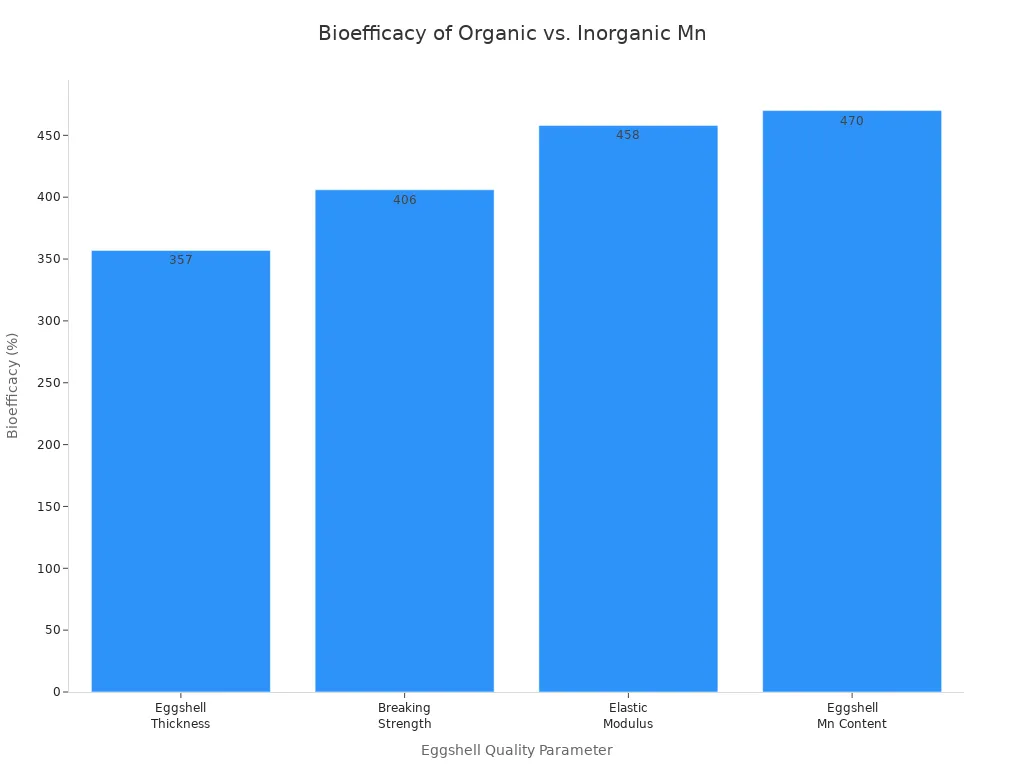
Researchers found animals absorb more manganese from organic formulas with strong complex strength than from manganese sulfate. Methionine-based formulas help animals absorb manganese better than glycine-based ones. These results show chelated or organic manganese works best in poultry diets. Still, manganese sulfate is popular because it costs less and mixes easily into feed.
Note: Manganese sulfate gives a steady source of manganese, but organic formulas may work better for some needs.
Safety and Authorized Limits
Manganese sulfate is safe for animal feed when used the right way. The FDA says manganese sulfate is generally safe for animal feed. Feed makers must use only the amount needed for nutrition or technical reasons. The product must be pure and meet Food Chemicals Codex rules. The European Union also allows manganese sulfate monohydrate in animal feed with strict rules. New updates show it is safe and works well for all animals if used within the allowed limits.
Too much manganese sulfate can cause manganese toxicity. Animals that get too much may have brain delays, weak muscles, and iron problems. The table below lists bad effects seen in animals:
Adverse Effect Category | Animal Model(s) | Description of Adverse Effects |
|---|---|---|
Neurodevelopmental Toxicity | Newborn rats | Delays, brain changes, less dopamine, trouble learning |
Neurotoxicity | Rhesus monkeys, rats | Weak muscles, nerve damage, stiff muscles, changed brain function |
Reproductive Toxicity | Rats, rabbits | Damage to reproductive organs |
Pulmonary Toxicity | Rats, monkeys, hamsters, rabbits | Lung swelling, congestion, lung disease, more infections |
Systemic/Cardiovascular Effects | Rats, dogs | Lower blood pressure, weaker heart |
Iron Deficiency | Domestic animals | Harder to absorb iron, slow growth, low appetite |
Feed makers should choose manganese sulfate that meets safety rules and check levels to stop toxicity. Using it the right way helps animals stay healthy and avoids problems.
Feed Grade Manganese Sulfate Market
U.S. Feed Grade Manganese Sulfate Market Segmentation
The feed grade manganese sulfate market in the U.S. is split by how it is used and by animal type. Animal feed is the biggest part of this market. Manganese sulfate is added to mineral mixes for animals like cows and chickens. Feed makers use it to help bones grow and to help enzymes work in animals like poultry, pigs, cows, and fish. Some manganese sulfate is used in supplements and fertilizers, but most is for animal feed. Farmers and feed makers are the main people who use it. The way the market is split shows a focus on caring for animals, saving resources, and helping animals do well. Rules from the government say animals need trace minerals in their food. This helps the market grow and keeps the product safe and good.
Market Trends and Applications
The feed grade manganese sulfate market in the U.S. was worth $1.2 billion in 2024. It is expected to reach $2.5 billion by 2033. The market will grow about 9.5% each year from 2026 to 2033. New technology and big companies help the market get bigger. More people want animal nutrition products. More farms are raising animals for food. Feed makers change their recipes to help animals use nutrients better and grow stronger.
Key trends are:
People care more about what animals eat.
Farms use special feeds made just for their animals.
New ways to make feed help animals use minerals better.
People want to protect the environment, so they make feed in cleaner ways.
The market is growing in new places where more animals are raised.
Feed makers and mineral companies work together to make better products.
Better technology saves money and makes purer products. Animals get more out of their food and stay healthier. Rules make sure feed additives are safe and good quality, and manganese sulfate meets these rules. Research and new ideas make manganese sulfate a better choice than other minerals.
The feed grade manganese sulfate market is getting bigger because farmers want cheaper, pure products to keep their animals healthy.
Manganese in Poultry Nutrition
Growth and Performance
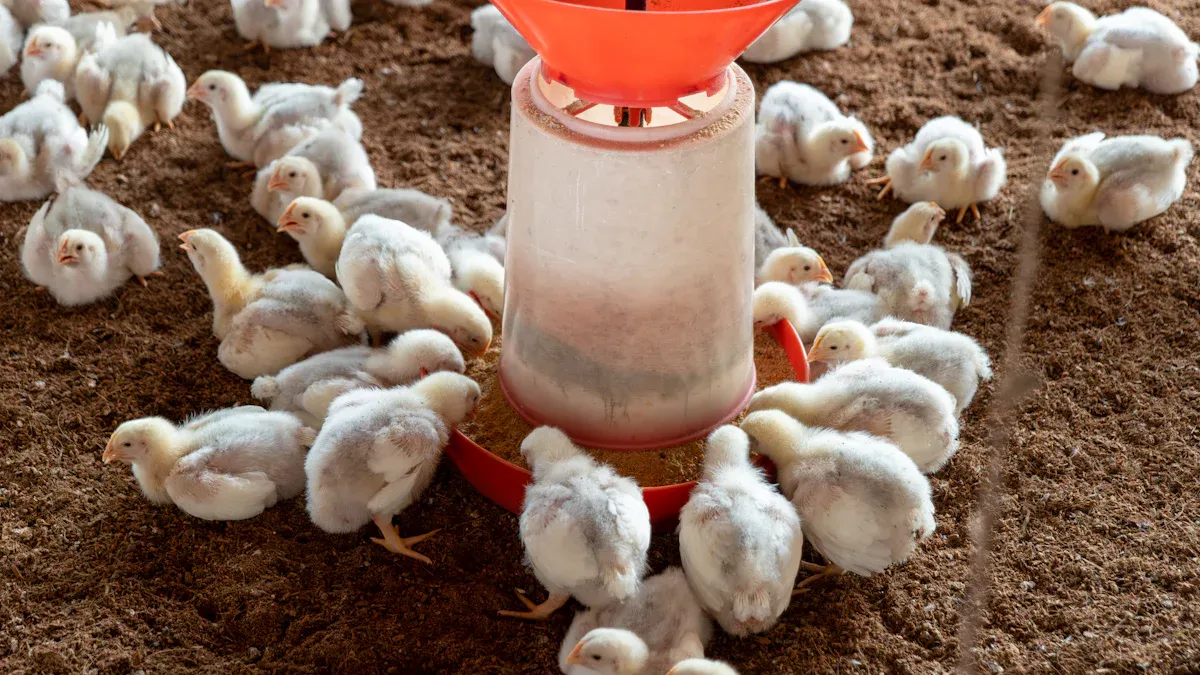
Manganese helps birds grow well and have strong bones. Farmers add manganese sulfate to bird feed for better growth. Studies with turkeys show less manganese does not hurt growth. Even with less, birds still grow well and use food well. In broiler chickens, manganese sulfate lowers leg problems. Birds have fewer bone issues and less belly fat. This mineral helps bones form and keeps legs straight. Phytase in food helps birds take in more manganese, making it work better.
Eggshells need enough manganese to be strong. Birds with enough manganese lay eggs with hard shells. Strong shells mean fewer broken eggs and more chicks hatch. Manganese also keeps broiler bones healthy, which helps birds do well. Farmers see better results when they use the right amount of manganese. Birds grow better, have stronger bones, and lay eggs with harder shells.
Immune and Antioxidant Support
Manganese helps the immune system in birds. It helps make mucopolysaccharides that protect the gut and fight sickness. Birds with enough manganese have bigger immune organs like the thymus and bursa. They react better to vaccines and fight infections better. Manganese also helps make manganese superoxide dismutase, an enzyme that protects cells from stress.
Manganese helps antioxidant enzymes like glutathione peroxidase and superoxide dismutase work better.
Birds eating organic manganese get the same or better protection at lower doses than those eating inorganic forms.
Good antioxidant defense helps birds stay healthy and get better after being sick.
Eggshells get stronger when birds have good immune systems. Healthy birds lay eggs with thicker, harder shells. This means better eggshells, more growth, and higher production. Manganese in bird food helps birds stay healthy, grow well, and lay eggs with strong shells.
???? Farmers who care about eggshell quality and manganese in broilers get better growth and more eggs.
Manganese sulfate helps animals stay healthy. It helps fix cartilage and helps animals use nutrients. It also helps protect cells from damage. Animals get stronger bones and better joints. Their bodies work better too.
Some main benefits are stronger bones and less swelling. It also helps the brain work better.
Giving manganese safely means using foods like liver and mussels. Chelated forms help animals absorb it best.
Animal owners should talk to nutrition experts. This helps pick the right food for each animal. It stops problems and keeps animals healthy.
FAQ
What does manganese sulfate do in animal feed?
Manganese sulfate gives animals an important mineral. It helps enzymes do their jobs. It also helps bones grow strong. Animals stay healthy and active with it. Farmers use it so animals grow well.
Is manganese sulfate safe for all animals?
Yes, manganese sulfate is safe if used the right way. Feed makers follow rules to keep animals safe. Too much can be bad, so levels must be checked.
How can farmers tell if animals need more manganese?
Animals may have weak bones or not grow fast. Some may have trouble having babies. Birds might lay eggs with soft shells. Farmers should look for these signs and test the feed.
Can animals get too much manganese sulfate?
Yes, too much manganese can hurt nerves and muscles. It can also cause iron problems. Farmers should follow feeding rules and ask experts for help.
What is the difference between manganese sulfate and organic manganese?
Manganese sulfate is an inorganic mineral. Organic manganese, like chelates, is absorbed better by some animals. Both types help, but organic ones may work better for eggshells or special needs.
Related Products

manganese dioxide

manganese carbonate

manganese sand
Related Posts

I am Edward lee, founder of manganesesupply( btlnewmaterial) , with more than 15 years experience in manganese products R&D and international sales, I helped more than 50+ corporates and am devoted to providing solutions to clients business.