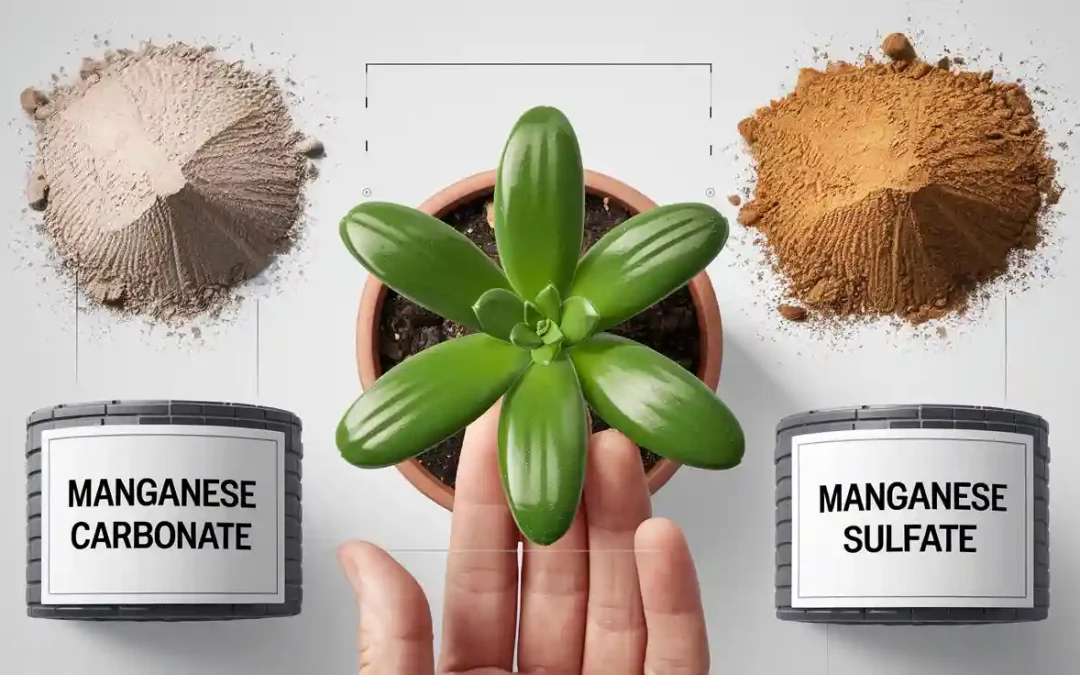
When you want your plants to grow better, you may need to pick between manganese carbonate vs manganese sulfate. Most gardeners prefer manganese sulfate because it works fast and mixes well with water. You can see good results when you use manganese sulfate for plants that lack manganese. Manganese carbonate has some advantages too, but it does not mix with water as effectively. The best choice between manganese carbonate vs manganese sulfate depends on how quickly your plants need manganese, how easy you want the process to be, and if you have safety concerns.
Many agronomists favor manganese sulfate for these reasons:
It mixes well with water.
It provides plants with manganese quickly.
It effectively addresses manganese deficiencies.
You should also consider the price and how straightforward each type is to use.
Manganese sulfate works fast. It mixes easily with water. Plants can take in manganese quickly with it.
Manganese carbonate gives manganese slowly. It is good for long-term use. Use it if your soil does not need quick help.
Test your soil before you use manganese. This helps you pick the right type. It also helps you know how much to use.
Manganese sulfate costs less. You can find it more easily than manganese carbonate. Many gardeners like to use it.
Safety is very important with manganese fertilizers. Always wear safety gear. Follow the rules for using it. This keeps you safe from harm.
Manganese carbonate vs manganese sulfate
Chemical Properties
When you look at manganese carbonate vs manganese sulfate, you see they are made differently. Manganese carbonate has manganese and carbonate ions. Manganese sulfate has manganese and sulfate ions. Manganese carbonate looks like a pale pink powder. Manganese sulfate is usually light pink or white and looks like crystals. Both give plants manganese, but they act differently in soil and water.
Manganese sulfate melts into water fast. You can mix it easily for spraying leaves or putting on soil. Manganese carbonate does not melt as well. You might need to use it as small grains or mix it with other plant food. Manganese sulfate is popular because it works fast to fix manganese problems. Manganese carbonate is better for soils that are not very acidic because it gives manganese slowly.
You might also hear about nanostructured manganese dioxide. This type is not used much in gardening. Scientists study it for special plant food. Nanostructured manganese dioxide can help plants take in more manganese sometimes. You will not find it in most garden shops.
Plant Absorption
Plants need manganese to grow strong and healthy. When you use manganese carbonate vs manganese sulfate, you help plants get this nutrient. Manganese sulfate gives manganese in a way roots can use fast. You see your plants get better quickly if you use manganese sulfate when they need it.
Manganese carbonate gives manganese slowly. You might pick it if you want plants to get manganese over time. Some soils, like those with high pH, make it hard for plants to get manganese. Manganese sulfate works better in these soils because roots can use it more easily. You can use manganese carbonate in soils with lower pH, but you may not see fast changes in your plants.
Nanostructured manganese dioxide also helps plants take in manganese. Scientists test it for crops that need more manganese. You do not need to use it unless you work on special farms.
Common Uses
You use manganese carbonate vs manganese sulfate for different reasons in your garden or on your farm. Manganese sulfate is the most common way to fix manganese problems. People use it on soybeans, cereals, and vegetables. Farmers put manganese sulfate on soils with high pH and muck soils to help crops grow better. You can spray it on leaves or mix it with water for the soil.
Manganese carbonate is not used as much. You might use it if you want manganese to last longer in the soil. It works best in soils that do not need a quick fix. You do not see many crops treated with manganese carbonate like you do with manganese sulfate.
Tip: If you want your plants to get better fast, use manganese sulfate. If you want a slow-release choice, use manganese carbonate.
You might also hear about nanostructured manganese dioxide in science studies. It is not a normal plant food, but it could be used more in the future as scientists learn more.
Here are some common uses for manganese sulfate in agriculture:
Helping crops grow more
Making plants healthier
Keeping plant nutrition balanced
Crops most often treated with manganese sulfate include:
Soybeans
Cereals (especially in soils with high pH)
Vegetables (especially in muck soils)
You do not see manganese carbonate used for certain crops as much. Most gardeners and farmers use manganese sulfate because it works well.
Effectiveness
Manganese Carbonate
You might ask how manganese carbonate helps plants. This fertilizer gives manganese to plants, but it works slowly. When you use manganese carbonate, plants get manganese over time. This slow release helps if you want steady growth, not a quick boost. Manganese carbonate works about the same as manganese(ii) sulfate in many cases. Both fertilizers help plants grow and give better harvests.
Here is a table that shows how the two fertilizers compare:
Fertilizer Type | Grain Yield Effectiveness | Manganese Uptake | Economic Aspect | Mobilization Efficiency Index |
|---|---|---|---|---|
Manganese Carbonate (MnCO3) | Same as MnSO4 | Same as MnSO4 | Costs more | 1.56 |
Manganese(ii) Sulfate (MnSO4) | Same as MnCO3 | Same as MnCO3 | Costs less | N/A |
You can see both fertilizers help plants take up manganese and grow more. But manganese carbonate costs more and may not fit every budget. You might also have some problems when using manganese carbonate:
Some rules limit how you can use it in fertilizers.
It is hard to clean, so it is not used as much.
If you want a fertilizer that works slowly and keeps giving manganese, you might pick manganese carbonate. You should also think about the price and if your soil needs a slow-release fertilizer.
Manganese(ii) Sulfate
Manganese(ii) sulfate is the most common manganese fertilizer. You see it in many gardens and farms because it works fast and costs less. When you use manganese(ii) sulfate, plants get manganese right away. This helps if your plants show signs of manganese deficiency. You can mix manganese(ii) sulfate with water and spray it on leaves or put it in the soil.
Manganese(ii) sulfate helps plants in many ways. It helps with photosynthesis, which lets plants make food from sunlight. It also helps plants use nitrogen and grow better. You see better results in your plants when you use manganese(ii) sulfate, especially if your soil has a high pH. This fertilizer is easy to use and gives quick results, so it fits well in modern farming.
You may notice manganese(ii) sulfate costs less than manganese carbonate. Farmers and gardeners pick it because it works well and does not cost a lot. You can trust manganese(ii) sulfate to fix manganese problems and keep your plants healthy.
Note: Manganese(ii) sulfate is important for plant nutrition in farming. You can count on it to help plants grow and give better harvests.
If you want a fertilizer that works fast and does not cost much, manganese(ii) sulfate is a good choice. You help your plants grow and stay healthy when you use it.
Application
How to Use
You can use manganese carbonate and manganese sulfate in a few ways. In gardens or on farms, you can spread 20-60 lbs. per acre before or at planting. If you use the banded or side-dress method, try 10-30 lbs. per acre. You can mix manganese with at least 50 lbs. of ammonium sulfate per acre for better results. Foliar sprays work well if you spray them on plants before the leaves are fully grown. Make sure you cover all the leaves and get them wet for the best results. If your plants have a mild manganese deficiency, use 1-2 lbs. per 100 gallons of water. For a severe deficiency, use 3 lbs. per 100 gallons. Do not spray when plants are stressed by heat or drought. Never spray deciduous tree crops during bloom.
Tip: Always change the amount of manganese you use based on your crop’s needs and your equipment.
Soil Compatibility
The type of soil changes how much manganese your plants can use. Lower soil pH helps manganese dissolve so roots can take it up. If your soil has high pH, manganese can turn into forms plants cannot use. Redox potential is important too. Wet soils with less oxygen make manganese easier for plants to use. Organic matter in soil helps keep manganese available by making complexes and helping redox reactions. If your soil has a lot of iron or aluminum, these can compete with manganese and make it harder for plants to get enough. Soil cation exchange capacity (CEC) controls how much manganese sticks to soil and how much is free for plants.
Soil Factor | Effect on Manganese Availability |
|---|---|
Low pH | Increases solubility |
High pH | Decreases solubility |
High organic matter | Helps plants take up manganese |
High iron/aluminum | Makes it harder for plants to get manganese |
High CEC | Controls how much manganese is available |
Plant Types
Different plants react to manganese carbonate and manganese sulfate in their own ways. Wheat grows taller and gives more grain when you use manganese sulfate. You may see more tillers and heavier grain. Manganese carbonate can help wheat too, but manganese sulfate works faster and costs less. Both types of manganese help plants stay healthy, but most people use manganese sulfate for wheat and similar crops. If you grow other grains or vegetables, manganese sulfate usually works better. You can use manganese carbonate instead, but it is not as common.
Note: Scientists sometimes use a special test to see how plants take up manganese from different fertilizers.
Safety
Toxicity Risks
When you use fertilizers with manganese, you must think about safety. Both manganese carbonate and manganese sulfate can be harmful if you use too much. If you breathe in manganese dust or fumes, you can get sick. Some people get metal fume fever or chemical pneumonia after breathing it in. If you work with these fertilizers for a long time, your nervous system can change. You might feel nervous or have trouble remembering things. Muscle weakness can happen too. Some people get symptoms like Parkinson’s disease after long exposure. Workers who breathe in manganese for years may get bronchitis or pneumonia.
Always wear gloves, a mask, and eye protection when you use manganese fertilizers. Wash your hands after you finish and do not breathe in dust.
Here is a table that shows the risks:
Manganese Compound | Inhalation Risk | Skin Irritation | Eye Irritation | Dermal Sensitizer |
|---|---|---|---|---|
Manganous Oxide | Yes | Yes | Yes | Yes |
Manganous Sulfate Monohydrate | Yes | No | Yes | No |
Side Effects
If you use too much manganese, your plants can get hurt. You might see spots on leaves or weak growth. Fruit may not grow well or ripen. These problems happen more when soil pH is below 5.8. Acidic soil lets plants take up too much manganese. Heavy rain can make this worse by lowering soil oxygen.
Spots may show up on older leaves, especially in cantaloupe.
Plants may look weak and not grow well.
Fruit may stay small or not ripen.
Manganese toxicity can also cause yellow edges and brown spots on leaves. Some crops, like cotton and potatoes, can get crinkle leaf or stem streak necrosis. If you see these problems, check your soil pH and use less manganese fertilizer.
Tip: Test your soil before you add manganese. Keep soil pH above 5.8 to stop toxicity.
Cost
Price
When you buy fertilizer, you want to know the price. Manganese carbonate costs more than manganese sulfate. The table below shows the price difference:
Product | Price per Kilogram | Currency |
|---|---|---|
Manganese Carbonate | 90 INR | INR |
Manganese Sulfate Mono | 60 INR | INR |
Global Manganese Price Index | 2.13 USD | USD |
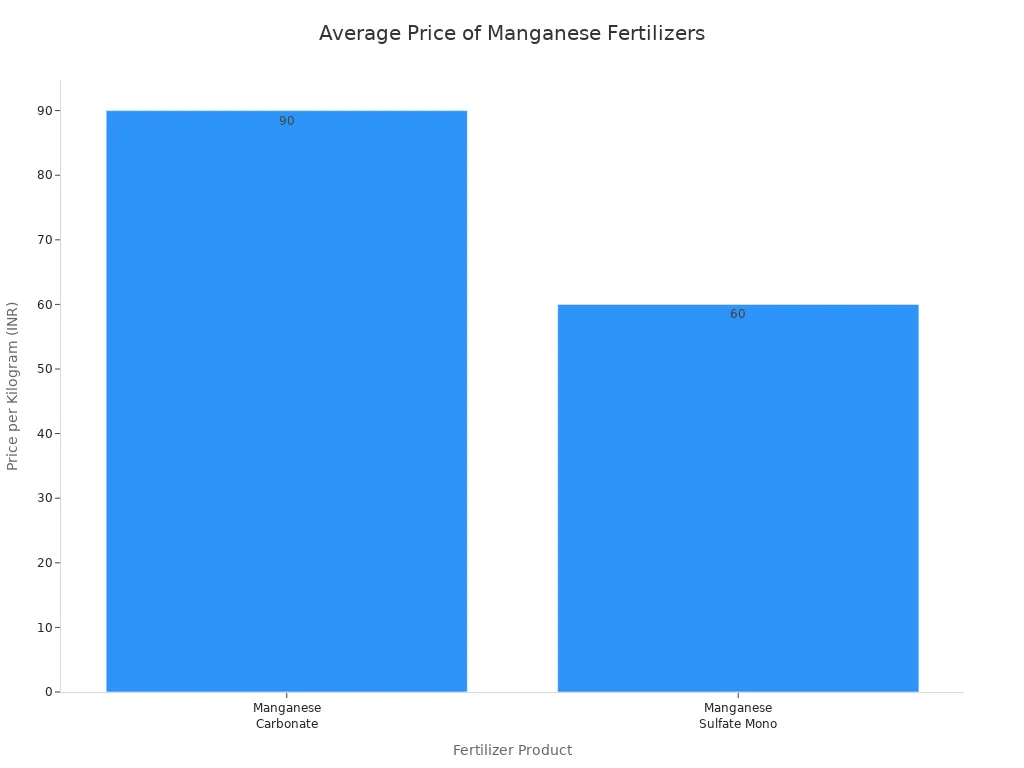
Manganese sulfate is cheaper, so most people buy it. More farmers and gardeners use manganese sulfate every year. Experts think the market will get much bigger from 2025 to 2032. If more people buy it, prices might go up later. You should watch for price changes if you use these fertilizers for a long time.
Tip: Pick manganese sulfate if you want to save money. It works well and does not cost as much.
Availability
You can find manganese sulfate in most garden and farm stores. North America and Asia-Pacific sell the most manganese sulfate. Farmers in these places use it a lot because it helps crops. Asia-Pacific is growing fast because more people need food. Governments there also help farmers.
Manganese carbonate is not as easy to find. You may have to order it from special sellers. Most stores do not have it because not many people use it.
Sometimes, it is hard to get manganese fertilizers. Manganese sulfate comes mostly from China. High energy costs and shipping problems can make it hard to find. Prices can go up or stores may run out. You should buy what you need before planting time.
Note: Check your local stores for manganese fertilizers before you start gardening. If they do not have what you need, ask if they can order it.
Summary Table
Pros and Cons
You want to pick the best fertilizer for your plants. Looking at manganese carbonate and manganese sulfate helps you choose. The table below lists the good and bad points for each one. You can use this table to help you decide what is best for your garden or farm.
Feature | Manganese Carbonate | Manganese Sulfate |
|---|---|---|
Speed of Action | Slow release | Fast acting |
Water Solubility | Low | High |
Cost | Higher | Lower |
Availability | Hard to find | Easy to find |
Soil Compatibility | Best for neutral or low pH soils | Best for high pH soils |
Application Methods | Granular, soil mix | Foliar spray, soil drench |
Risk of Toxicity | Lower (slow release) | Higher (if overused) |
Common Uses | Specialty crops, slow feeding | Most crops, quick deficiency fix |
Tip: Pick manganese sulfate if you want fast results. Choose manganese carbonate if you want it to last longer.
Manganese sulfate gives plants manganese right away. You can mix it with water and spray it on leaves. You can also add it to the soil. This helps if your plants need manganese quickly. Manganese carbonate works slower. It is good if you want manganese to stay in the soil longer. It costs more and is not easy to find.
Think about your soil before you choose. High pH soils make it hard for plants to get manganese. Manganese sulfate works better in these soils. Neutral or low pH soils can use manganese carbonate, but it does not work fast.
Safety is important too. Too much manganese can hurt your plants. Always test your soil before you add fertilizer. Wear gloves and a mask when you use manganese products.
Note: Most gardeners use manganese sulfate because it is simple, cheap, and works quickly.
Most gardeners get the best results with manganese sulfate. It gives plants manganese fast and does not cost much. To pick the right fertilizer, look at your soil and what you grow. The table below gives advice from experts:
Manganese Form | Efficiency in Agriculture | Notes |
|---|---|---|
Manganese Sulfate | Most efficient | Good for spraying on leaves; plants use it right away. |
Manganese Carbonate | Less efficient | Has less usable manganese; costs more for what you get. |
Test your soil before adding manganese to see if it is needed. Put on manganese early so plants get what they need to grow. Always use safety gear like gloves and a mask when handling manganese. Pick manganese sulfate if you want something easy and quick.
Test your soil to see if it needs manganese.
Add manganese early to help plants grow strong.
Tip: Choose the manganese fertilizer that matches your soil, crop, and how much you want to spend. Always stay safe when using manganese.
FAQ
What is the main difference between manganese carbonate and manganese sulfate?
Manganese carbonate gives manganese to plants slowly. Manganese sulfate works much faster. Manganese sulfate mixes with water very easily. You can use it when you want quick results. Manganese carbonate is better if you want a steady supply for your plants.
Can you use manganese sulfate for all types of soil?
You can use manganese sulfate in almost any soil. It helps most in soils with high pH. That is because plants get manganese quickly in these soils. Always test your soil before you add manganese. This helps you avoid problems and gives plants what they need.
How do you know if your plants need more manganese?
Your plants may have yellow leaves or brown spots. They might not grow well or look weak. These are signs your plants need more manganese. You should test your soil to make sure. Adding manganese can help your plants get healthy again.
Is manganese safe for edible plants?
You can use manganese on vegetables and fruits if you follow the label. Too much manganese can hurt your plants and make them unsafe to eat. Always measure the fertilizer and wear gloves when you use it.
Which manganese fertilizer costs less?
Manganese sulfate costs less than manganese carbonate. Most stores sell manganese sulfate because it is cheap and easy to use. If you want to save money, pick manganese sulfate for your garden or farm.
Related Products

manganese dioxide

manganese carbonate

manganese sand
Related Posts

I am Edward lee, founder of manganesesupply( btlnewmaterial) , with more than 15 years experience in manganese products R&D and international sales, I helped more than 50+ corporates and am devoted to providing solutions to clients business.