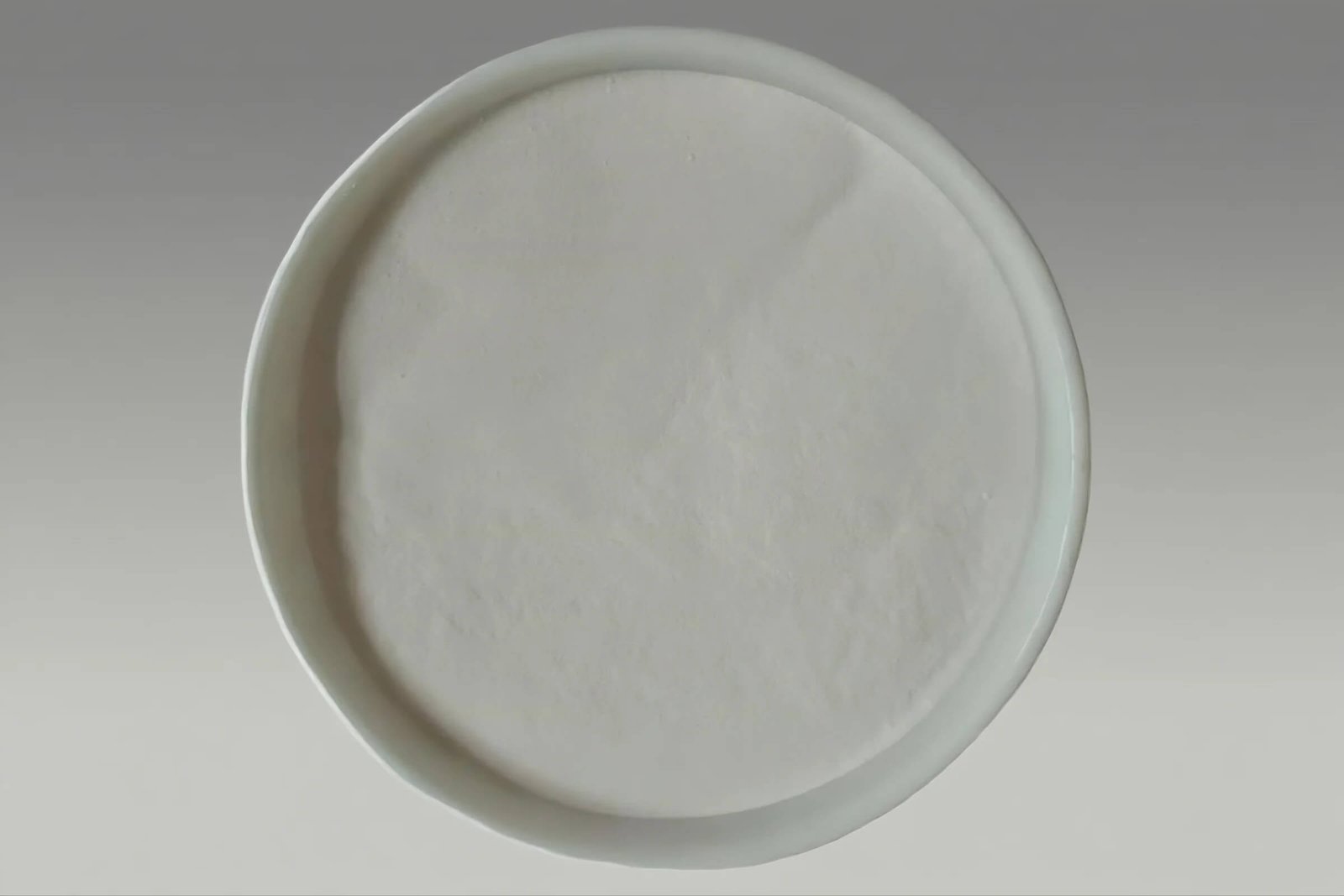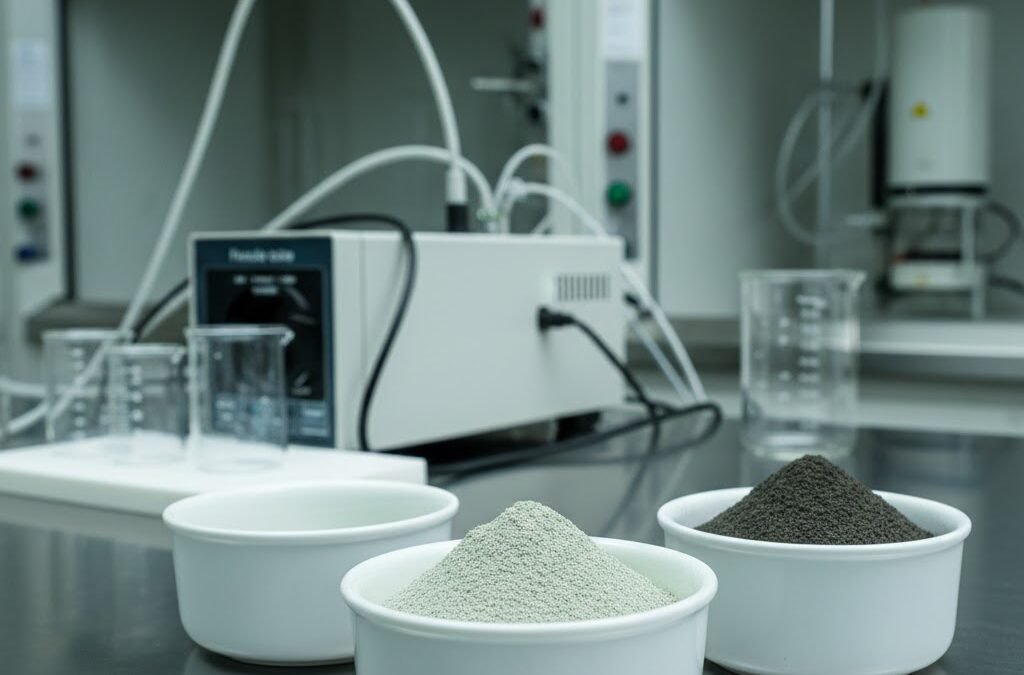
Manganese oxide (MnO), also known as manganese(II) oxide, is a divalent manganese compound widely used across ceramics, metallurgy, specialty chemicals, fertilizers, pigments, and battery precursor systems. Its industrial value comes from a combination of controlled oxidation state (Mn²⁺), thermal stability, and high reactivity under sintering or fluxing conditions. In practical applications, MnO purity levels typically range from 96.0–99.5%, with particle sizes from 5–75 µm, depending on downstream requirements. Tight control of iron (Fe), heavy metals, moisture, and loss on ignition (LOI) directly affects color consistency, melting behavior, and electrochemical or chemical performance.
1. Technical Background: What Is Manganese Oxide (MnO)?
1.1 Chemical Identity and Structure
Manganese oxide (MnO) is an inorganic binary oxide composed of manganese in the +2 oxidation state and oxygen. Its key characteristics include:
Chemical formula: MnO
Molar mass: 70.94 g/mol
Crystal structure: Rock salt (NaCl-type, cubic)
Color: Greenish to gray-black powder
Unlike higher oxides such as MnO₂ or Mn₃O₄, MnO is thermodynamically stable under reducing or neutral conditions, making it suitable for high-temperature industrial processes.
1.2 How MnO Is Produced
Industrial MnO is typically produced by thermal decomposition or reduction of higher manganese oxides or carbonate precursors:
MnCO₃ → MnO + CO₂ (calcination at 500–700 °C)
MnO₂ → MnO (reduction using carbon or hydrogen at elevated temperature)
The production route strongly influences particle morphology, residual carbon, LOI, and trace impurity levels, which are critical for downstream use.
2. Core Chemical Properties of Manganese Oxide (MnO)
2.1 Oxidation State Stability (Mn²⁺)
MnO contains manganese exclusively in the +2 oxidation state, which provides:
Predictable redox behavior
Stable ionic radius for lattice incorporation
Controlled reactivity in ceramic and metallurgical systems
This stability is why MnO is often preferred over MnO₂ when oxidation control is critical.
2.2 Thermal Behavior and Melting Characteristics
Melting point: ~1,780 °C
Thermal stability: Stable up to >1,500 °C under inert or reducing atmospheres
MnO acts as a fluxing agent in ceramics and metallurgical slags, lowering melting temperature and improving phase homogeneity.
2.3 Solubility and Reactivity
Insoluble in water
Soluble in mineral acids (HCl, H₂SO₄) forming Mn²⁺ salts
This controlled solubility allows MnO to function both as a reactive intermediate and a structural modifier in solid-state reactions.
3. Key Benefits Linking MnO Properties to Industrial Performance
3.1 Purity (%) → Process Stability and Product Consistency
Typical industrial grades range:
Industrial grade: ≥96.0% MnO
Ceramic / pigment grade: ≥98.0%
Battery / specialty chemical grade: ≥99.0–99.5%
Higher purity reduces unwanted secondary phases, color drift, and slag inclusions.
3.2 Particle Size (D50, PSD) → Reaction Kinetics
Coarse MnO (D50: 30–75 µm): controlled melting, reduced dust
Fine MnO (D50: 5–20 µm): faster solid-state reaction, higher reactivity
Particle size directly affects mixing uniformity, sintering rate, and density development.
3.3 Moisture & LOI (%) → Yield and Thermal Predictability
Moisture: typically ≤0.5%
LOI (1000 °C): ≤1.0–2.5% depending on grade
Low LOI minimizes weight loss, gas release, and structural defects during firing or calcination.
3.4 Impurity Control (Fe, Pb, As, Cu, Ni)
Typical limits for controlled MnO:
Fe: ≤300–800 ppm
Pb / As: ≤10 ppm
Cu / Ni: ≤50 ppm
Impurity control is critical for ceramic color stability, battery precursor purity, and regulatory compliance.
4. Specification Table
| Parameter | Typical Industry Range | Why It Matters |
|---|---|---|
| MnO Purity (%) | 96.0 – 99.5 | Reaction predictability |
| Particle Size D50 (µm) | 5 – 75 | Kinetics & mixing |
| Fe Content (ppm) | 300 – 800 | Color & conductivity |
| Heavy Metals (ppm) | ≤10–50 | Safety & compliance |
| Moisture (%) | ≤0.5 | Storage stability |
| LOI (%) | ≤1.0–2.5 | Yield control |
5. Industrial Applications and Performance Impact
5.1 Ceramics and Pigments
MnO functions as:
Fluxing agent
Color modifier (brown, black, purple hues)
Crystal phase stabilizer
Controlled MnO improves glaze melt uniformity and color reproducibility.
5.2 Metallurgical Fluxes and Alloy Processing
In steelmaking and non-ferrous metallurgy, MnO:
Reduces sulfur and oxygen activity
Enhances slag fluidity
Contributes manganese to alloy systems
This improves metal cleanliness and yield.
5.3 Battery Cathode Precursors
MnO is used as a chemical intermediate for:
LiMn₂O₄ spinel synthesis
NMC precursor adjustment
Low impurity MnO reduces capacity fade and cycle degradation.
5.4 Fertilizers and Specialty Chemicals
MnO serves as:
Micronutrient source after conversion
Controlled Mn²⁺ precursor
Its predictability improves nutrient bioavailability consistency.
6. Quality Control & Testing Methods
Key QC tests include:
ICP-OES / ICP-MS: Fe, Pb, As, Cu, Ni
Laser diffraction (ISO 13320): Particle size distribution
LOI testing: Thermal weight loss
Moisture analysis: Oven or Karl Fischer
Representative sampling is essential to ensure batch reliability.
7. Purchasing and Supplier Evaluation Considerations
Buyers should evaluate:
Grade differentiation (industrial vs ceramic vs battery)
Production method (carbonate calcination vs oxide reduction)
Packaging (25 kg bags, 1 MT big bags)
Storage conditions (moisture protection)
HS code consistency for customs clearance
Low-cost MnO often shows unstable LOI and high Fe contamination, increasing downstream risk.
8. FAQ
Q1: What purity of MnO is required for ceramics?
Typically ≥98.0% for color and melt stability.
Q2: Is MnO the same as MnO₂?
No. MnO is Mn²⁺, while MnO₂ is Mn⁴⁺ with different reactivity.
Q3: Why is LOI important?
High LOI causes gas release and weight loss during firing.
Q4: Can MnO be used directly in batteries?
Usually as an intermediate, not the final cathode material.
Q5: How is Fe controlled in MnO?
Through precursor selection and purification during calcination.
9. Practical Checklist for Buyers
Confirm MnO purity and oxidation state
Verify particle size suitability
Review Fe and heavy metal limits
Check LOI and moisture data
Request full COA with test methods
Evaluate production consistency across batches
Related Products

manganese dioxide

manganese carbonate

manganese sand
Related Posts

I am Edward lee, founder of manganesesupply( btlnewmaterial) , with more than 15 years experience in manganese products R&D and international sales, I helped more than 50+ corporates and am devoted to providing solutions to clients business.