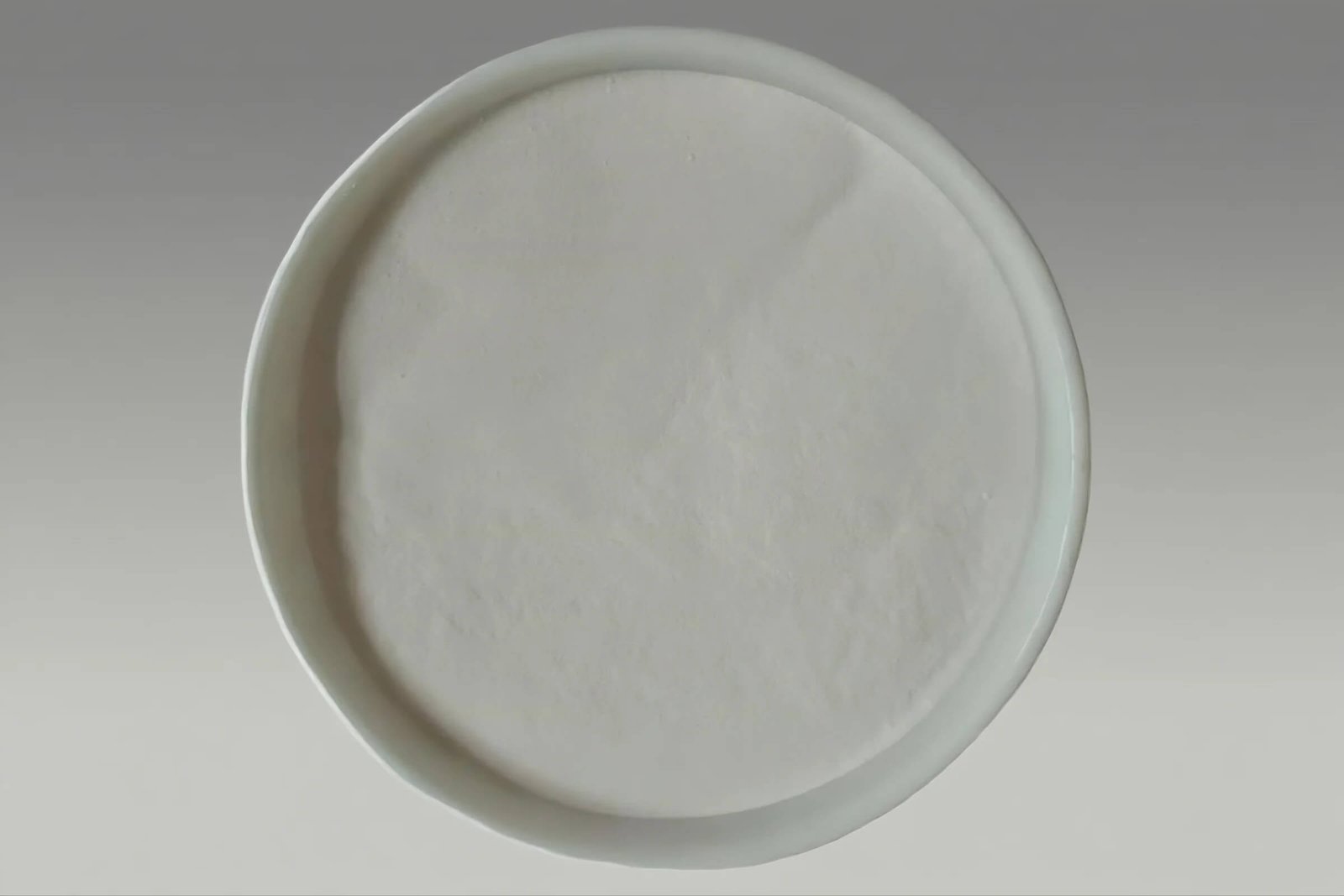
Manganese monoxide (MnO) is emerging as a critical precursor in advanced lithium-ion battery cathode formulations, particularly for high-rate and high-safety applications such as spinel LiMn₂O₄ and layered Li(NiMnCo)O₂ variants. As a lower oxidation-state manganese compound (Mn²⁺), MnO enables more controlled oxidation to Mn³⁺/Mn⁴⁺ during synthesis, which can improve phase purity, reduce defect concentrations, and enhance electrochemical performance. For battery manufacturers and materials engineers, key measurable benefits include: high chemical purity (≥ 99.0 wt%), controlled particle size (D50: 1–10 µm depending on process), and low impurity levels (Fe, Cu, Ni < 50 ppm). High-quality MnO precursors contribute to improved initial capacity (mAh g⁻¹), enhanced cycle retention (% after 500 cycles), and consistent manufacturing yields in cathode active material (CAM) production.
Technical Background
What MnO Is
Manganese monoxide (MnO) is a binary oxide of manganese in the +2 oxidation state. It appears as a green to black powder and is characterized by a rock-salt crystal structure. Unlike higher oxidation-state manganese oxides (e.g., Mn₂O₃, MnO₂), MnO is electronically and structurally suited as a precursor that can be oxidized in controlled steps during high-temperature synthesis of battery cathode materials.
Role of MnO in Cathode Synthesis
In Li-ion battery cathode chemistry, MnO serves as a stoichiometric manganese source in the preparation of:
Spinel LiMn₂O₄ (LMO) — used in high-power and safety-focused cells due to its three-dimensional lithium diffusion network.
Layered Li(NixMnyCoz)O₂ (NMC) — where Mn helps stabilize the layered structure and mitigate cation mixing.
Layered Li(NiCoMn)O₂ (NCM) with high Mn content — for enhanced thermal stability and cost advantage vs. high-Ni variants.
Quality and properties of MnO directly impact phase purity, particle morphology, defect chemistry, and electrochemical performance of final cathode materials.
Why Precursor Quality Matters
Cathode performance depends on crystallographic order, defect population, homogeneity of element distribution, and surface chemistry. Impurities such as Fe or Cu can act as electrochemically inactive sites or catalyze undesired side reactions, reducing capacity and cycle life. Particle size and distribution affect mixing uniformity, sintering behavior, and tap density, all critical for consistent electrode fabrication and cell performance.
Key Benefits of High-Quality MnO Precursors
1. Chemical Purity (%) → Structural & Electrochemical Stability
MnO Purity Range in Practice: 99.0 – 99.9 wt%
Why It Matters:
High purity minimizes foreign ions that may substitute into the cathode lattice.
Reduces parasitic reactions during high-temperature calcination.
Enhances repeatability in phase formation (e.g., consistent spinel vs layered ratios).
Mechanism:
Impurity elements such as Fe³⁺ or Ni²⁺ can occupy lattice sites incorrectly, altering the electronic structure and interfering with lithium diffusion pathways.
Impact:
Higher purity precursors lead to improved initial specific capacity (e.g., > 120 mAh g⁻¹ for LMO) and higher capacity retention after cycling.
2. Particle Size Distribution (PSD) → Mixing Uniformity & Sintering Behavior
Typical MnO Particle Metrics:
D50: 1–10 µm (application dependent)
PSD Span: narrow to moderate (10–30% span)
Why It Matters:
Particle size affects powder packing, homogeneity in slurry mixing, and reaction kinetics during calcination.
Too fine particles promote agglomeration and uncontrolled sintering; too coarse particles may lead to incomplete reaction and poor phase development.
Mechanism:
Controlled PSD ensures uniform lithium diffusion, consistent local reaction extents, and reliable densification during high-temperature processing.
Impact on KPI:
Stable electrode thickness and uniform active layer density.
Improved tappable density (g cm⁻³) in final CAM products.
3. Impurity Control (Fe, Cu, Ni, etc.) → Cycle Life & Safety
Typical Impurity Limits for Battery Grade MnO:
Fe ≤ 20–50 ppm
Cu ≤ 10–30 ppm
Ni ≤ 10–30 ppm
Other heavy metals: minimized to below regulatory or performance thresholds
Why It Matters:
Transition metal impurities can participate in undesirable redox reactions.
Elevated iron content, for instance, may catalyze electrolyte decomposition at high potentials.
Mechanism:
During thermal synthesis, impurities can segregate to grain boundaries or surface of cathode particles, altering electronic pathways and promoting side reactions.
Impact:
Lower impurity precursors correlate with longer cycle life (e.g., better capacity retention after 300–500 cycles) and lower gas generation during cycling.
Specification Table — Battery Grade MnO
| Parameter | Typical Industry Range | Why It Matters |
|---|---|---|
| Purity (MnO, wt%) | 99.0 – 99.9 | Reduces lattice defects & parasitic phases |
| Particle Size D50 (µm) | 1 – 10 | Controls PSD for uniform mixing and reaction kinetics |
| PSD Span (%) | 10 – 30 | Narrow span improves tap density & sintering control |
| Fe Content (ppm) | ≤ 20 – 50 | Minimizes inactive sites and electrolyte reactions |
| Cu Content (ppm) | ≤ 10 – 30 | Reduces conductive impurity effects |
| Ni Content (ppm) | ≤ 10 – 30 | Limits unwanted redox activity |
| Moisture (%) | ≤ 0.2 | Ensures stability during calcination & reduces hydroxide formation |
| Loss on Ignition (LOI) (%) | ≤ 0.5 | Ensures minimal absorbed water and carbonates |
Impact on Battery Performance
Initial Capacity
Precise precursor chemistry directly influences active material stoichiometry. MnO with reliable purity and PSD contributes to:
Higher theoretical vs practical capacity alignment.
Less deviation between batches in initial capacity measurements.
Example: LiMn₂O₄-based cathodes synthesized from controlled MnO precursors typically achieve >120 mAh g⁻¹ at C/10 rates, with minimized electrode polarization.
Impact on Battery Performance
Initial Capacity
Precise precursor chemistry directly influences active material stoichiometry. MnO with reliable purity and PSD contributes to:
Higher theoretical vs practical capacity alignment.
Less deviation between batches in initial capacity measurements.
Example: LiMn₂O₄-based cathodes synthesized from controlled MnO precursors typically achieve >120 mAh g⁻¹ at C/10 rates, with minimized electrode polarization.
Capacity Retention & Cycle Life Stability
Controlled impurities and consistent phase formation yield:
Improved capacity retention: >85–90% after 300 cycles in optimized systems.
Lower capacity fade rate per cycle.
Reduced internal impedance growth.
Mechanistically, cleaner crystallographic lattice and minimized secondary phases reduce mechanical stresses and structural degradation during lithiation/delithiation.
Manufacturing Yield and Batch Consistency
Highly controlled MnO precursors reduce:
Failed batches due to incomplete phase formation.
Out-of-specification CAM material requiring reprocessing.
Variability in cathode coating performance (e.g., adhesion, loading uniformity).
Quality Control & Testing Methods
Certificate of Analysis (COA) Essentials
COA for battery-grade MnO should include:
Purity by XRF or titration.
PSD metrics (D10, D50, D90) by laser diffraction.
Fe, Cu, Ni, and heavy metal content by ICP-MS/OES.
Moisture/LOI by gravimetric analysis.
Analytical Techniques
Elemental Impurities:
ICP-MS (Inductively Coupled Plasma – Mass Spectrometry) for trace metals with ppb/ppm resolution.
ICP-OES for major oxide quantification.
Particle Size:
Laser Diffraction (ISO 13320) provides PSD data including D10, D50, D90.
Chemical Purity:
XRF (X-Ray Fluorescence) or wet chemistry titration for total MnO content.
Moisture/LOI:
Thermogravimetric analysis under controlled heating.
Purchasing & Supplier Evaluation
Grade Differentiation
Industrial Grade: Used for non-battery applications; looser specs, higher impurity tolerances.
Battery Grade: Tight impurity controls, consistent PSD, comprehensive COA.
Electronic/Specialty Grade: Ultra-low impurities for high-end applications (e.g., A-space or medical).
Packaging & Logistics
Moisture-resistant packaging (multi-layer kraft bags with PE liner or sealed drums) is vital.
Desiccants may be required for long-term storage.
HS codes relevant to MnO vary by country tariff schedules — consult a customs expert to avoid classification delays.
Common Sourcing Risks
Mislabelled grade (industrial sold as battery grade).
Lack of batch COA or third-party testing.
Wide PSD variance leading to downstream inconsistencies.
FAQ
Q1: What minimum purity should MnO have for battery cathode use?
A: Generally ≥ 99.0 wt% MnO with controlled impurities (< 50 ppm) to reduce defect formation and unwanted redox activity.
Q2: Why is particle size important?
A: Particle size affects mixing uniformity, reaction completeness during calcination, and final electrode density, impacting capacity and cycle life.
Q3: What impurity levels are acceptable?
A: Fe, Cu, Ni typically controlled below 20–50 ppm, depending on end-use and risk tolerance for parasitic reactions.
Q4: How is MnO tested for trace metals?
A: Using ICP-MS/OES for precise measurement of trace and heavy metal content.
Q5: What packaging should be used?
A: Moisture-resistant packaging with desiccants to prevent hydration or surface oxidation during storage.
Q6: Can lower-grade MnO be used with purification?
A: In some cases, but purification adds cost and risk; starting with battery-grade material is preferred for consistency.
Q7: What effect does moisture content have?
A: High moisture can lead to hydroxide formation during calcination, altering final phase composition and performance.
Final Practical Checklist
☐ Verify purity ≥ 99.0 wt% and inspect COA for batch compliance.
☐ Confirm PSD (D50 value) matches process requirements.
☐ Ensure impurity levels (Fe, Cu, Ni) are within defined limits.
☐ Review moisture/LOI results.
☐ Assess packaging and storage conditions.
☐ Confirm supplier provides complete analytical data and traceability.
☐ Evaluate logistics lead times and tariff classification early.
Related Products

manganese dioxide

manganese carbonate

manganese sand
Related Posts

I am Edward lee, founder of manganesesupply( btlnewmaterial) , with more than 15 years experience in manganese products R&D and international sales, I helped more than 50+ corporates and am devoted to providing solutions to clients business.