Manganese in carbon steel significantly affects the toughness of the metal. It also plays a crucial role in preventing the metal from breaking easily. As an important alloying element, manganesein carbon steel enhances the strength and hardness of steel. Many industrial standards require a manganese-to-carbon ratio of at least 5:1 to reduce the risk of brittle failure. This is especially critical for pipes and flanges used in cold environments. While manganesein carbon steel is less critical in steels with higher carbon content, it remains essential for most common steel types. Selecting the right amount of manganesein carbon steel helps engineers ensure safety and meet performance requirements.
Key Takeaways
- Manganese makes carbon steel stronger and harder. It also makes it tougher. It does this by changing the steel’s inside structure. Manganese also removes bad oxygen and sulfur from steel.
- The right amount of manganese helps steel not break easily. It helps steel resist wear and damage from cold. But too much manganese can make steel break more easily.
- Manganese makes steel easier to cut and weld. It forms special inclusions that protect the metal. These inclusions help tools last longer.
- Manganese can help steel form a rust layer that protects it. This slows down rust in many places. But how well it works depends on the environment.
- Engineers must pick the right amount of manganese for steel. They need to balance strength, toughness, weldability, and cost for each use.
Manganese in Carbon Steel
Alloying Role
Manganese in carbon steel has many important jobs. Steelmakers add manganese to make the metal stronger and tougher. It also helps the steel last longer by making it harder to wear out. Manganese acts as a deoxidizer, which means it takes away extra oxygen from melted steel. This helps stop holes from forming and makes the steel better quality. Manganese forms manganese carbides, which make the steel harder and tougher.
- Manganese is mostly used to take out oxygen and sulfur during steelmaking, which makes steel stronger and tougher.
- It helps make the steel stronger and harder by forming stable compounds.
- Manganese lets steel get harder, so it can be used for strong buildings and bridges.
- It helps steel stretch, bend, resist scratches, handle impacts, and be easier to weld and shape.
Steelmakers use manganese to make the steel’s inside structure more even. This gives the steel better strength and makes it easier to shape. About 90% of all manganese made is used in steelmaking, showing how important it is.
Sulfur Control
Manganese in carbon steel also helps control sulfur. Sulfur can cause problems like hot-shortness, which makes steel crack when it is hot. Manganese reacts with sulfur to make manganese sulfide (MnS) inclusions. These inclusions melt at higher temperatures than iron sulfide, so they stop cracks and help the steel work better when hot. The MnS inclusions also help break chips when cutting, so the steel is easier to machine.
Manganese sticks to sulfur, which stops sulfur from hurting the steel. This chemical reaction keeps the steel strong and tough. Manganese is very important for making good carbon manganese steel products.
Note: Carbon manganese steel usually has between 1.00% and 1.65% manganese. Some standards, like ISO 4948-1 and ASTM A941, say the most manganese allowed in unalloyed steels is 1.65%. When manganese gets close to 2%, the steel is called high-strength low-alloy (HSLA) instead of carbon-manganese steel.
| Standard/Source | Manganese Content Range in Carbon-Manganese Steels |
|---|---|
| ISO 4948-1 / ASTM A941 | Maximum 1.65% Mn; minimum ~1.00% Mn for C-Mn steels |
| EN 10025 (e.g., S450) | Up to 1.80% Mn allowed |
| General Practice | 1.00% to 1.65-1.80% Mn |
| Note | Near 2% Mn = HSLA, not carbon-manganese steel |
Effects on Properties
Strength and Hardness
Manganese helps make high carbon steel and manganese steel stronger and harder. When steelmakers add manganese, the metal can handle more weight and does not wear out as fast. Manganese steel plate is used in places that need strong and tough metal, like mining tools and train tracks. High manganese steel plate can take hits and does not scratch easily, so it works well for tough jobs.
If you add more manganese to high carbon steel, the tensile strength goes up. For example, when manganese goes from 2% to 5%, the tensile strength rises by about 100 MPa. This happens because manganese changes how the metal cools and forms inside. In high manganese steel, special effects like the TRIP effect and TWIP effect help the steel get even stronger at different temperatures. At -40 °C, 26% manganese steel has a good mix of strength and stretch because of martensitic transformation. At 200 °C, 27% manganese steel gets stronger because of twinning.
Manganese steel plate also gets harder from grain refinement and solution strengthening. These changes make the steel hard but not too easy to break. High strength steel often has more manganese to get the right mechanical properties.
Ductility and Toughness
Ductility means the steel can bend or stretch without breaking. Toughness means the steel can take hits before it cracks. Manganese helps high carbon steel and manganese steel keep good ductility while getting stronger. This is important for parts that need to bend or take hits without snapping.
The table below shows how manganese changes ductility and toughness in high carbon steel:
Mn Content (%) | Tensile Strength (MPa) | Elongation (%) | Reduction of Area (%) | Microstructural Effects |
|---|---|---|---|---|
2 | Baseline | ~23.5 | 79 | Fresh martensite, ferrite/tempered martensite, reversed austenite |
4 | +~100 MPa vs 2% Mn | ~23.5 | ~77 | More reversed austenite, more twins |
5 | +~100 MPa vs 2% Mn | ~23.5 | 75 | High reversed austenite, less stable, more microcracks |
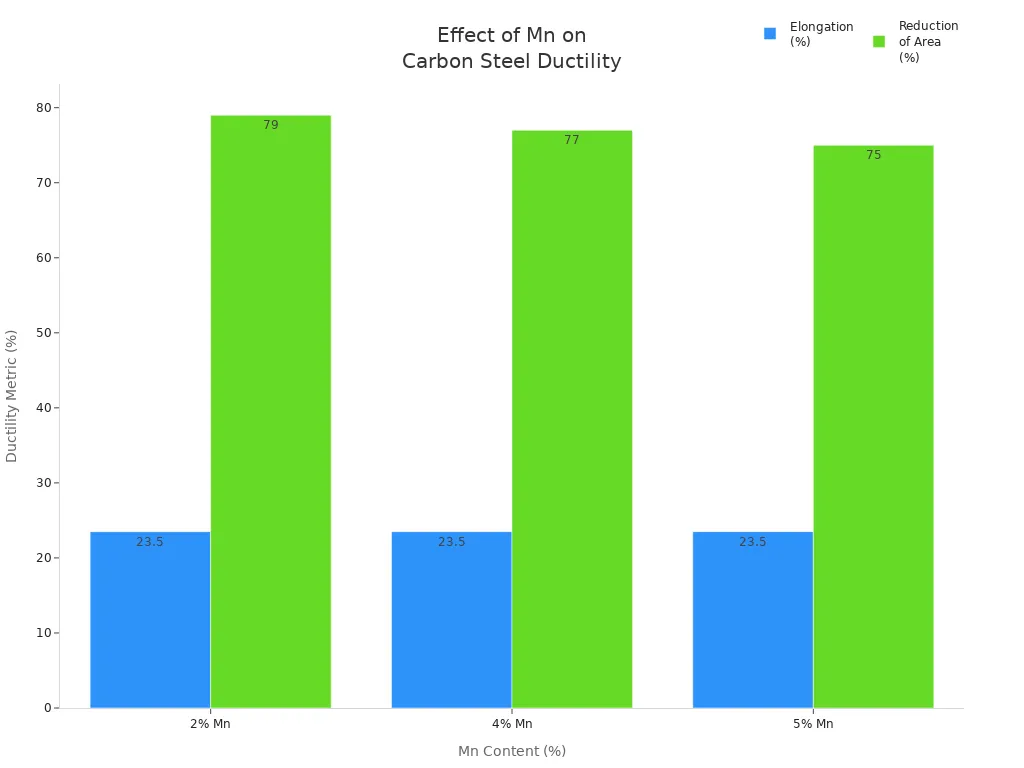
When manganese goes from 2% to 5%, tensile strength goes up, but elongation stays about the same. The reduction of area drops a little, so the steel is a bit less ductile. High manganese steel plate keeps a good mix of strength and ductility, but too much manganese can make the steel crack more easily.
Toughness, especially in cold weather, is also changed by manganese. The next chart shows how impact toughness changes as manganese goes up:
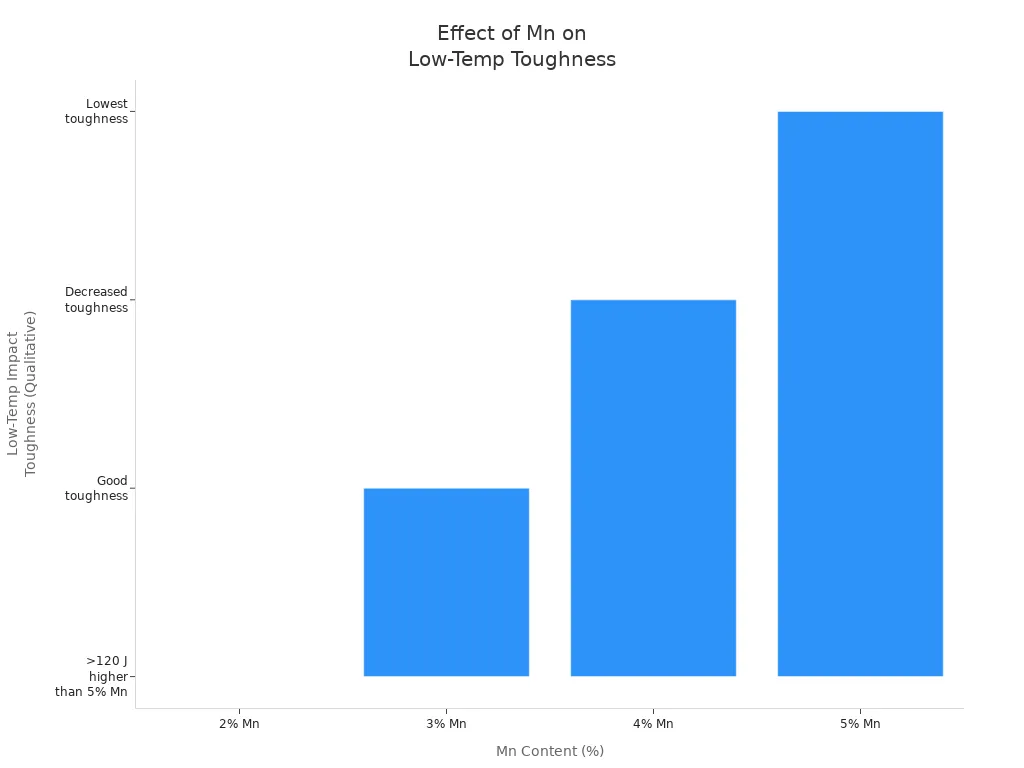
When manganese goes up, the steel cannot take as much energy before breaking. At 2% manganese, high carbon steel has high impact toughness and breaks in a ductile way. At 5% manganese, the steel is more brittle, and cracks start and spread more easily. This is because more manganese makes more reversed austenite and fresh martensite, which can cause microcracks.
Hardenability
Hardenability means how well steel can get hard when cooled fast. Manganese makes high carbon steel and manganese steel easier to harden. This lets steelmakers make thick parts that are hard all the way through, not just on the outside. Manganese steel plate uses this to get high strength and toughness in big parts.
Manganese works with other elements like chromium and molybdenum to make hardenability better. By lowering the cooling speed needed for martensite to form, manganese helps make a strong, hard inside. High manganese steel can also stay strong after heat treatment, which is good for tools and heavy machines.
But too much manganese can cause problems. If there is too much manganese, the steel can get brittle and crack more easily. The ductile-to-brittle transition temperature (DBTT) goes up with too much manganese, so the steel is less safe in cold weather. High manganese steel plate and high manganese steel need careful control of manganese levels to avoid these problems.
Note:
Using too much manganese in high carbon steel or manganese steel can cause temper brittleness, overheating problems, and welding issues. It can also lower corrosion resistance and make machining harder. Steelmakers must balance manganese content to get the best mechanical properties without making the steel too brittle.
Machinability and Weldability
Manganese in Steel and Machinability
Manganese is important for how easy it is to machine carbon steel and manganese steel. When steelmakers add manganese, it reacts with sulfur. This makes manganese sulfide (MnS) inclusions. These inclusions help break chips when cutting the steel. This gives a smoother surface and helps tools last longer. The amount and shape of MnS inclusions depend on how much manganese and sulfur are in the steel. Cooling speed also changes the inclusions. More manganese and sulfur make more MnS. Their shape changes from round to long after rolling. Long MnS inclusions can make manganese steel weaker in some directions. But they still help make machining easier.
Manganese amount controls how MnS inclusions form and spread.
MnS inclusions start round but stretch out during rolling or forging.
Long MnS inclusions can make toughness and fatigue resistance different in each direction.
By controlling manganese and sulfur, steelmakers can change MnS size and shape. This affects both how easy it is to machine and how strong the steel is.
Note: Small, evenly spread MnS inclusions help manganese steel machine better and make higher quality products.
Weldability Factors
Manganese also changes how easy it is to weld carbon steel and manganese steel. Low carbon steels with up to 0.9% manganese are usually easy to weld and do not crack much. If manganese goes up, especially to 1.0–1.7%, welding can get harder. More manganese makes steel stronger but can cause cracks when welding. Welders use low-hydrogen methods and control heat to keep welding safe.
Manganese in the weld helps remove oxygen. This makes the weld strong. But too much manganese can make hard, brittle spots that crack. In pipeline steels, less manganese (0.2–0.5%) makes smaller MnS inclusions. This lowers the chance of hydrogen cracks. Welders must watch manganese levels and use special electrodes to keep welds good in manganese steel.
Do not let manganese steel get too hot when welding or it can get brittle.
Use electrodes with nickel or molybdenum to make welds tougher.
Keep the steel cool and fix cracks before welding again.
Use special heat treatments after welding to bring back manganese steel’s properties.
Tip: To weld manganese steel well, control manganese, keep the right temperature, and pick the best electrodes.
Corrosion Resistance and Standards
Carbon Manganese Steel and Corrosion
Manganese steel changes how carbon manganese steel handles rust. In low carbon steels, manganese makes the metal harder and tougher. This helps in weathering steels. Manganese can help make a thin oxide layer on the outside. This layer acts like a shield and slows down damage from chloride ions. Chloride ions are found in salty or ocean water. Some studies say manganese oxides help form a rust layer that protects the steel. Over time, manganese ions mix with iron to make special compounds like MnFe₂O₄. These compounds help build a thick rust layer with lots of α-FeOOH. This layer keeps out water and air, so the steel lasts longer.
But manganese steel does not always stop rust better. Sometimes, manganese sulfide inclusions show up in carbon manganese steel. These inclusions can break the shield and cause small pits, especially in tough places. How manganese affects rust depends on where the steel is used. In acidic places, manganese can make rusting happen faster. In water that is not too salty, manganese steel often resists rust better because of the strong rust layer. The way manganese helps with rust is tricky and changes with different conditions.
Note: The thick rust layer in manganese steel is important for stopping rust in ocean and outdoor places. Scientists need to study more to know how manganese changes rust in all cases.
Typical Content and Grades
Carbon manganese steel usually has between 1.00% and 1.65% manganese. Some types can have up to 1.80%. The most common types of carbon manganese steel are ASTM A36, UNS G10400, and AISI/SAE 1040. These types are used in many jobs because they are strong and resist rust. The table below shows some common types:
Standard Organization | Steel Grade | Notes |
|---|---|---|
ASTM | A36 | Clearly called carbon-manganese steel |
UNS | G10400 | Very close to AISI 1040, a carbon-manganese steel |
AISI/SAE | 1040 | Common carbon-manganese steel type |
Rules do not set strict manganese limits for safety. They look at how strong and tough the steel is instead. For example, ASTM rules say the steel must be strong and tough enough. This lets steelmakers change manganese levels to get the right results. Uncoated cold rolled carbon-manganese steel and medium-carbon alloy steel also follow these rules.
Manganese steel and carbon manganese steel are important in building, pipelines, and machines. Their strength and rust resistance make them good for many uses.
Applications
Carbon-Manganese Steel Uses
Engineers and builders use carbon manganese steel in many fields. This steel is strong, tough, and does not wear out fast. Most of it is used in construction. Builders pick it for bridges and buildings. It is a top choice because it is strong and lasts a long time.
Car makers use high manganese steel and high manganese steel plate for car frames and engine parts. These parts must be strong but not too heavy. High manganese steel plate gives both strength and light weight. Shipbuilders use manganese steel and carbon manganese steel for ship hulls and other big parts. These steels do not rust easily and last longer in the ocean.
Factories use high carbon steel or high manganese steel plate for machines. These machines carry heavy loads and get hit a lot. High manganese steel and manganese steel plate help machines last longer by fighting wear. Railways and pipelines use carbon manganese steel and high manganese steel plate for tracks and pipes. Makers of big machines use high manganese steel and manganese steel plate for tough parts.
New ways to make steel help carbon manganese steel, high manganese steel, and manganese steel plate work better. These changes let people use them in more places.
Selection Considerations
Picking the right carbon manganese steel or high manganese steel plate depends on a few things. Engineers check if the steel is easy to weld and shape. Low manganese steel grades are easier to weld and form. High manganese steel and high manganese steel plate fight wear well but may need special welding.
Strength and stretch matter for building and machine parts. High manganese steel plate and manganese steel plate are harder and tougher. Heat treatment can change how hard or tough high carbon steel, manganese steel, and high manganese steel plate are. Where and how the steel is used, like temperature and pressure, also matters.
The table below shows how steel series are different:
Steel Series | Manganese Content Range | Classification | Key Mechanical Properties Impacted |
|---|---|---|---|
10XX | Up to 1.65% | Plain Carbon Steel | Hardness, ductility, weldability |
11XX | Resulfurized grades | Free Machining Steels | Machinability |
12XX | Resulfurized & rephosphorized | Best machining grades | Enhanced machinability |
15XX | >1.00% | High Manganese Carbon Steel | Hardness, work-hardening ability |
13XX | >1.60% | Alloy Steel | High manganese alloy, unique properties |
Price is important too. High manganese steel and high manganese steel plate cost more but work better for hard jobs. Manganese steel plate and high carbon steel give a good mix of price and strength. Engineers must pick the right manganese level for the job to keep things safe and strong.
Manganese makes carbon steel stronger and harder. But if there is too much, the steel can bend and break more easily. Manganese also helps take out oxygen, so the steel does not break as easily. It changes how easy the steel is to weld and cut by changing the shape of inclusions. Engineers can pick how much manganese to use for each job.
Tip: Always look at how much manganese is in the steel before you pick it. This helps you get the right strength, toughness, and welding for your project.
You can check out BTLnewmaterial Metallurgy & Special Uses of Manganese Dioxide and download tds and msds for the following applications
| Application | Description |
|---|---|
| Manganese Dioxide for Thermite Welding | Oxidizer for railway welding and thermite reactions |
| Metallurgical Grade MnO2 for Manganese Steel | Additive in specialty steel metallurgy |
| MnO2 Flux for Metal Smelting | Oxidizing flux in high purity metal refining |
| MnO2 for Welding Electrode Coatings | Arc stabilization and slag formation |
| Pyrolusite for Ferro-Manganese | Raw material for ferro alloy production |
| MnO2 for Pyrotechnics | Oxidizer for ignition systems |
| MnO2 in Analytical Metallurgy | Oxidizing reagent for laboratory analysis |
| MnO2 for Ferrite Magnets | Raw material for magnetic ceramic synthesis |
| Bulk MnO2 for Fertilizer | Micronutrient manganese source |
| MnO2 for Soil Remediation | Environmental redox treatment material |
FAQ
What does manganese do in carbon steel?
Manganese makes carbon steel stronger and harder. It helps the steel not break as easily. Manganese also helps the steel handle heat and pressure. It removes unwanted things during steelmaking.
How much manganese is usually in carbon steel?
Most carbon steel has 1.00% to 1.65% manganese. Some special types can have up to 1.80%. High-strength low-alloy steels can have even more.
Does manganese affect welding?
Yes, manganese changes how welding works. It helps by taking out oxygen from the weld. But too much manganese can make cracks or brittle welds. Welders need to control heat and use the right tools.
Can manganese improve corrosion resistance?
Manganese can help make a rust layer that protects steel. This layer can slow down rust in some places. In salty or acidic spots, manganese may not stop rust as well.
Why do engineers choose carbon-manganese steel?
Engineers pick carbon-manganese steel for its strength and toughness. It also resists wearing out. It is used in buildings, bridges, pipelines, and machines. The right amount of manganese helps keep things safe and working well.
Related Products

manganese dioxide

manganese carbonate

manganese sand
Related Posts

I am Edward lee, founder of manganesesupply( btlnewmaterial) , with more than 15 years experience in manganese products R&D and international sales, I helped more than 50+ corporates and am devoted to providing solutions to clients business.