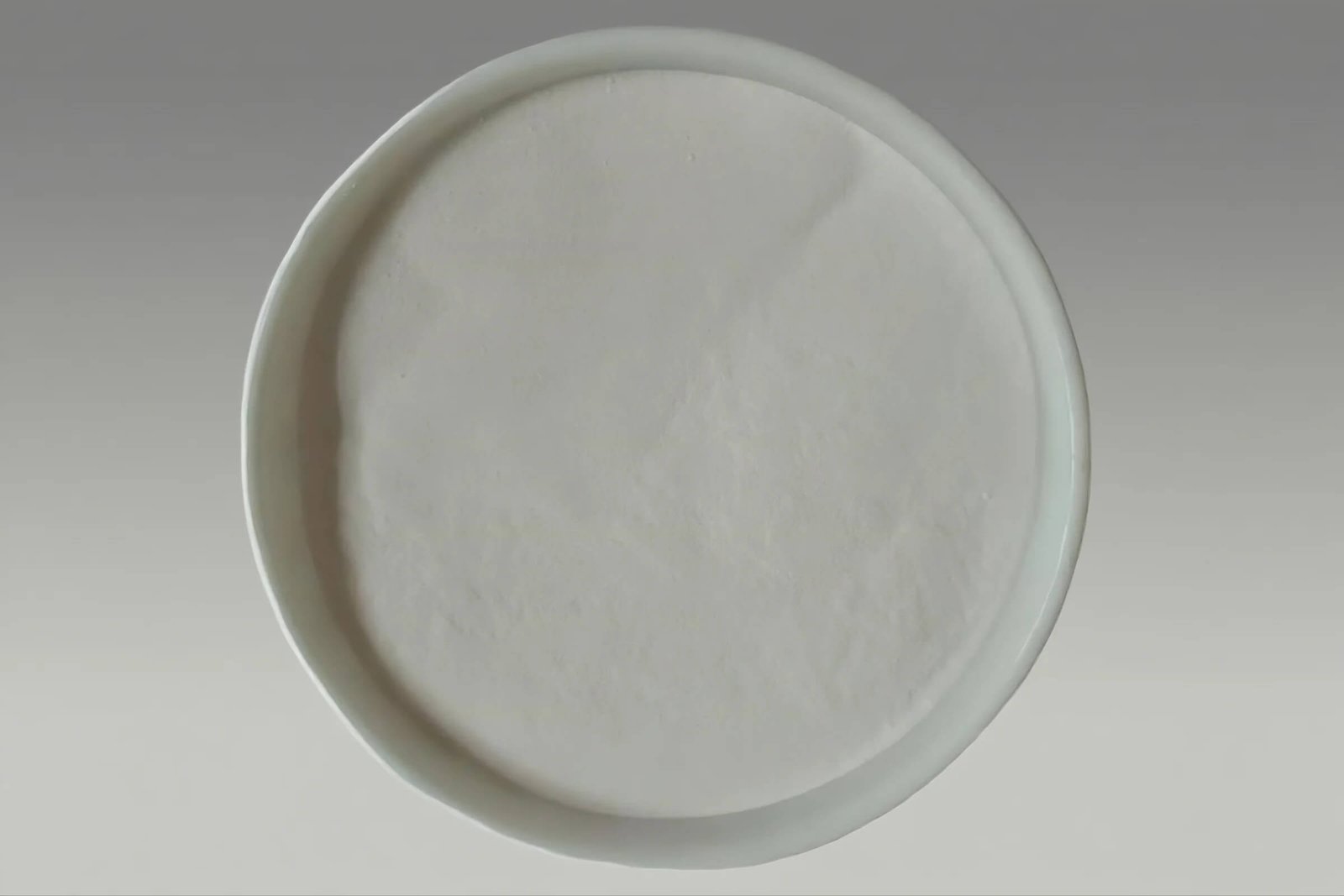
Manganese carbonate (MnCO₃) is used in batteries, ceramics, pigments, fertilizers, and metal treatments. Its quality affects how well these products work.
Testing MnCO₃ is important. High-purity, consistent material means better performance and fewer problems for users.
This article covers:
Why testing MnCO₃ matters
Key quality points to check
Common testing methods
Industry standards and reference data
How to read test results
Lab equipment and procedures
Why consistent testing matters
For manufacturers, testing shows reliability. For buyers, it helps choose a good supplier.
Key Quality Parameters of Manganese Carbonate
When evaluating MnCO₃ quality, these parameters commonly matter:
1. Manganese content (Mn %)
This is the percentage of elemental manganese present in the carbonate material. A typical specification sheet lists Mn content of around 44 % minimum for industrial grade manganese carbonate.
For example, one technical data sheet lists Mn content “44 ± 0.5 % min” for MnCO₃.
Because the molecular weight of MnCO₃ is 114.94 g/mol (Mn ~54.94 g/mol) the theoretical Mn content is about 47.8 % if all is pure MnCO₃. In practice impurities and other phases reduce that.
Thus a specification of ≥ 44 % Mn corresponds roughly to ≥ 92 % MnCO₃ by weight (i.e., “assay 92 % min” in one sheet).
2. Moisture content / free water
Moisture affects storage stability, lumping, transport weight and downstream reactivity. Although specific values vary, a good industrial grade should aim for moisture ≤ 0.5 % (or as per supplier specification). One blog-style article mentioned moisture ≤ 0.5 % being acceptable.
3. Impurity levels (trace metals, alkali/alkaline earth, chloride, sulfate)
Undesirable impurity elements such as Fe, Cu, Pb, Ni, Ca, etc can affect downstream processes (e.g., battery cathode materials, ceramics). One specification lists e.g. Fe ≤ 0.005 %, Pb ≤ 0.0015 % for high quality MnCO₃.
Another comprehensive blog states impurity thresholds such as Fe ≤ 0.005 %, Pb ≤0.002 %, Cd ≤0.001 % (by ICP-OES/AAS) for premium MnCO₃.
4. Particle size / median diameter / particle distribution
Particle size affects surface area, reactivity, downstream dispersion, sintering behaviour (in ceramics) or conversion in battery feedstock. For fine powders used in battery materials, for example, median diameter (d₅₀) ≤ 10 µm (and even ≤ 5 µm) is desired. A Japanese patent described MnCO₃ production method for battery raw-material where median diameter ≤ 10 µm, preferably 1-5 µm.
5. Bulk density / apparent density / colour consistency
Though less often specified in general specs, these physical parameters matter especially for downstream logistics and processing. For example, one method aimed at “apparent density ≈ 2.3-2.5 g/cm³” for heavy MnCO₃ intended as intermediate feed for MnO₂.
Summary Table
| Quality Parameter | Typical Acceptable Range* | Reason |
|---|---|---|
| Mn content | ≥ 44 % (approx) | Ensures sufficient active manganese for downstream uses |
| Moisture | ≤ 0.5 % | Avoids lumping, weight variation |
| Impurities (Fe, Pb, etc) | Fe ≤ 0.005 %, Pb ≤ 0.0015 % (premium) | Reduces contamination risk |
| Particle size (d₅₀) | ≤ 10 µm (fine powders) | Improves reactivity / processing |
| Bulk/apparent density | ~2.3-2.5 g/cm³ (heavy grade) | Relevant for conversion to oxides |
*Ranges depend on application (ceramics vs battery feedstock vs general chemical use).
Common Testing Methods for Manganese Carbonate
Quality testing for MnCO₃ involves a combination of chemical, physical and instrumental methods. Below are commonly used techniques, their purpose and brief description.
X-Ray Fluorescence Spectroscopy (XRF)
Purpose: Determine elemental composition (including Mn, Fe, Cu, Zn, etc) in bulk solid samples non-destructively.
Method overview: Sample is prepared in pellet or pressed form; XRF instrument measures emitted fluorescent X-rays associated with each element.
Applicability: Fast screening of major elements; sometimes used for trace impurities if instrument is sensitive enough.
Reference/Standard: There is a standard method ASTM D5059‑21 for lead and manganese in gasoline by XRF, though not specifically MnCO₃. That standard covers Mn in aviation gasoline in range 25 mg Mn/L to 250 mg Mn/L.
While ASTM D5059 is not directly for MnCO₃, the instrument principle is relevant. For MnCO₃, one study used ICP-OES and Chinese national standards (GB/T) for Mn content.
Remarks: XRF is good for routine screening but may need more accurate methods for trace impurities or exact Mn content.
Complexometric Titration (EDTA Titration)
Purpose: Determine manganese content (Mn²⁺) precisely via titration with a chelating agent.
Method overview: Sample is dissolved (e.g., acid dissolution), then titrated with standardized EDTA at pH ~10 using an appropriate indicator (e.g., Eriochrome Black T) after reduction to Mn²⁺.
One procedure: 0.5 g sample dissolved in nitric acid, then titrated with EDTA (per blog article) — thus allowing calculation of %Mn and %purity.
Applicability: Good accuracy for manganese assay; more labour-intensive than instrumental methods but widely accepted in lab.
Remarks: Needs careful sample dissolution and controls for interferences (iron, calcium, etc). For example one research states method works in presence of Al, Ca, Mg, heavy metals with proper reagents.
Atomic Absorption Spectroscopy (AAS) / Inductively Coupled Plasma Optical Emission Spectroscopy (ICP-OES)
Purpose: Determine trace impurity elements (Fe, Pb, Cu, Ni, Ca, etc) with high sensitivity.
Method overview: Solid sample is dissolved (acid digestion) and measured by AAS or ICP-OES for concentrations of specified elements.
Reference: One article used ICP-OES to measure Mn, Mg, Fe content of manganese carbonate ore (Chinese standard GB/T 1506-2016).
Another specification sheet lists trace limits determined by ICP-OES (e.g., Fe 0.005 % max; Ca 0.22 % max).
Remarks: These methods are standard for impurity measurement; require appropriate instrumentation and calibration.
Moisture Measurement (Weight Loss, Thermogravimetric)
Purpose: Determine moisture or free water content in material.
Method overview: Sample is weighed, dried at specified temperature (e.g., 105 °C) for a set period, then re-weighed. The weight loss gives moisture content. One source: moisture ≤ 0.5 % acceptable.
Remarks: Simple but important for storage/handling quality control.
Particle Size Analysis
Purpose: Determine median diameter (d₅₀) and distribution of powder particles.
Method overview: Laser diffraction analyzers, sieving (for coarse fractions), microscopy may be used. For battery-grade MnCO₃, a patent described controlling median diameter ≤ 10 µm, preferably 1-5 µm.
Remarks: Physical test; may require specialist instruments and sample preparation.
Bulk/Apparent Density Measurement
Purpose: Measure the mass per unit volume (g/cm³) of the powder in a defined container under defined fill conditions.
Method overview: Fill a graduated container/vessel with the powder under specified conditions (e.g., tapping) then weigh and compute density.
Remarks: Less critical for chemical assay, but relevant for logistics, conversion to oxide, packing.
Industrial and Laboratory Standards for MnCO₃
Quality control benefits when testing follows recognized standards. While there is no single global standard covering all aspects of manganese carbonate testing, there are national standards and commonly accepted specifications.
Chinese Standard
One recent paper refers to the Chinese national standard GB/T 1506‑2016 for manganese content analysis in manganese carbonate ores.
Similarly, other GB/T standards refer to impurity and element analysis (e.g., GB/T 6730-10-2014 for Si content, GB/T 6730-73-2024 for Fe).
If your factory is in China (Guangdong region) and you supply globally, aligning with these standards gives you good internal benchmarks.
Supplier/Technical Data Sheet Specifications
As referenced earlier, one data sheet lists: “Assay 92 % min; Mn content 44 ±0.5 % min; Ca as Ca 0.22 % max; Cu 0.003 % max; Fe 0.005 % max; Pb 0.0015 % max.”
Such data sheets represent what buyers expect for good industrial quality.
Application-Driven Specifications
For example, in battery feedstock manufacturing, the patent for MnCO₃ production states requirements: median diameter ≤ 10 µm (preferably 1-5 µm) and apparent density ~2.3-2.5 g/cm³.
These application-specific requirements emphasise how quality parameters tie into end-use performance.
How to Interpret Test Results
Receiving a Certificate of Analysis (COA) or lab report is one thing; interpreting whether the material is acceptable is another. Here are some guidelines.
1. Mn Content Check
If your lab reports Mn content = 44.3 %, then since the specification is ≥ 44 % (for example), this meets requirement. If Mn = 42 %, it fails and may indicate low assay or higher inert/impurity content.
Remember: if pure MnCO₃ should give ~47.8% Mn (theoretical). If only 44%, that implies ~92% MnCO₃ (assuming no other manganese compound).
So ensure your internal spec and your customers’ requirement are clear.
2. Impurity Levels
E.g., if Fe = 0.006 % but spec is ≤ 0.005 %, then you are out of spec. Some downstream users (e.g., battery grade) might require even lower values.
Check each impurity parameter separately – some may matter more than others depending on end-use.
3. Moisture
If moisture = 1.2% but spec required ≤ 0.5%, then you have a handling/storage issue. Moisture above spec may affect shipping weight (you pay for water), cause lumping or reaction issues.
4. Particle Size
If d₅₀ = 12 µm but spec requires ≤ 10 µm for fine grade, the material may not disperse or react properly. For standard chemical use, maybe this is acceptable; for high-grade battery feedstock, not.
5. Bulk Density
If the measured bulk density is significantly lower than expected (say measured 1.9 g/cm³ vs spec 2.3 g/cm³), that may indicate incomplete reaction, high porosity or poor compaction – may affect downstream behaviour.
Example Comparison Table
| Parameter | Spec | Lab Result | Acceptable? | Comments |
|---|---|---|---|---|
| Mn content | ≥44.0% | 44.3% | ✅ Yes | Good |
| Fe | ≤0.005% | 0.0048% | ✅ Yes | Good |
| Pb | ≤0.0015% | 0.0022% | ❌ No | Exceeds spec – issue |
| Moisture | ≤0.5% | 0.9% | ❌ No | High moisture – storage concern |
| d₅₀ particle size | ≤10 µm | 11.5 µm | ❌ No | Slightly coarse – may still be usable for general use but not high-end |
By showing such a table to your customer or internally, you add clarity.
Testing Equipment in Modern Factories
For a factory (such as your manganese carbonate production facility) to maintain quality, some investment in laboratory and quality control is essential.
In-House Laboratory
It is advantageous to have a dedicated QC laboratory with at least:
Analytical balance (±0.1 mg)
Drying oven (for moisture determination)
pH meter, suitable glassware for titration
Complexometric titration equipment (for EDTA titration)
ICP-OES or AAS (for trace impurities) or access to a high-quality third-party lab
Particle size analyser (laser diffraction) or at least sieve/optical microscopy for coarse monitoring
Bulk density measurement equipment
Third-Party Testing & Certification
Even if you have in-house QC, regular third-party certification (e.g., by SGS, Intertek, or national labs) enhances trust with international buyers. Regular batchised COAs and audits help maintain transparency.
Sample Preparation and Batch Release
Each production batch should have a representative sample taken (according to standard sampling practice).
Analytical methods should be validated: calibration, blanks, standard reference materials if available.
Retain lab records and COAs for traceability (e.g., for 3-5 years).
Have a rejection/hold policy if results are out of spec; do not ship the batch without corrective action.
Digital Documentation and Traceability
Consider QR codes/links with each shipment to the COA, test results and batch number.
Provide customers access to information (for example, downloadable PDF COA, lab signature, date).
For international trade, emphasise CE, ISO 9001 systems if applicable (though ISO covers management rather than chemical specifics).
Why Reliable Testing Ensures Product Consistency and Differentiation
From a business perspective, reliable testing is more than just QA—it is a competitive advantage.
Stability of Quality
By ensuring each batch meets or exceeds specification, you reduce customer complaints, returns, and claims. For example, a downstream user in battery manufacturing may reject material if impurity levels are too high or particle size too coarse, causing production downtime.
Premium Positioning
High-purity, well-analysed manganese carbonate can command a premium price. If you demonstrate impurity levels <0.005%, particle size controlled to ≤5 µm, moisture <0.3%, you stand out compared to generic suppliers. This is especially relevant for high-end applications (e.g., lithium-ion battery manganese feedstock).
Differentiation and Trust
Many buyers of manganese carbonate come from overseas (US, EU, Southeast Asia) and may be cautious when sourcing from new suppliers. By providing transparent test data, third-party certificates, you build trust. This aligns with your website’s goal (as a Chinese factory with global market) to highlight “custom-production + in-house QC”.
Compliance and Risk Mitigation
Traceability matters. If a buyer later experiences performance issues, having clear testing records helps you defend your product and process. It also reduces regulatory risk (for impurities, environmental waste, shipments).
Practical Example for Your Factory
Since your factory already offers customization (surface materials, custom molds etc) in other product lines (pickleball paddles etc), you can highlight in your manganese carbonate line that you provide: “Batch-by-batch COA, internal and external lab testing, customised impurity limitation to suit battery/ceramic grade”, and show sample test reports.
Conclusion
Testing methods for manganese carbonate quality are a critical part of ensuring your product meets customer expectations, international standards and downstream performance requirements. As we have seen:
Key parameters such as Mn content, moisture, impurity levels, particle size and bulk density matter.
Common testing methods include complexometric EDTA titration, ICP/AAS for impurities, XRF for elemental screening, moisture loss tests and particle size analysis.
Standards and supplier specifications provide useful benchmarks (e.g., ≥ 44 % Mn, Fe ≤ 0.005 %, d₅₀ ≤ 10 µm for fine grade).
Interpretation of test results in tabular form helps clarify compliance and issues.
Having strong in-house QC capabilities, third-party certification, traceability and clear documentation helps position your factory for global customers and higher margins.
By implementing and communicating a robust testing regime, your manganese carbonate product line can clearly differentiate itself in the marketplace—especially for buyers who value quality assurance.
Related Products

manganese dioxide

manganese carbonate

manganese sand
Related Posts

I am Edward lee, founder of manganesesupply( btlnewmaterial) , with more than 15 years experience in manganese products R&D and international sales, I helped more than 50+ corporates and am devoted to providing solutions to clients business.