Manganese Sand Filter Media For Iron and Manganese Removal
Water Treatment Challenges: Iron and Manganese in Raw Water
In groundwater and drinking water treatment projects, excessive iron (Fe²⁺) and manganese (Mn²⁺) are among the most common water quality challenges. According to WHO drinking water guidelines, the aesthetic limit for iron is 0.3 mg/L and for manganese is 0.1 mg/L. Concentrations above these levels can cause:
- Brown or black water discoloration
- Metallic taste and odor
- Pipeline scaling and clogging
- Fouling of downstream membranes and equipment
Many conventional filtration systems fail to maintain stable removal efficiency over long-term operation due to unsuitable filter media or inconsistent material quality.
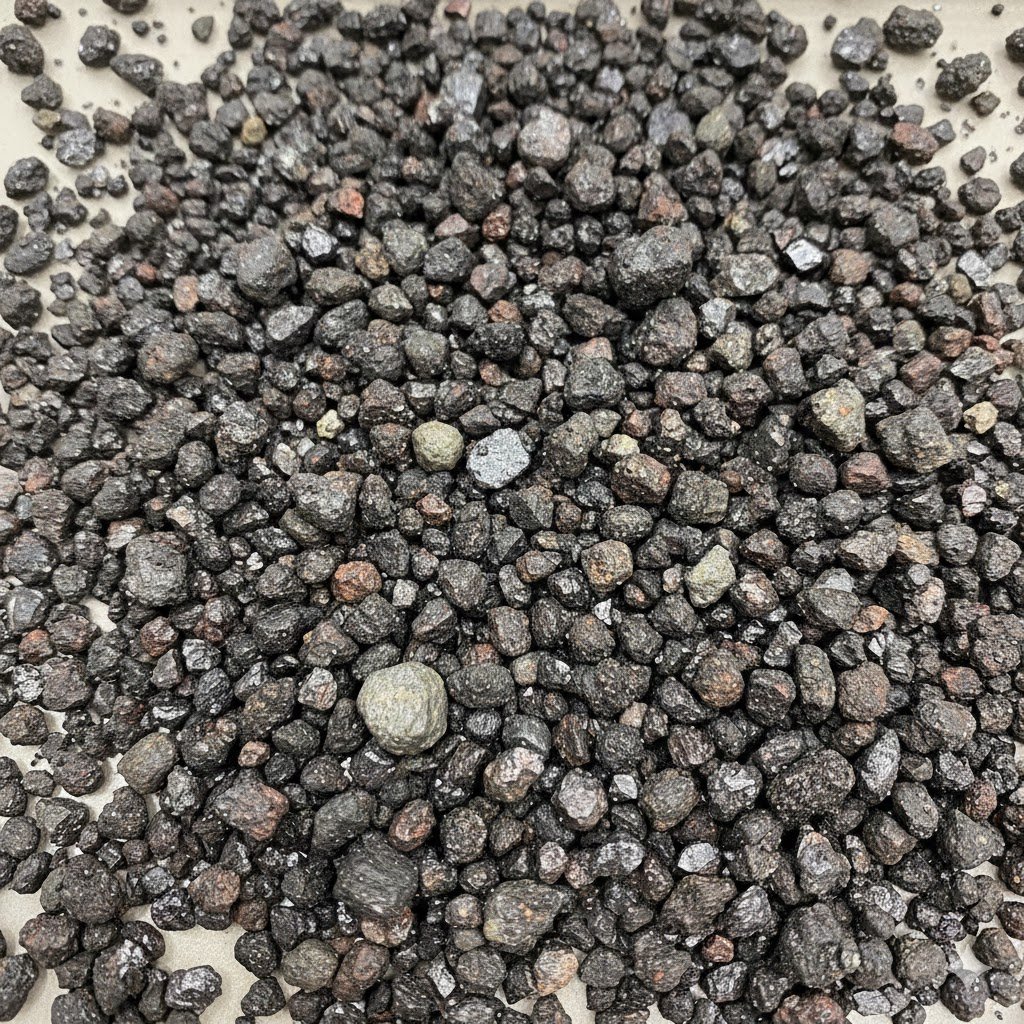
Why Manganese Sand Filter Media Is Used for Iron & Manganese Removal
Manganese sand filter media is a widely used catalytic filtration material designed specifically for iron and manganese removal in water treatment systems.
The working principle is catalytic oxidation:
- The surface of the filter media is coated with manganese dioxide (MnO₂)
- MnO₂ catalyzes the oxidation of soluble Fe²⁺ and Mn²⁺ into insoluble ferric and manganic oxides
- The oxidized particles are then physically retained within the filter bed
Compared with ordinary quartz sand, manganese sand offers:
- Higher oxidation efficiency
- Faster reaction kinetics
- More stable long-term performance
- Reduced chemical consumption in some system designs
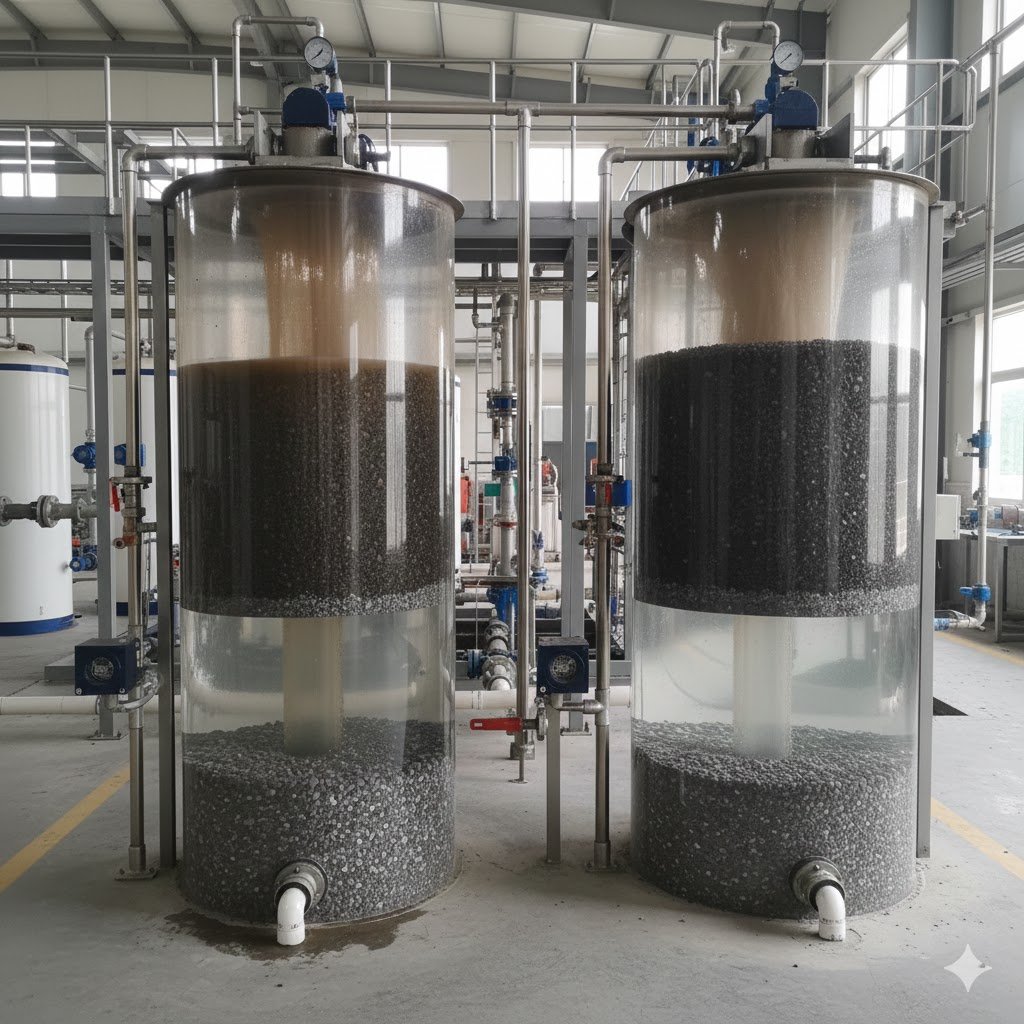
Typical Technical Specifications of Manganese Sand Filter Media
The following specifications are commonly used in groundwater and municipal water treatment projects:
| Parameter | Typical Value | Test Standard |
|---|---|---|
| MnO₂ Content | 35–45% | Chemical analysis |
| Particle Size | 0.6–1.2 mm / 1–2 mm | Sieve analysis |
| Bulk Density | 1.8–2.0 g/cm³ | ASTM C29 |
| Crushing Rate | ≤ 1.5% | GB/T 14685 |
| Porosity | ≥ 45% | Volumetric method |
| Acid Solubility | ≤ 3.5% | GB/T 5480 |
| Service Life | 3–5 years | Field operation data |
Stable MnO₂ coating content and uniform particle size distribution are critical factors affecting filtration efficiency and operational stability.
Typical Water Treatment Applications
Manganese sand filter media is widely used in various water treatment projects, including:
Municipal drinking water treatment plants
Groundwater purification systems
Well water filtration projects
Industrial water pre-treatment systems
Rural and decentralized water supply facilities
It is typically used in pressure filters, gravity filters, or dual-media filtration systems.
Operation and Maintenance Considerations
For optimal performance, typical operating parameters include:
Filtration rate: 6–10 m/h
Bed depth: 800–1200 mm
Operating pH range: 6.5–9.0
Iron concentration: up to 15 mg/L (system-dependent)
Manganese concentration: up to 5 mg/L (with proper design)
In some systems, pre-oxidation using aeration, chlorine, or potassium permanganate may be applied depending on raw water quality.
Backwashing and Maintenance Guidelines
Proper operation and maintenance are essential for long-term performance:
Backwashing is recommended when pressure drop reaches 0.05–0.07 MPa
Typical backwash intensity: 15–18 L/m²·s
Backwash duration: 8–10 minutes
Air-water combined backwashing can improve cleaning efficiency
Under normal conditions, manganese sand filter media can operate for 3 to 5 years before replacement is required.
Common Procurement Questions in Water Treatment Projects
How do I choose the correct particle size?
Particle size selection depends on filtration rate, system pressure, and raw water turbidity. 0.6–1.2 mm is commonly used for drinking water systems.
Does manganese sand require chemical regeneration?
In many groundwater systems, manganese sand can operate without continuous chemical regeneration. In high-load systems, periodic oxidation support may be required.
How does particle size uniformity affect performance?
Non-uniform grading can cause channeling, reduced contact time, and lower iron and manganese removal efficiency.
Quality Control and Supply Capability
To support water treatment projects, we focus on:
Strict control of MnO₂ coating consistency
Precise particle size grading and screening
Batch-level Certificate of Analysis (COA)
Full traceability from raw material to finished product
Customized packaging for bulk water treatment installations
Our manganese sand filter media has been supplied to international water treatment projects across municipal, industrial, and rural applications.
Project-Based Support
For water treatment projects, material selection should always be based on raw water analysis and system design parameters.
If you are evaluating manganese sand filter media for iron and manganese removal, we can provide:
Technical datasheets and test reports
Project-based particle size recommendations
Samples for pilot testing
Packaging and logistics solutions for overseas projects
Contact us to discuss your specific water treatment project requirements.
Frequently Asked Questions (FAQ)
What is manganese sand filter media used for in water treatment?
Manganese sand filter media is primarily used for the removal of dissolved iron (Fe²⁺) and manganese (Mn²⁺) from groundwater and well water through oxidation and filtration.
What iron and manganese levels can manganese sand effectively treat?
Manganese sand is commonly applied when iron concentrations are below 10 mg/L and manganese concentrations are below 2 mg/L, which covers most municipal and small industrial water treatment scenarios.
Does manganese sand require chemical regeneration?
Yes. Manganese sand usually requires periodic regeneration using oxidizing agents such as potassium permanganate (KMnO₄), chlorine, or sodium hypochlorite to restore its oxidation capacity.
What pH range is suitable for manganese sand filtration?
For optimal performance, manganese sand operates best at a pH range of 6.5–9.0. For manganese removal specifically, a pH above 7.0 is generally recommended.
What is the typical service life of manganese sand filter media?
Under proper operating conditions and correct regeneration, manganese sand filter media typically has a service life of 3–5 years in continuous water treatment systems.
Related Products

manganese dioxide

manganese carbonate

manganese sand
Related Posts