Have you seen your palm leaves turning yellow or looking frizzled? Manganese plays a key role in keeping palm trees strong and healthy. When your palm lacks manganese, you may notice slow growth and weak leaves. Manganese deficiency affects many palm trees, but you can treat it. With the right care and manganese for palm trees, your palm can recover and thrive.
Tip: Quick action helps your palm regain its green color and vitality.
Watch for yellow or frizzy new leaves. These are early signs of manganese deficiency in palms. – Keep soil pH between 5.5 and 7. This helps palms take in manganese the right way. – Use manganese sulfate in the soil or as a spray. Follow the right amounts and timing to fix the problem. – Use slow-release fertilizers with manganese every year. This stops future problems from happening. – Test soil and leaves often. This helps you find problems early and keeps palms healthy and strong.
Symptoms
Leaf Signs
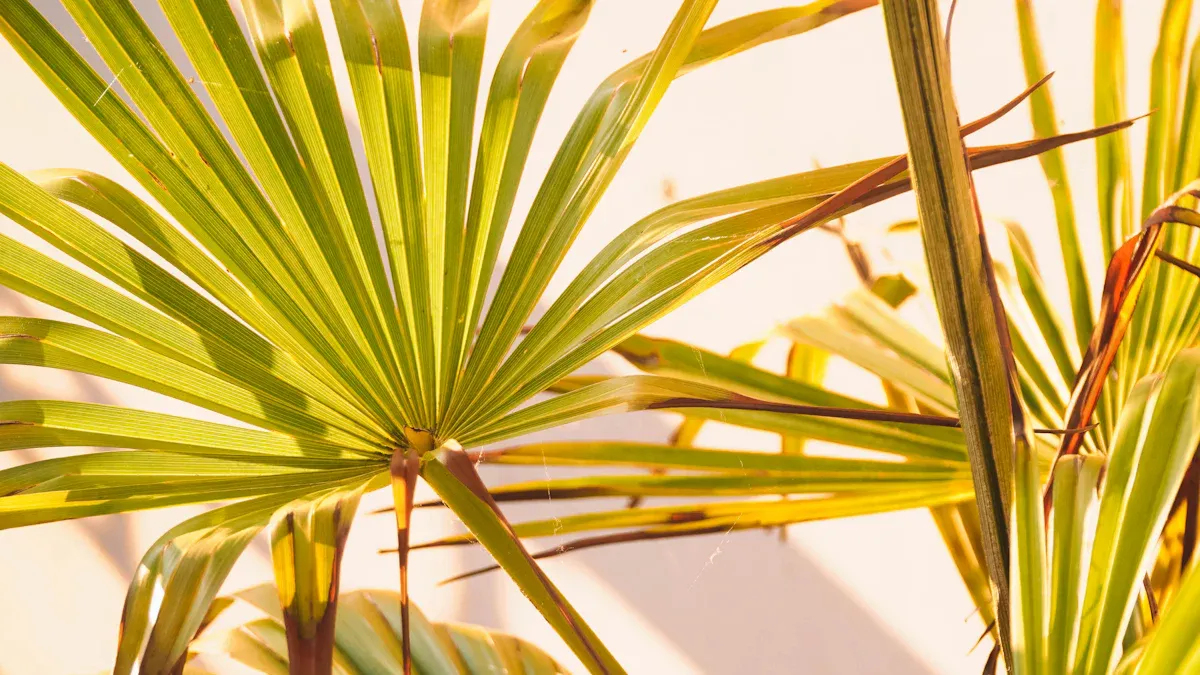
You can find palm tree problems by checking the leaves. Manganese issues show up first on new leaves. Look for these signs:
Young leaves may turn yellow between the veins.
Long brown lines can appear along the leaf.
Leaflets may curl around the middle stalk and look frizzy.
The tips of leaflets can dry out or burn, sometimes falling off and looking scorched.
The base of the leaf may die and dry up, but the tip might look better.
If it gets worse, new leaves may stop growing and look like small brown stubs.
Note: Each palm type shows different symptoms. Queen palms often have frizzy new leaves. Royal palms get small, frizzy new leaves but keep old leaves big. Coconut palms may lose leaflet tips that turn brown and fall off.
Growth Issues
Manganese is important for palm health and growth. Without it, palms have more than leaf problems. Growth slows down. New leaves get smaller and weaker. Oil palms with low manganese grow less and make fewer fruits. Date palms may have leaflets that break easily, twist, or shrivel up. Roots can get hurt over time. This makes it hard for the palm to take in water and nutrients. Photosynthesis and protein making get messed up. The palm can get weak or even die if not fixed.
Palm nutrient problems, especially with manganese, can get worse fast. Finding issues early and acting quickly helps keep your palm trees healthy.
Causes
Soil pH
Soil pH affects how much manganese your palm can use. If the soil is too alkaline, roots cannot get manganese. Adding things like magnesium limestone or magnesium carbonate makes soil more alkaline. This change lowers acidity and stops palms from using manganese. You should keep soil pH between 5.5 and 7. If pH gets higher, palms may look sick even if manganese is there.
To fix high pH, use acidic amendments. Palm growers add pine bark or compost to lower pH. These also help soil structure. Elemental sulfur works slowly but helps. Iron sulfate works faster but costs more. These changes help palms get more manganese and stay healthy.
Tip: Test your soil pH before you plant or fertilize. Fixing pH early stops problems with nutrients later.
Environmental Factors
Many things in the environment can make it hard for palms to get manganese:
Alkaline soils often cause manganese deficiency because roots cannot get the nutrient.
Hard or wet soils have less oxygen, so palms cannot absorb manganese.
Lots of rain can wash manganese out of sandy soils, especially if they do not hold nutrients well.
Waterlogged soils have little air, so manganese is harder to get.
Other nutrients like iron, calcium, and magnesium can fight with manganese, making it harder for palms to get enough.
Roots that are hurt or sick cannot take up manganese well.
Healthy roots and good drainage help palms get nutrients. Watch for changes in weather or soil that could hurt your palm’s health. Acting fast keeps your palm strong and green.
Manganese for Palm Trees
Testing Soil
Start by testing your soil before you treat your palm. Soil tests help you know if your soil is good for palm growth. These tests may not show how much manganese your palm can use. But they do tell you the soil pH. High pH can stop palms from getting manganese.
To get a good soil sample:
Dig down 4 to 6 inches under the palm’s leaves.
Get soil from a few places under the sick palms.
Mix all the soil together well.
Send about one cup of this mix to a soil lab.
Home test kits are not very good. They can be hard to use and may not show the real problem. Lab tests are better and can check for manganese. The reports might be hard to read. If you need help, ask your local extension office to explain the results.
Tip: Watch the soil pH. Keep it between 5.5 and 7 so palms can use manganese.
Application Methods
There are a few ways to give manganese to palm trees. Each way has its own good points and best uses.
Application Method | Details and Recommendations |
|---|---|
Spread manganese sulfate under the palm’s leaves. Use 8 oz to 5 lbs, depending on palm size and soil. Do this every 2-3 months. Don’t put it all in one spot. Water well after you put it down. | |
Foliar Spraying | Mix 3 lbs manganese sulfate with 100 gallons of water. Spray this on the leaves for fast results. This works best as extra help, not instead of soil feeding. |
Trunk Injection | Only try this if other ways do not work. This can hurt the trunk and let in disease. Be careful if you use this. |
Precautions | Too much manganese can cause iron problems. Only use manganese sulfate. Don’t use composted sewage or manure near palms. |
Foliar sprays work fast if your soil is too alkaline. But you should not only use sprays. Soil feeding lasts longer and helps the whole palm. For steady feeding, you can use manganese spikes or water-based fertilizers. Spikes give nutrients slowly and are easy to use. Water-based fertilizers work faster and let you control the amount.
Feature | Water-Based Micronutrient Fertilizers | |
|---|---|---|
Nutrient Release | Slow-release over weeks or months | Fast nutrient release |
Application Frequency | Not often (about twice a year) | More often (every two weeks in growing season) |
Nutrient Distribution | Can be uneven, close to where you put the spike | More even and exact application |
Micronutrient Variety | Limited, usually just main nutrients like manganese | More types of nutrients, including manganese |
Environmental Impact | Risk of runoff if not used right | Less risk if used right, but needs moist soil |
Convenience | Easy to use, already measured, but less flexible | You must measure and mix, but you can control the dose |
Efficacy for Palm Trees | Gives steady nutrients but works slower | Works faster and gives quick results |
Dosage and Timing
You need to use the right amount of manganese for palm trees. The amount depends on how big and old your palm is. For manganese sulfate, use 1/3 to 2/3 cup for every 100 square feet. For big palms, use up to 3 lbs. Another way is to use 2 tablespoons for each inch of trunk width. Always spread it out under the leaves and water it well.
For spikes, use this guide:
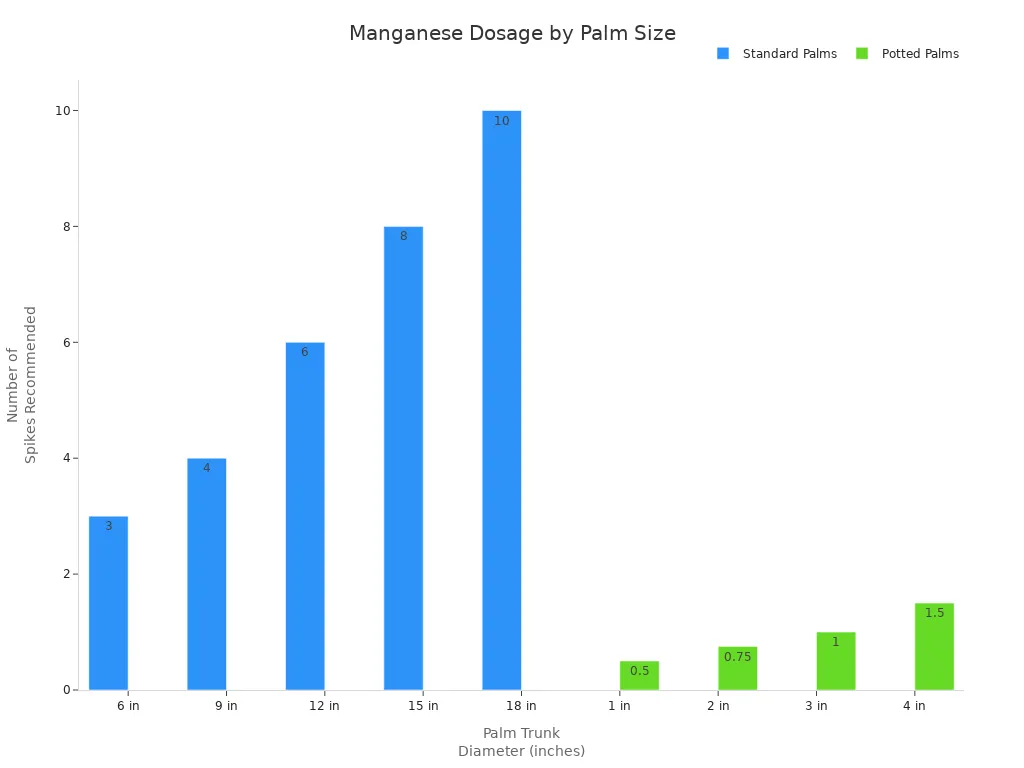
Number of Spikes Recommended | |
|---|---|
6 inches | 3 spikes |
9 inches | 4 spikes |
12 inches | 6 spikes |
15 inches | 8 spikes |
18 inches | 10 spikes |
Put spikes at the edge of the roots, 18 to 36 inches from the trunk. For small potted palms, use half or one spike, depending on the pot size.
Give manganese to palm trees during the growing season, from March to October. For best results, treat palms 1 to 3 times each year. Young palms need food every 4 to 6 weeks. Juvenile palms do best with food every 2 to 3 months. Grown palms need manganese 3 to 4 times a year. Apply in the early morning or late afternoon. This helps the palm take in nutrients and keeps it from getting stressed.
Note: Always water after you put down manganese. This helps the roots take in the nutrient and stops burning.
With the right testing, feeding, and timing, you can make your palm healthy again. Manganese for palm trees keeps leaves green, growth strong, and palms looking great.
Prevention
Annual Fertilization
You can stop manganese deficiency by using fertilizer. Pick a slow-release formula for your palm trees. This keeps your palm healthy all year long. Fertilizers should have all the nutrients your palm needs. Make sure they have micronutrients like manganese. Put fertilizer around the canopy, not just by the trunk. This helps roots take in nutrients better.
Use slow-release fertilizers so nutrients do not wash away.
Put fertilizer down in February, May, and November. In August, skip nitrogen and phosphorus. Give potassium and magnesium instead.
Spread fertilizer under the canopy for best results.
Choose products with at least 2% manganese. This helps palms grow strong and stops frizzle top.
If you get lots of rain, fertilize more often. This replaces nutrients that wash away.
Tip: Slow-release fertilizers feed your palm for up to six months. They help stop deficiency, even when it rains a lot.
Monitoring Soil
Check your soil often to find problems early. Test your soil once or twice each year. Do this before the growing season starts. Use a soil test kit to check manganese and pH. Take samples from different spots around the palm. Dig down 4 to 6 inches for each sample. This shows you how much nutrients are in your soil.
Test leaf tissue once a year to find problems early. Look for yellow or frizzy new leaves. If you see these, use a manganese supplement fast. Keep soil pH between 5.5 and 7.0. This helps your palm use the nutrients you give.
Landscapers use soil tests, visual checks, and special fertilizer plans. This keeps palms healthy.
Cut off dead or damaged fronds. This helps nutrients reach new leaves.
Use eco-friendly products. Change your care if the weather or soil changes.
Note: Checking your palm often and acting fast keeps it healthy and strong.
Spotting palm problems early helps you keep your palm healthy and strong. When you see yellow or frizzy leaves, act fast to protect your palm from lasting damage. Regular care and the right manganese treatments support steady palm growth. You can prevent future issues by checking your palm and soil often. With these steps, you will enjoy a beautiful, thriving palm in your landscape.
FAQ
What causes manganese deficiency in palm trees?
Manganese deficiency happens when soil pH is too high. Roots cannot take in nutrients well. Wet, packed, or sandy soils also make it hard for palms to get manganese.
How do I know if my palm needs manganese?
Check for yellow lines or frizzy new leaves. Brown tips on leaves are another sign. If new leaves look weak or small, your palm may need manganese. Soil and leaf tests can show if there is a problem.
Can I use regular fertilizer to fix manganese deficiency?
Regular fertilizer does not always fix manganese deficiency. You need a product with extra manganese, like manganese sulfate or micronutrient spikes. Always read the label to see if it has manganese.
How quickly will my palm recover after treatment?
New leaves may look better in a few weeks. Old leaves usually stay damaged. Giving the right care and manganese helps your palm get strong and green again.
Is manganese toxic to palm trees if I use too much?
Too much manganese can hurt your palm. You might see leaf burn or iron problems. Always use the right amount and water well after using manganese.
Related Products

manganese dioxide

manganese carbonate

manganese sand
Related posts

I am Edward lee, founder of manganesesupply( btlnewmaterial) , with more than 15 years experience in manganese products R&D and international sales, I helped more than 50+ corporates and am devoted to providing solutions to clients business.