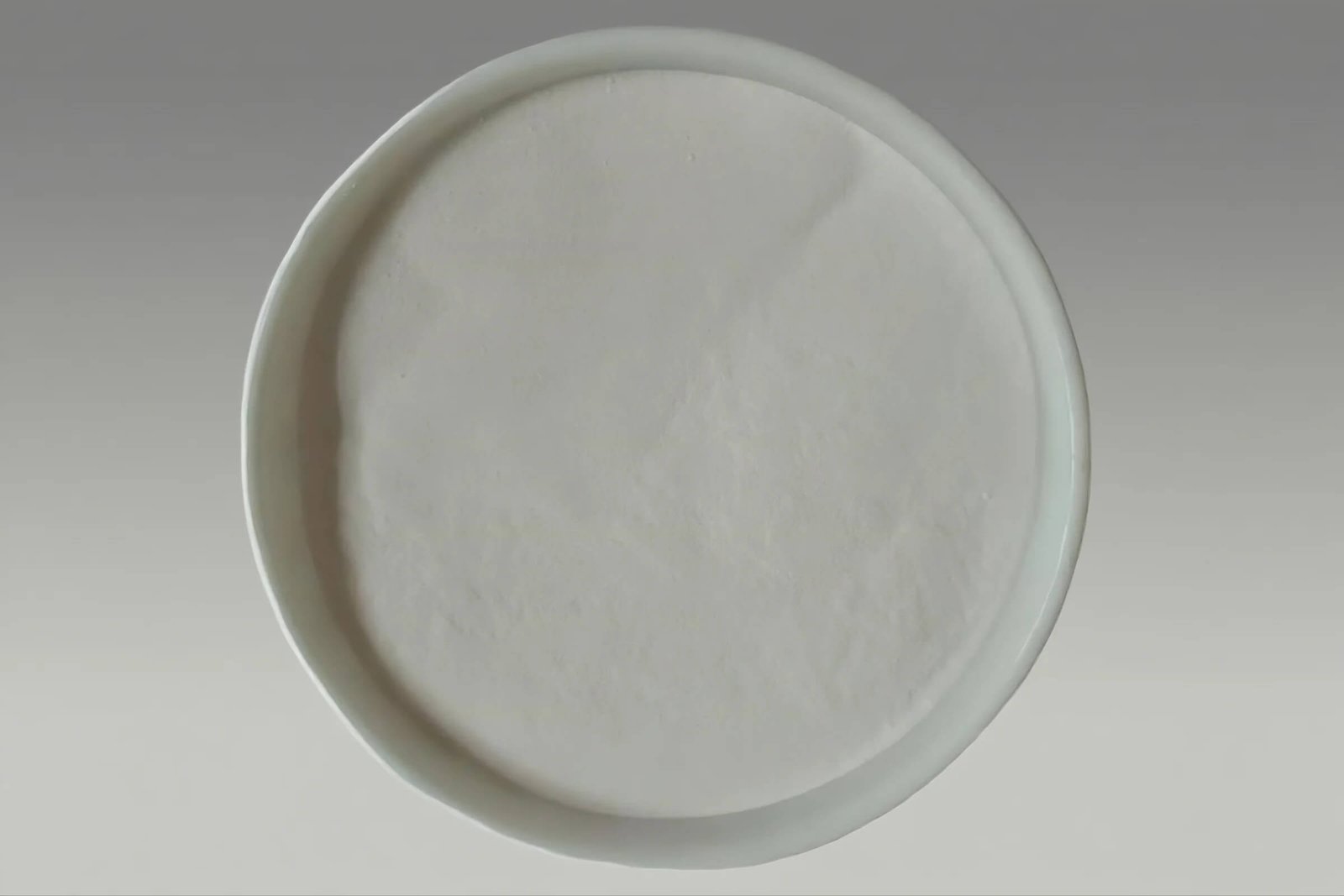
Industrial‑grade manganese monoxide (MnO) is a foundational inorganic chemical used in ceramics, glass, metallurgy, fertilizer production, and battery precursor synthesis. Its utility stems from its role as a reducing agent, fluxing component, and colorant in high‑temperature processes. For industrial applications, consistent chemical and physical properties—such as MnO content (≥ 98.0%), controlled particle size (D50 ~10–75 µm depending on application), and minimal heavy metal impurities—are essential to ensure process stability and product quality.
Selecting a qualified MnO supplier requires understanding detailed material specifications, production methods, quality control regimes, and logistics capabilities for bulk volumes (metric tons per order). This guide clarifies industry specifications, performance impacts, testing methods, and practical ordering considerations for high‑volume industrial procurement.
Technical Background
What Industrial‑Grade Manganese Monoxide Is
Manganese monoxide (MnO) is a black to dark green powder or granule consisting predominantly of divalent manganese oxide. It is typically produced by:
Thermal reduction of higher manganese oxides (e.g., MnO₂) under reducing atmospheres;
Carbothermal reduction of manganese ore with carbon at controlled temperatures.
Chemically, MnO functions as a basic oxide, participating in redox reactions as a reducing agent and influencing melt behavior in glass and ceramics.
Key Industrial Uses
Industrial‑grade MnO is primarily used as:
Fluxing agent in ceramics and glass to lower melting temperatures and modify optical properties.
Reductant in metallurgical processes, such as ferroalloy production.
Precursor in chemical synthesis, including fertilizers and specialty metal compounds.
Colorant and stabilizer in high‑temperature refractory applications.
In all uses, consistency in chemical purity, particle size distribution, and trace impurity levels directly affects process stability and final product properties.
Key Benefits
Chemical Purity (MnO %)
For industrial applications, MnO content typically ranges from 98.0% to 99.5% by weight.
Mechanism: Higher MnO reduces the need for additional raw material input and minimizes variable chemical behavior in high‑temperature processes.
Impact: Purity influences melt rheology in glass and achievable color consistency in ceramics.
Specification guide: ≥ 98.0% MnO for general industrial; ≥ 99.0% MnO for higher performance processes.
Particle Size Distribution (PSD)
Particle size affects dissolution, reaction kinetics, and packing density.
D50 (median particle diameter): Typical industrial ranges are 10–75 µm depending on use.
10–25 µm: Faster reactivity and uniform mixing in chemical synthesis.
25–75 µm: Good for fluxing and refractory formulations.
Mechanism: Finer particles increase surface area, improving reaction uniformity; coarse particles improve flow and reduce dust generation.
Moisture / Loss on Ignition (LOI)
Moisture content (and associated LOI) affects handling and process yields.
Typical moisture: ≤ 0.5%.
LOI at 1000 °C: ≤ 3.0% depending on grade and production method.
Mechanism: Lower moisture reduces bridging and caking in bulk storage, and lowers furnace energy demand.
Trace Impurities (Fe, Pb, Cu, Ni in ppm)
Impurities can disrupt color properties, catalytic behavior, and high‑temperature stability.
Fe (iron): ≤ 500 ppm
Pb (lead): ≤ 10–20 ppm
Cu (copper): ≤ 50–100 ppm
Ni (nickel): ≤ 50 ppm
Mechanism: Transition metal impurities catalyze unwanted side reactions and alter melt/redox behavior.
Industrial MnO Specification Table
| Parameter | Typical Industrial Grade Range | Why It Matters |
|---|---|---|
| MnO (%) | 98.0–99.5 | Higher MnO enhances reaction predictability and reduces extraneous inputs |
| Particle size D50 (µm) | 10–75 | Determines reactivity, mixing uniformity, and flow behavior |
| Moisture (%) | ≤ 0.5 | Controls handling and storage behavior |
| LOI (%) | ≤ 3.0 | Indicates volatile content; affects furnace energy use |
| Fe (ppm) | ≤ 500 | Reduces impact on color and redox activity |
| Pb (ppm) | ≤ 10–20 | Limits toxic heavy metal content |
| Cu (ppm) | ≤ 50–100 | Controls catalytic and color effects |
| Ni (ppm) | ≤ 50 | Influences high‑temperature performance |
Impact on Industrial Performance
Process Yield and Efficiency
High‑purity MnO improves yield by reducing slag formation and by stabilizing melt chemistry. For example, in glass fluxing, controlled MnO helps achieve target viscosity at set temperatures without over‑adjustment with other additives.
Melt Uniformity and Product Quality
Consistent particle size distribution ensures homogeneous mixing and smooth melting curves. Variability in PSD can cause local compositional inhomogeneities, resulting in surface defects or color variation.
Thermal Stability
Low LOI and moisture reduce furnace variability. Excess moisture increases energy consumption and can cause boiler plate shocks in thermal processes.
Consistency Across Batches
Tight control of chemical and physical parameters supports predictable process performance and easier quality control downstream.
Quality Control & Testing Methods
Certificate of Analysis (COA) Requirements
A complete COA should include:
MnO % (typically by X‑ray fluorescence (XRF) or titration)
PSD (D10/D50/D90 via laser diffraction per ISO 13320)
Moisture or LOI (gravimetric analysis)
Trace metals (Fe, Pb, Cu, Ni) by ICP‑OES or ICP‑MS
Recommended Testing Techniques
ICP‑OES / ICP‑MS: For elemental trace impurity quantification.
Laser particle size analysis: For accurate D50 and distribution metrics.
XRF: For bulk elemental composition.
Thermogravimetric analysis (TGA): For LOI and moisture profiling.
Sampling Best Practices
Representative sampling from bulk bags or containers should follow randomized, stratified sampling to account for segregation and layering in storage.
Purchasing & Supplier Evaluation
Grade Differentiation
Industrial grade MnO differs from battery or electronic grade primarily in allowable impurity levels and tighter physical controls. Industrial grade typically focuses on:
Cost‑performance balance
Robust supply capacity
Consistent physical and chemical properties
Packaging and Storage
Common bulk packing:
1,000 kg big bags
25 kg multi‑wall paper bags
FCL containerized loose bulk shipment
Proper storage should minimize exposure to moisture and contamination.
Logistics & HS Codes
HS code: 282010 (Manganese oxides) depending on classification.
Bulk ordering should factor lead times, customs clearance for chemical imports, and seasonal demand variation in buyer geography.
Sourcing Risks
Unverified suppliers may deliver inconsistent purity or high impurities.
Mislabeling of grade can cause off‑spec material that disrupts industrial processes.
Logistics delays for large bulk shipments can vary by port capacity and regulatory inspections.
Frequently Asked Questions
What purity level is necessary for most industrial applications?
Industrial processes commonly require 98.0–99.5% MnO, with higher purity desired where melt consistency is critical.
Which particle size range should I specify?
A typical range is 10–75 µm D50, selected based on reaction speed and handling needs.
Why is moisture content critical?
Lower moisture (<0.5%) reduces caking, improves flow, and decreases furnace startup energy.
How are trace metals controlled?
Suppliers should provide ICP data showing low levels of Fe, Pb, Ni, and Cu to avoid process interference.
What analytical methods verify MnO quality?
ICP‑OES/ICP‑MS for elemental, laser diffraction for PSD, and XRF/TGA for composition and LOI.
Practical Bulk Ordering Checklist
Confirm MnO % and impurity limits on COA.
Specify PSD range with D10/D50/D90 requirements.
Require analytical methods (ICP, laser diffraction) on COA.
Define moisture/LOI limits appropriate for process.
Clarify packaging format and bulk delivery logistics.
Verify supplier’s production and QA capacity for repeat orders.
Establish lead time expectations and contingency plans.
Align HS codes and documentation for customs clearance.
Related Products

manganese dioxide

manganese carbonate

manganese sand
Related Posts

I am Edward lee, founder of manganesesupply( btlnewmaterial) , with more than 15 years experience in manganese products R&D and international sales, I helped more than 50+ corporates and am devoted to providing solutions to clients business.