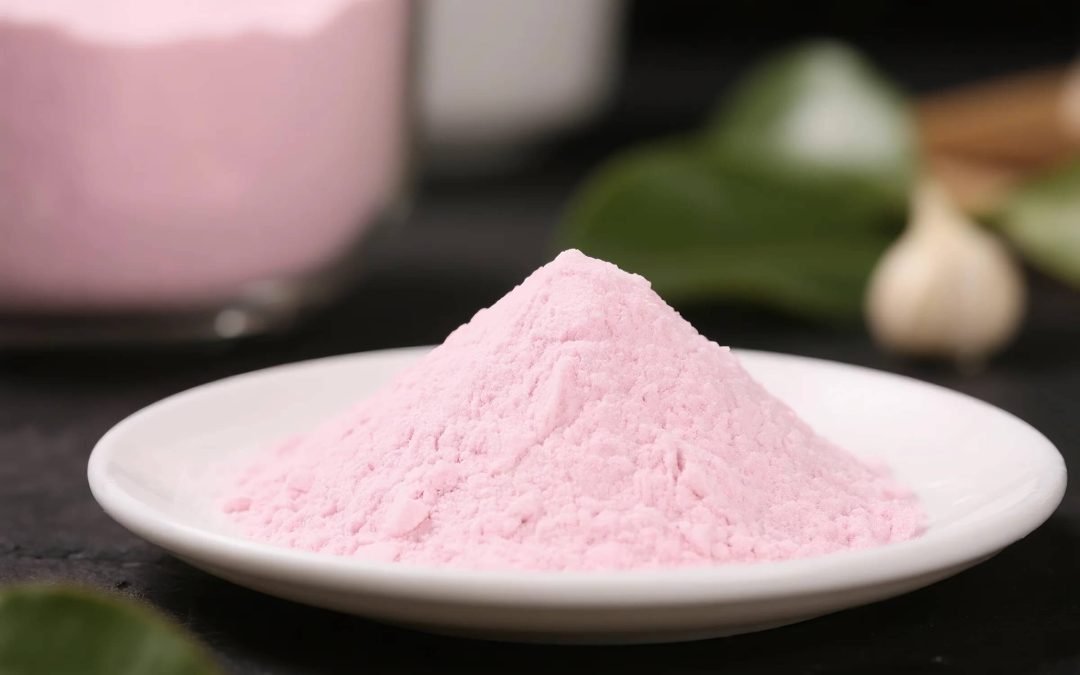
In chemistry, it’s common to convert moles into grams to know how much of a substance to measure. For manganese sulfate (MnSO₄), the molar mass is about 150.91 g/mol. That means 1.11 moles equals 167.51 grams. In this article, we’ll show the simple calculation and explain why it matters in real applications like fertilizers, animal feed, and industry.
Molar Mass of Manganese Sulfate
To convert from moles to grams, you first need to know the molar mass of the substance. The molar mass is the mass of one mole of a compound, expressed in grams per mole (g/mol).
Manganese sulfate has the formula MnSO₄. Let’s calculate its molar mass:
Manganese (Mn): 54.94 g/mol
Sulfur (S): 32.07 g/mol
Oxygen (O₄): 4 × 16.00 g/mol = 64.00 g/mol
Total molar mass of MnSO₄ = 54.94 + 32.07 + 64.00 = 150.91 g/mol
So, the manganese sulfate molar mass is about 150.91 g/mol.
Step-by-Step Calculation for 1.11 Moles
To find the grams in 1.11 moles of manganese sulfate (MnSO₄), we use the basic formula:
Write down the known values:
Number of moles = 1.11 mol
Molar mass of MnSO₄ = 150.91 g/mol
Set up the calculation:
Multiply step by step:
Total = 166.5 + 1.0101 = 167.51 g
Check units:
“mol” cancels out, leaving the unit in grams (g).
Final Answer (with correct significant figures):
167.51 g of MnSO₄ in 1.11 moles.
???? Note: If you are working with hydrated manganese sulfate (MnSO₄·H₂O, molar mass ≈ 169.02 g/mol), the same calculation gives:
That’s why it is always important to know whether the sample is anhydrous MnSO₄ or hydrated MnSO₄·H₂O, since the mass will differ.
Practical Applications of Manganese Sulfate Measurements
Knowing the exact weight of manganese sulfate for a given number of moles is not just a classroom exercise. It has real applications in agriculture, animal nutrition, and industrial processes. Below are a few examples:
1. Agriculture: Fertilizer Use
Manganese sulfate is one of the most common fertilizers used to correct manganese deficiency in soil. According to the University of Minnesota Extension, manganese deficiency often reduces crop yields in soybeans, corn, and wheat.
For example:
Recommended application rate for manganese sulfate on soybeans is about 5 to 10 pounds of Mn per acre.
Since manganese sulfate (MnSO₄·H₂O) contains about 32% manganese by weight, farmers need to calculate how many grams or kilograms to apply.
Example Calculation:
If a farmer wants to add 2.5 kg of manganese (Mn) per acre, they need:
Here, the mole-to-gram conversion helps confirm how much manganese sulfate should be measured for precise application.
2. Animal Nutrition: Feed Supplements
Manganese is an essential trace mineral for animals. It helps with bone formation, reproduction, and enzyme function.
According to the National Research Council (NRC), poultry diets often require 40 to 60 mg of manganese per kg of feed. Manganese sulfate is commonly used as the manganese source.
Example Calculation:
Suppose a feed mill produces 1,000 kg of chicken feed and needs to add 50 mg of Mn per kg:
Since MnSO₄ contains about 32% Mn, the required amount of manganese sulfate is:
This is a direct real-life example where knowing grams from moles (and molar mass) ensures animals get the right nutrition.
3. Industrial Production: Chemical Processes
In industrial chemistry, manganese sulfate is used to produce other manganese compounds, such as manganese dioxide (MnO₂) for batteries. Precise measurements are required to ensure correct chemical reactions.
Example Calculation:
If a factory needs 1 mole of Mn²⁺ ions for a reaction, they must weigh out 150.91 g of MnSO₄. If they need 10 moles, that equals 1,509.1 g (1.51 kg).
Incorrect measurements could lead to wasted raw materials or faulty products, especially in the battery industry where purity and stoichiometry are critical.

Common Questions (FAQ)
1. What is the molar mass of manganese sulfate?
The molar mass of MnSO₄ is about 150.91 g/mol.
2. How do you calculate grams from moles?
Multiply the number of moles by the molar mass (grams per mole).
3. Why is manganese sulfate important?
It is widely used in fertilizers, animal nutrition, and chemical industries. Accurate mole-to-gram conversions help ensure correct application and production.
Conclusion
The calculation shows that 1.11 moles of manganese sulfate equals 167.51 grams. This is not only a theoretical result but a practical value used by farmers, feed producers, researchers, and industrial manufacturers. Precision in mole-to-gram conversions ensures efficiency, safety, and quality across these fields.
Manganese sulfate remains an essential compound worldwide, and accurate measurement is the key to using it effectively.
Related Products

manganese dioxide

manganese carbonate

manganese sand
Related Posts

I am Edward lee, founder of manganesesupply( btlnewmaterial) , with more than 15 years experience in manganese products R&D and international sales, I helped more than 50+ corporates and am devoted to providing solutions to clients business.