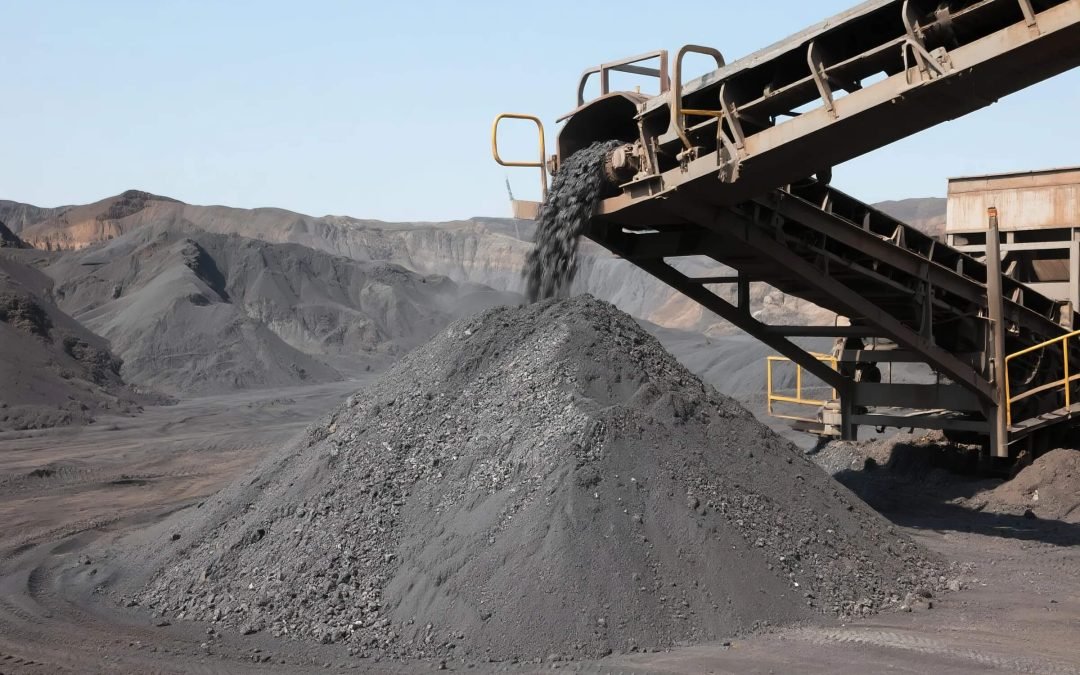
Manganese is a vital metal used in various industries, including steel production, battery manufacturing, and chemical processes. Traditionally, manganese is extracted from manganese dioxide (MnO₂) using methods like pyrometallurgical and hydrometallurgical techniques. However, these conventional methods often involve high energy consumption, toxic chemicals, and significant environmental impact. This blog explores eco-friendly alternatives for extracting manganese from MnO₂, focusing on bioleaching, green solvent leaching, and electrochemical reduction, supported by recent research and data.
1. Traditional Methods of Manganese Extraction
1.1 Pyrometallurgical Methods
Pyrometallurgical processes involve high-temperature reactions to reduce MnO₂ to manganese metal. The most common method is carbothermic reduction, where MnO₂ is heated with carbon (usually coke) at temperatures around 1000–1200°C.
Reaction:
Advantages:
High efficiency in extracting manganese.
Suitable for large-scale operations.
Disadvantages:
High energy consumption.
Release of CO₂ and other pollutants.
Requires significant capital investment.
1.2 Hydrometallurgical Methods
Hydrometallurgical methods involve leaching MnO₂ with acids to dissolve manganese, followed by precipitation or electrolysis to recover the metal.
Sulfuric Acid Leaching:
MnO₂ is leached with sulfuric acid to produce manganese sulfate.
Manganese sulfate is then subjected to electrolysis to produce manganese metal.
Advantages:
Lower temperature requirements.
Potential for selective extraction of manganese.
Disadvantages:
Use of toxic acids.
Generation of hazardous waste.
Requires careful handling and disposal of chemicals.
2. Eco-Friendly Extraction Approaches
2.1 Bioleaching
Bioleaching utilizes microorganisms to extract metals from ores. In the case of manganese, certain bacteria can oxidize Mn²⁺ to Mn³⁺ or Mn⁴⁺, facilitating the extraction of manganese from MnO₂.
Mechanism:
Microorganisms such as Acidithiobacillus ferrooxidans oxidize Mn²⁺ to higher oxidation states, solubilizing manganese.
Advantages:
Low energy consumption.
Minimal environmental impact.
Potential for extracting manganese from low-grade ores.
Disadvantages:
Slow reaction rates.
Requires careful control of environmental conditions (e.g., pH, temperature).
Case Study:
A study demonstrated that bioleaching with mixed bacterial strains achieved manganese extraction efficiencies of 70–98% from low-grade ores.
2.2 Green Solvent Leaching
Green solvent leaching involves using environmentally friendly solvents, such as organic acids, to leach manganese from MnO₂.
Organic Acid Leaching:
Organic acids like citric acid or acetic acid are used to leach manganese from MnO₂.
These acids are biodegradable and less toxic than traditional mineral acids.
Advantages:
Reduced environmental toxicity.
Potential for selective extraction of manganese.
Disadvantages:
Lower extraction efficiencies compared to traditional methods.
Requires optimization of leaching conditions.
Case Study:
Research has shown that using citric acid for leaching can achieve manganese extraction efficiencies of up to 84.57%, with minimal co-extraction of iron.
2.3 Electrochemical Reduction
Electrochemical reduction involves applying an electric current to reduce MnO₂ to manganese metal in an electrolytic cell.
Process:
MnO₂ is dissolved in an electrolyte solution, and an electric current is passed through the solution, reducing Mn²⁺ to manganese metal at the cathode.
Advantages:
High purity of extracted manganese.
Potential for integration with renewable energy sources.
Disadvantages:
Requires significant energy input.
High capital costs for electrolytic equipment.
Case Study:
3. Comparative Analysis
| Method | Energy Consumption | Environmental Impact | Extraction Efficiency | Purity of Manganese | Scalability |
|---|---|---|---|---|---|
| Pyrometallurgical | High | High (CO₂ emissions) | High | High | High |
| Hydrometallurgical | Moderate | Moderate (acid waste) | Moderate | Moderate | High |
| Bioleaching | Low | Low | 70–98% | Moderate | Moderate |
| Green Solvent Leaching | Low | Low | Up to 84.57% | Moderate | Moderate |
| Electrochemical | High | Low | High | High | Moderate |
4. Challenges and Future Perspectives
Bioleaching:
Slow reaction rates and the need for optimized conditions.
Limited scalability for large-scale operations.
Green Solvent Leaching:
Lower extraction efficiencies compared to traditional methods.
Need for further research to optimize leaching conditions.
Electrochemical Reduction:
High energy consumption and capital costs.
Potential for integration with renewable energy sources to reduce environmental impact.
Future Directions:
Development of hybrid methods combining bioleaching and electrochemical reduction.
Research into more efficient and sustainable green solvents.
Integration of renewable energy sources in electrochemical processes.
Conclusion
Eco-friendly methods for extracting manganese from manganese dioxide offer promising alternatives to traditional extraction techniques. While challenges remain in terms of efficiency and scalability, ongoing research and technological advancements continue to improve these methods. By adopting more sustainable practices, the manganese extraction industry can reduce its environmental footprint and contribute to a more sustainable future.
Related Products

manganese dioxide

manganese carbonate

manganese sand
Related Posts

I am Edward lee, founder of manganesesupply( btlnewmaterial) , with more than 15 years experience in manganese products R&D and international sales, I helped more than 50+ corporates and am devoted to providing solutions to clients business.

