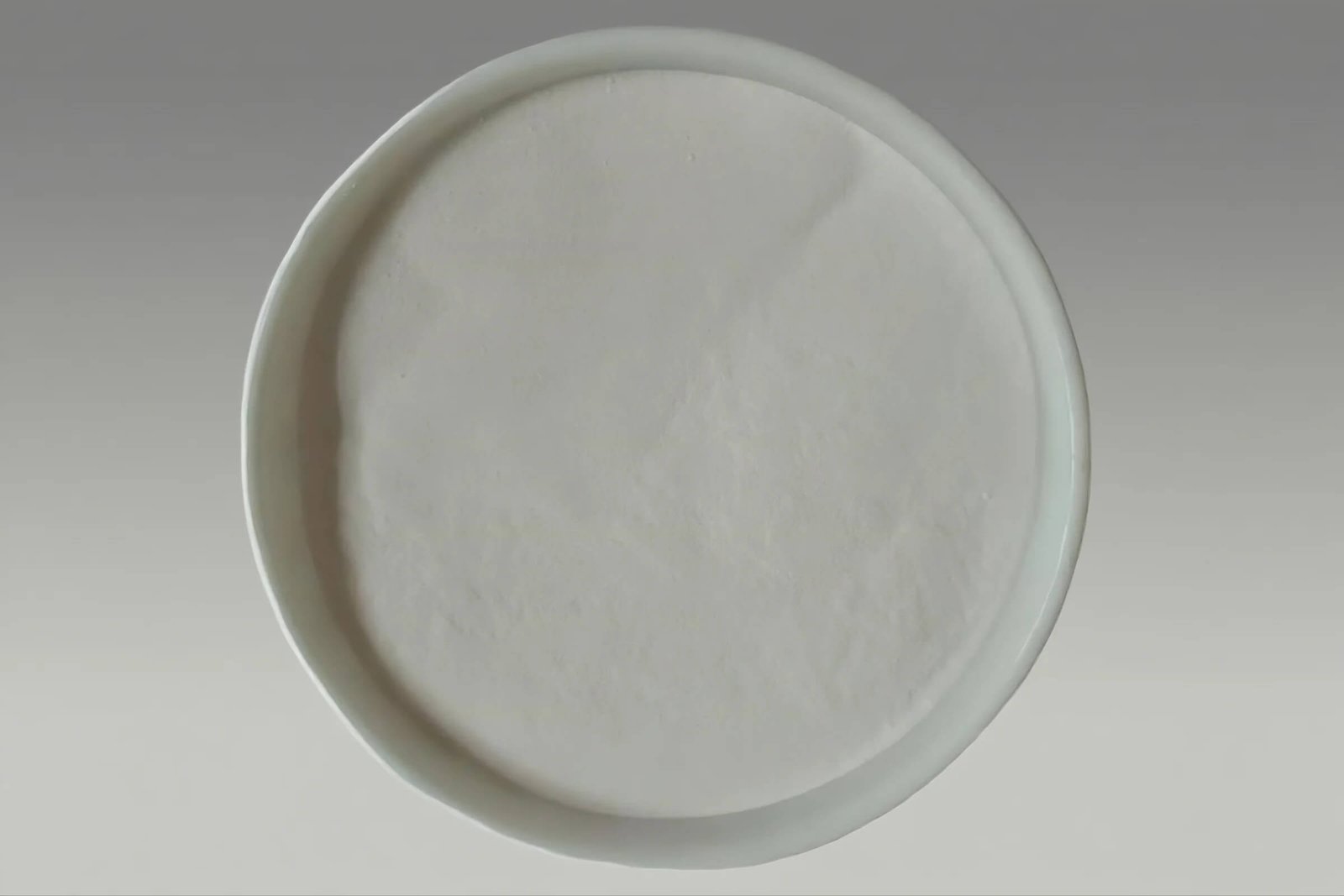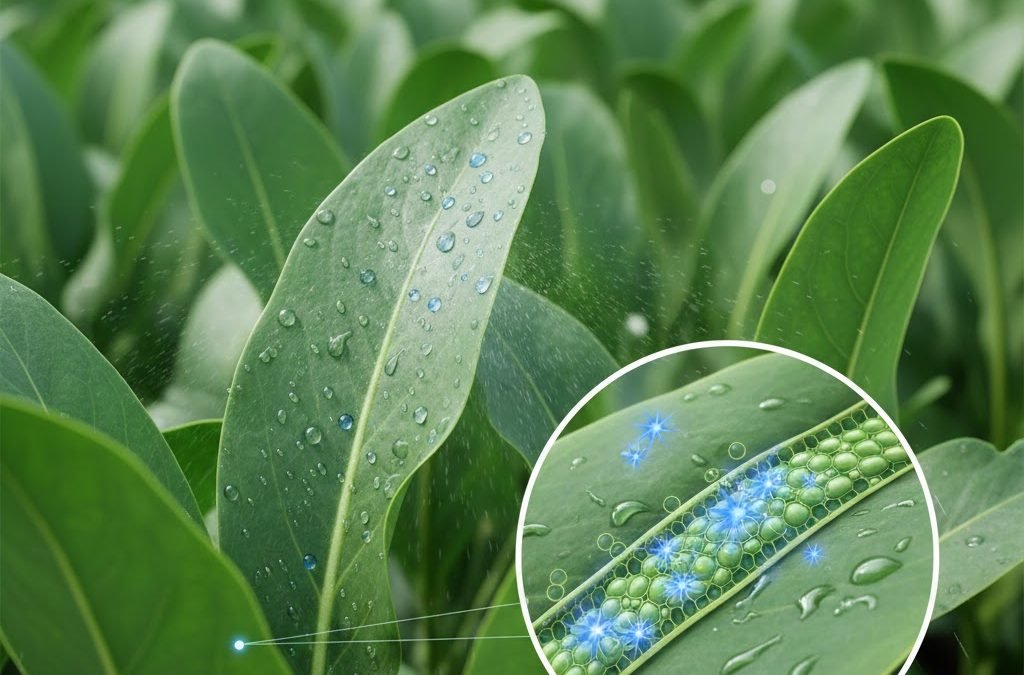
Manganese carbonate is used in foliar spray formulations as a slow-release manganese source to correct manganese deficiency in crops, especially in alkaline or calcareous soils. Compared with highly soluble manganese salts, manganese carbonate offers lower phytotoxicity risk, better leaf safety, and more controlled manganese availability when properly micronized and formulated. Typical foliar application rates range from 0.1–0.3% Mn (w/v), depending on crop type and deficiency severity. Key performance factors include particle size (D50 ≤ 5 μm), purity ≥ 98%, and low heavy metal content (Fe, Cu < 50 ppm). Correct dispersion, spray pH control, and timing are critical to achieving effective leaf uptake and avoiding nozzle blockage or sedimentation.
1. Technical Background: What Is Manganese Carbonate?
Manganese carbonate is an inorganic manganese compound containing approximately 47–48% elemental manganese (Mn) by weight. It is commonly used as:
A manganese source in fertilizers
A precursor for manganese sulfate
A micronutrient additive in agriculture
In foliar nutrition, manganese carbonate is typically applied as a suspension concentrate rather than a true solution, because of its low water solubility (~0.02 g/L at 25°C).
Why Manganese Matters in Plants
Manganese plays a critical role in:
Photosystem II (water-splitting reaction)
Chlorophyll synthesis
Enzyme activation (oxidoreductases)
Nitrogen metabolism
Deficiency often appears as interveinal chlorosis on young leaves, especially in high-pH soils.
2. Why Use Manganese Carbonate in Foliar Sprays?
Unlike manganese sulfate, manganese carbonate releases Mn²⁺ ions gradually on the leaf surface under weakly acidic conditions created by leaf exudates.
Key Advantages
Lower leaf burn risk compared to highly soluble salts
Suitable for sensitive crops (vegetables, fruit trees)
Reduced salt stress
Better compatibility with controlled-release foliar programs
However, effectiveness depends heavily on particle size control and formulation quality.
3. Key Technical Requirements for Foliar Application
3.1 Purity Level and Agricultural Safety
Typical requirement: ≥ 98% MnCO₃
Higher purity reduces the risk of unwanted ions interfering with plant metabolism.
| Impurity | Recommended Limit (ppm) | Reason |
|---|---|---|
| Iron (Fe) | ≤ 100 | Avoid leaf spotting |
| Copper (Cu) | ≤ 50 | Prevent phytotoxicity |
| Lead (Pb) | ≤ 10 | Regulatory compliance |
| Cadmium (Cd) | ≤ 5 | Food safety |
Impurity control is especially critical for leafy vegetables and fruit crops.
3.2 Particle Size and Foliar Uptake
Because manganese carbonate is insoluble, particle size determines leaf coverage and absorption efficiency.
Recommended specification:
D50: 2–5 μm
D90: ≤ 10 μm
Smaller particles:
Remain suspended longer
Improve leaf adhesion
Reduce sedimentation in spray tanks
Particles larger than 20 μm significantly increase nozzle clogging risk.
3.3 Moisture Content and Storage Stability
Typical moisture requirement:
≤ 0.5%
Excess moisture leads to:
Agglomeration
Poor dispersibility
Reduced shelf life
Dry, sealed packaging is recommended for foliar-grade manganese carbonate.
4. Recommended Specification Table (Foliar Grade)
| Parameter | Typical Foliar-Grade Range | Why It Matters |
|---|---|---|
| MnCO₃ purity (%) | ≥ 98.0 | Nutrient consistency |
| Mn content (%) | 47–48 | Dosage accuracy |
| Particle size D50 (μm) | 2–5 | Leaf adhesion |
| Particle size D90 (μm) | ≤ 10 | Nozzle safety |
| Moisture (%) | ≤ 0.5 | Flowability |
| Fe (ppm) | ≤ 100 | Leaf safety |
| Cu (ppm) | ≤ 50 | Phytotoxicity control |
| LOI (%) | ≤ 1.0 | Thermal and chemical stability |
5. How to Formulate Manganese Carbonate Foliar Sprays
5.1 Typical Spray Concentration
Manganese carbonate is applied based on elemental manganese content, not raw material weight.
Common application ranges:
Field crops: 0.1–0.2% Mn
Vegetables: 0.1–0.15% Mn
Fruit trees: 0.15–0.3% Mn
Example calculation:
Target Mn concentration: 0.15%
MnCO₃ contains ~48% Mn
Required MnCO₃ ≈ 0.31% (w/v)
5.2 Dispersion and Mixing Procedure
Recommended steps:
Fill tank to 30–40% with clean water
Adjust water pH to 5.5–6.5 if necessary
Pre-mix manganese carbonate with dispersant
Add slurry under constant agitation
Complete water volume and maintain mixing
Continuous agitation is required to prevent settling.
5.3 Spray pH Considerations
Optimal spray pH: 5.5–6.5
High pH (>7.5) reduces Mn availability
Avoid strong alkaline tank mixes
Mild acidifiers (citric acid, phosphoric acid) are commonly used.
6. Impact on Crop Performance
Properly applied manganese carbonate foliar sprays can result in:
Chlorosis reduction within 7–14 days
Improved photosynthetic efficiency
Yield increase of 5–12% in manganese-deficient fields
Better stress tolerance under high pH soil conditions
Results depend on deficiency severity and application timing.
7. Quality Control and Testing Methods
7.1 Key COA Items
MnCO₃ purity
Mn content
Particle size distribution
Moisture
Heavy metals
7.2 Common Test Methods
| Parameter | Method |
|---|---|
| Mn content | ICP-OES |
| Heavy metals | ICP-MS |
| Particle size | Laser diffraction |
| Moisture | Oven drying (105°C) |
| LOI | 950°C calcination |
Batch-to-batch consistency is critical for stable foliar performance.
8. Purchasing and Supplier Evaluation Considerations
When sourcing manganese carbonate for foliar sprays, buyers should verify:
Clear distinction between industrial grade and foliar grade
Availability of micronized powder
Stable dispersion performance
Full COA with trace metals data
Packaging suitable for moisture control
Low-grade materials often fail due to coarse particles or excessive impurities.
9. FAQ: Manganese Carbonate in Foliar Sprays
Q1: Can manganese carbonate fully replace manganese sulfate in foliar sprays?
A: No. It provides slower manganese release and is better suited for preventive or mild deficiency correction.
Q2: What particle size is required for foliar use?
A: D50 between 2–5 μm is generally recommended.
Q3: Is manganese carbonate soluble in water?
A: No. It must be applied as a suspension with proper agitation.
Q4: Why is heavy metal control important?
A: Excess Fe or Cu can cause leaf spotting and crop damage.
Q5: How often should foliar sprays be applied?
A: Typically every 10–14 days during active growth if deficiency persists.
Q6: Can it be mixed with other micronutrients?
A: Yes, but compatibility testing is required.
10. Practical Checklist for Agronomists and Buyers
Verify MnCO₃ purity ≥ 98%
Confirm micronized particle size (≤ 10 μm D90)
Check COA for heavy metal limits
Control spray pH between 5.5–6.5
Maintain continuous agitation during spraying
Apply during cool hours (morning or late afternoon)
Related Products

manganese dioxide

manganese carbonate

manganese sand
Related Posts

I am Edward lee, founder of manganesesupply( btlnewmaterial) , with more than 15 years experience in manganese products R&D and international sales, I helped more than 50+ corporates and am devoted to providing solutions to clients business.