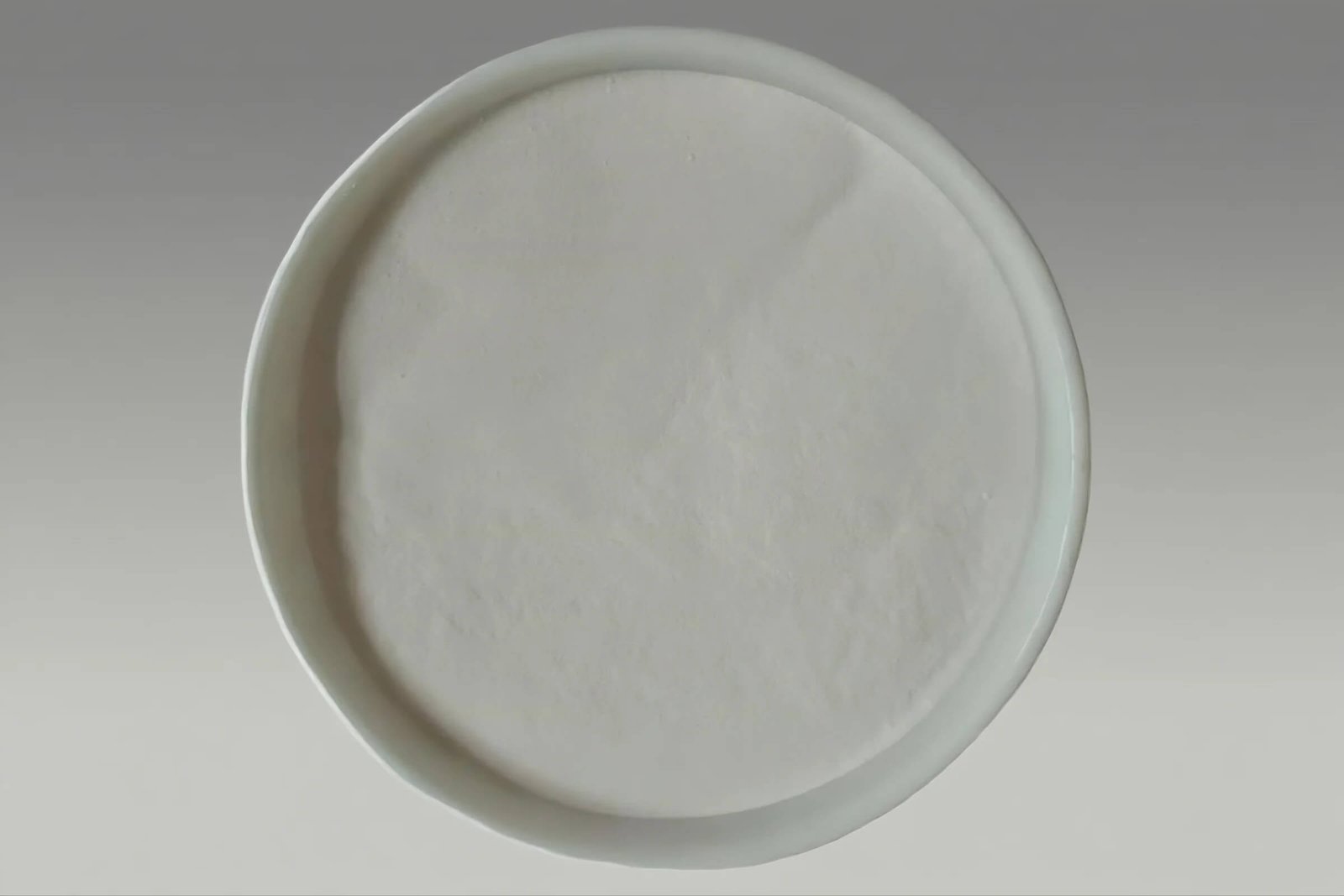
Selecting reliable MnO suppliers is a critical decision for manufacturers of high-end battery cathode precursors. Manganese(II) oxide (MnO) is not a finished cathode material, but its purity, particle size distribution, and impurity control directly influence precursor yield, phase stability, and downstream electrochemical performance. Inconsistent MnO quality can lead to elevated Fe or Ni contamination (≥50 ppm), unstable calcination behavior, or batch-to-batch variability that reduces capacity retention and increases rejection rates. This article explains how to technically evaluate MnO suppliers using measurable criteria—purity ≥99.0%, D50 control between 1–10 µm, LOI ≤0.5%, and trace metals at ppm levels—so procurement and QA teams can minimize risk and ensure stable battery precursor production.
1. Technical Background: MnO in Battery Precursor Manufacturing
1.1 What MnO Is and Why It Is Used
Manganese(II) oxide (MnO) is a divalent manganese compound commonly used as a precursor or intermediate in the synthesis of:
Lithium manganese oxide (LMO)
NMC and NCA cathode precursors
Specialty Mn-based dopants for cathode stabilization
In precursor production, MnO typically undergoes solid-state or wet chemical reactions, followed by oxidation and lithiation during calcination at 700–900 °C.
1.2 Why MnO Quality Affects Cathode Performance
Unlike finished cathode materials, MnO quality issues are often amplified downstream:
Impurities such as Fe, Cu, or Ni can catalyze side reactions during calcination
Poor particle size control reduces reaction uniformity
High LOI leads to mass loss and unstable stoichiometry
For high-end battery applications, MnO must be treated as a functional raw material, not a commodity oxide.
2. Key Quality Parameters When Evaluating MnO Suppliers
2.1 Purity (%) and Phase Composition
Typical requirement (battery precursor grade):
MnO purity: ≥99.0%
Mn content: ≥77.4 wt% (theoretical Mn in MnO)
Why it matters:
Lower purity MnO often contains Mn₃O₄ or Mn₂O₃ phases, which alter oxidation kinetics and require higher calcination energy to achieve uniform lithiation.
2.2 Particle Size Distribution (PSD)
Typical target ranges:
D50: 1–10 µm
D90: ≤25 µm
Mechanism:
Fine and narrow PSD improves:
Solid-state diffusion during calcination
Mixing homogeneity with Li₂CO₃ or LiOH
Tap density consistency in precursor powders
MnO suppliers unable to control milling and classification often show large batch-to-batch PSD drift, impacting precursor density and yield.
2.3 Moisture and Loss on Ignition (LOI)
Typical limits:
Moisture: ≤0.3%
LOI (950 °C): ≤0.5%
Why it matters:
High LOI indicates residual carbonates or hydroxides, which cause:
Gas release during calcination
Microcracking in precursor particles
Unstable weight control in batch reactors
2.4 Impurity Control (ppm-Level)
For high-end battery precursors, impurity thresholds are significantly tighter than industrial MnO.
| Element | Typical Limit (ppm) | Risk |
|---|---|---|
| Fe | ≤30–50 | Accelerates electrolyte decomposition |
| Cu | ≤10 | Promotes micro-shorts |
| Ni | ≤20 | Alters cathode stoichiometry |
| Pb | ≤10 | Regulatory and safety risk |
| As | ≤5 | Toxicity and compliance |
Consistent MnO suppliers invest in raw ore selection and purification, not just final milling.
3. Specification Table
| Parameter | Battery Precursor Grade Range | Why It Matters |
|---|---|---|
| MnO purity (%) | ≥99.0 | Phase stability during calcination |
| Mn content (%) | ≥77.0 | Stoichiometric accuracy |
| D50 particle size (µm) | 1–10 | Reaction kinetics, density |
| D90 (µm) | ≤25 | Mixing and sintering uniformity |
| Fe (ppm) | ≤30–50 | Cycle life stability |
| Cu (ppm) | ≤10 | Safety and defect risk |
| Moisture (%) | ≤0.3 | Shelf life, handling |
| LOI (%) | ≤0.5 | Yield and mass balance |
4. Impact on Battery Precursor Performance (KPIs)
4.1 Manufacturing Yield
High-quality MnO can improve precursor yield by 2–5%, mainly by reducing:
Agglomeration during calcination
Off-spec density batches
4.2 Electrochemical Performance
Indirect but measurable effects include:
+1–3% initial capacity retention (through impurity control)
Improved cycle stability in Mn-rich cathodes
Reduced formation of resistive surface films
4.3 Batch-to-Batch Consistency
Stable MnO suppliers demonstrate:
PSD CV <10%
Mn content deviation ≤±0.2%
Trace metal drift ≤±5 ppm across lots
5. Quality Control and Testing Methods
5.1 Certificate of Analysis (COA) Review
A valid COA from MnO suppliers should include:
MnO purity and Mn%
Full impurity panel (not only Fe)
PSD method and instrument
LOI test temperature
5.2 Analytical Techniques
ICP-OES / ICP-MS: elemental impurities
(ASTM E1479, ISO 11885)Laser diffraction PSD: ISO 13320
LOI: gravimetric at 950 °C
Moisture: oven or Karl Fischer (if required)
5.3 Sampling Representativeness
For bulk MnO:
Minimum 5–7 incremental samples per lot
Avoid top-layer-only sampling
Retain reference samples for ≥6 months
6. Purchasing and Supplier Evaluation Considerations
6.1 Grade Differentiation
Not all MnO is suitable for battery use.
Industrial grade: loose impurity control
Battery precursor grade: controlled PSD + low trace metals
Electronic grade: even tighter limits, higher cost
Procurement teams should clearly specify “battery precursor grade MnO” in contracts.
6.2 Packaging and Storage
Recommended:
25 kg PE-lined bags or 1 MT big bags
Moisture barrier inner liner
Storage below 30 °C, RH <60%
6.3 Logistics and HS Code
HS Code: 282590 (commonly used)
Avoid mixed-oxide declarations
Ensure consistency between COA and customs documents
6.4 Common Sourcing Risks
Rebranded metallurgical MnO
Incomplete impurity disclosure
PSD measured after sieving, not milling
COA copied across batches
Evaluating MnO suppliers requires process transparency, not just paperwork.
7. FAQ: MnO for Battery Precursors
Q1: What MnO purity is required for high-end battery precursors?
≥99.0% is typically required.
Q2: Why is Fe content so critical?
Fe accelerates electrolyte oxidation and degrades cycle life.
Q3: Is finer MnO always better?
No. D50 below 1 µm increases dusting and handling risk.
Q4: Can industrial MnO be upgraded for battery use?
Rarely. Impurity control must be built into production.
Q5: How often should MnO suppliers be audited?
At least once every 12–18 months for high-volume users.
8. Final Practical Checklist for Procurement & QA
☐ Specify MnO purity ≥99.0%
☐ Define PSD target (D50 + D90)
☐ Set impurity limits in ppm
☐ Require full COA for every batch
☐ Verify test methods (ICP, ISO 13320)
☐ Retain reference samples
☐ Audit MnO suppliers’ production process
Related Posts

I am Edward lee, founder of manganesesupply( btlnewmaterial) , with more than 15 years experience in manganese products R&D and international sales, I helped more than 50+ corporates and am devoted to providing solutions to clients business.