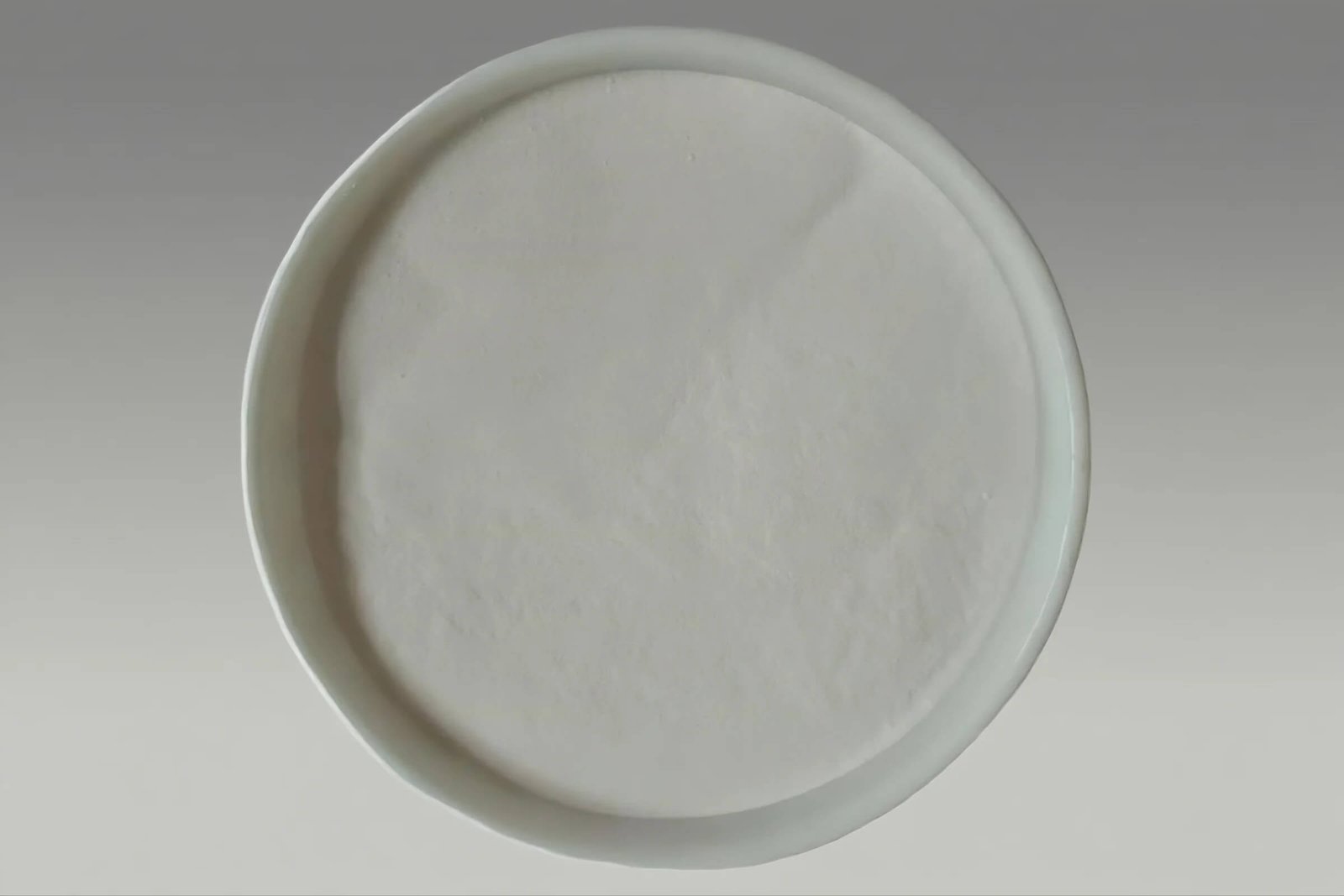
When sourcing high-purity manganese monoxide (MnO) powder with a particle size <250 µm, technical buyers must evaluate suppliers on a combination of measurable criteria: chemical purity and impurity limits (ppm), particle size distribution (PSD), manufacturing process controls, quality testing and traceability, and logistics compliance. Because MnO performance in downstream applications — including ceramic, battery precursor, and specialty chemical uses — is closely tied to compositional and physical consistency, choosing a manufacturer with rigorous analytical standards and transparent documentation is essential. Key metrics to assess include purity ≥98.0–99.9%, Fe and heavy metals controlled to low ppm levels, PSD D50 consistently <250 µm with tight distribution, and robust quality control across batches.
1. Battery Cathode Precursor Applications
Typical Uses
Lithium manganese oxide (LMO) synthesis
NMC / LMFP precursor formulations
Specialty manganese-based cathode research materials
Key Specification Expectations
| Parameter | Typical Requirement | Technical Impact |
|---|---|---|
| MnO Purity | ≥99.0–99.9% | Ensures predictable stoichiometry in cathode synthesis |
| Particle Size (D50) | 5–50 µm (often <45 µm) | Improves solid-state reaction kinetics |
| Fe Content | ≤50 ppm | Reduces parasitic reactions and capacity fade |
| Cu / Ni / Pb | ≤10 ppm | Prevents electrochemical side reactions |
| Moisture | ≤0.1% | Avoids hydrolysis during calcination |
| PSD Consistency | Tight D10–D90 | Improves batch-to-batch cathode uniformity |
Why These Parameters Matter
High purity directly correlates with initial discharge capacity and cycle stability
Excess Fe or Cu acts as redox-active contaminants, accelerating electrolyte decomposition
Fine, uniform PSD lowers calcination temperature requirements and improves phase homogeneity
In battery applications, MnO is often treated as a functional precursor, not a commodity oxide.
2. Ceramic Pigments & Technical Ceramics
Typical Uses
Brown, black, and spinel pigments
Structural ceramics and electronic ceramics
Glaze and body coloration
Key Specification Expectations
| Parameter | Typical Requirement | Technical Impact |
|---|---|---|
| MnO Purity | ≥98.0–99.0% | Color stability and sintering consistency |
| Particle Size (D50) | 10–150 µm (≤250 µm max) | Controls dispersion and firing behavior |
| Fe Content | ≤200 ppm | Prevents unintended color shifts |
| Si / Al | Controlled | Avoids glassy phase formation |
| LOI | Stable, low variation | Predictable firing shrinkage |
Why These Parameters Matter
Particle size affects glaze melt behavior and pigment dispersion
Impurity oxides alter color tone and thermal expansion
Consistent LOI ensures repeatable kiln results
For ceramics, MnO is both a colorant and a flux modifier, making impurity control critical.
3. Paint Driers & Coating Additives
Typical Uses
Alkyd resin driers
Catalytic oxidation systems
Specialty coating formulations
Key Specification Expectations
| Parameter | Typical Requirement | Technical Impact |
|---|---|---|
| MnO Purity | ≥99.0% | Predictable catalytic activity |
| Particle Size | <250 µm (often milled further in-house) | Dispersion efficiency |
| Fe / Cu | ≤100 ppm | Avoids premature curing or gelation |
| Moisture | ≤0.2% | Prevents storage instability |
| PSD Uniformity | Moderate | Consistent catalytic behavior |
Why These Parameters Matter
Trace metals strongly influence oxidation rate
Moisture can destabilize drier concentrates
Overly fine powders may cause dusting but not performance gains
In coatings, MnO acts as a reaction-rate modifier, not a structural material.
4. Metallurgical Fluxes & Alloy Processing
Typical Uses
Steel and ferroalloy fluxes
Deoxidation and slag chemistry adjustment
Key Specification Expectations
| Parameter | Typical Requirement | Technical Impact |
|---|---|---|
| MnO Purity | ≥97.0–98.5% | Cost–performance balance |
| Particle Size | 75–250 µm | Controlled melting behavior |
| Fe Content | Application-dependent | Often tolerated at higher levels |
| Moisture | ≤0.3% | Prevents spattering during charging |
| PSD Control | Broad acceptable range | Flow and handling efficiency |
Why These Parameters Matter
Particle size affects dissolution rate in molten systems
Moisture directly impacts safety during furnace charging
Higher impurity tolerance allows more flexible sourcing
Metallurgy prioritizes process robustness and cost efficiency over ultra-high purity.
5. Specialty Chemical Formulations
Typical Uses
Laboratory reagents
Catalysts
Intermediate chemical synthesis
Key Specification Expectations
| Parameter | Typical Requirement | Technical Impact |
|---|---|---|
| MnO Purity | ≥99.5% | Reaction selectivity |
| Particle Size | Application-specific | Reaction surface control |
| Heavy Metals | ≤10 ppm total | Avoids catalytic poisoning |
| Documentation | Full traceability | Regulatory and QA compliance |
Why These Parameters Matter
Minor impurities can dramatically change reaction pathways
Traceability is often required for regulated end uses
Cross-Industry Comparison Summary
| Industry | Purity Sensitivity | PSD Sensitivity | Impurity Sensitivity | Cost Sensitivity |
|---|---|---|---|---|
| Battery Materials | Very High | Very High | Very High | Medium |
| Ceramics | Medium | Medium | Medium | Medium |
| Paint Driers | High | Low–Medium | High | Medium |
| Metallurgy | Low–Medium | Low | Low | High |
| Specialty Chemicals | Very High | Medium | Very High | Low |
Core Material Quality Criteria
Chemical Purity (%)
Specification to demand: ≥98.0% MnO (or customer-specific higher grades such as ≥99.5%).
Why it matters: Higher purity reduces unwanted side reactions, minimizes by-product formation, and improves performance consistency in downstream processes (e.g., ceramics sintering or alloying).
What to verify: Supplier COA reports with validated results for MnO %.
Impurity Profiles (ppm)
Critical elements: Fe, Si, Al, Ca, Cu, Ni, Pb — typically specified in ppm (mg/kg).
Typical thresholds for high-purity grades:
Fe ≤100 ppm
Cu, Ni, Pb ≤10–50 ppm each
Total heavy metals controlled to tight limits
Why it matters: Metallic impurities can alter electrical properties, color, reactivity, and thermal behavior.
Moisture & Loss on Ignition (LOI) (%)
Supplier targets: Low moisture (~≤0.2%) and LOI consistent with stable composition.
Why it matters: Excess moisture affects handling, blending, shelf life, and can skew analytical results.
Particle Size & Distribution
Particle Size Distribution (PSD)
Target requirement: D50 (median) <250 µm.
Additional metrics:
D10 and D90 values for width of distribution
% below/above key cut-offs (e.g., <45 µm, <150 µm, <250 µm)
Why it matters:
Reactive surface area: Controls reactivity and blend homogeneity.
Packing and flow: Narrow PSD improves flowability and densification.
Process repeatability: Consistency ensures predictable behavior in mixers and reactors.
Measurement Standard
Testing method: Laser diffraction per ISO 13320 or equivalent.
Documentation: PSD curves included in COA, not just average numbers.
Manufacturing Processes & Controls
Feedstock & Synthesis
Trusted feedstock: Quality raw manganese oxides, carbon sources, minimizing contaminants at the outset.
Stable reaction control: Consistent reduction/oxidation conditions ensuring reproducible product chemistry.
Particle Engineering
Milling & Classification: Precise control of milling intensity and classification to maintain <250 µm target with minimal fines.
Agglomeration control: Prevent hard agglomerates that affect dispersion and PSD reproducibility.
Batch Traceability
Batch tracking: Unique identifiers with full process history and testing records.
Retention samples: Saved for future reference and dispute resolution.
Quality Assurance & Testing Protocols
Certificate of Analysis (COA)
A professional COA should include:
MnO % purity
PSD (D10, D50, D90) and method used
Impurity list (Fe, Al, Si, heavy metals in ppm)
Moisture & LOI
Batch number and production date
Testing method references (e.g., ICP-OES, ICP-MS, laser diffraction)
Analytical Methods
Elemental analysis:
ICP-MS or ICP-OES for trace metals and major element quantification
Particle size:
Laser diffraction (ISO 13320 compliant)
Moisture/LOI:
Thermogravimetric analysis or standardized loss tests
Frequency & Audit
Routine testing: Every production batch analyzed, not just periodic sampling.
Third-party validation: Willingness to provide independent lab verification on request.
Compliance, Documentation & Certifications
Quality Systems
ISO 9001: Indicates structured QA/QC processes (not a performance guarantee, but a quality management baseline).
Other relevant standards: Depending on industry (battery, ceramics, chemicals), additional compliance may be expected.
Documentation Provided
COAs
Material Safety Data Sheets (MSDS)
Packaging certificates
Transportation compliance (UN numbers, hazard class if applicable)
Test method references
Packaging & Logistics
Packaging Specifications
Moisture protection: Sealed bags with desiccants where appropriate.
Labeling: Clear lot codes, weights, hazard info, and supplier details.
Compatibility: Packaging appropriate for powder flow properties and end use.
Transportation Safety
Hazard classification: Correct UN number and shipping name on docs.
Regulatory compliance: Meets IATA/ADR/IMDG rules if hazardous.
Supplier Evaluation Checklist
Use this checklist when assessing prospective MnO powder suppliers:
| Evaluation Item | Expectation / Target |
|---|---|
| Chemical Purity (%) | ≥98.0% (customer spec) |
| Fe Content (ppm) | ≤100 ppm |
| Heavy Metals (ppm) | Cu, Ni, Pb ≤10–50 ppm |
| Moisture (%) | ≤0.2% |
| LOI (%) | As per spec |
| PSD D50 | <250 µm |
| PSD Span | Tight distribution with controlled D10–D90 |
| Analytical Methods | ICP-MS/OES, laser diffraction |
| COA Detail | Full data with methods and batches |
| Quality System | ISO 9001 or equivalent |
| Packaging | Moisture-protected, labeled |
| Logistics Compliance | Correct hazard classification |
Common Risk Factors to Avoid
Incomplete COAs
COAs lacking defined methods or detailed PSD metrics lead to uncertainty in material performance.
Broad PSD
Large variance (wide D10–D90) can cause inconsistent reactivity and mixing behavior.
Uncontrolled Impurities
High or unspecified trace elements may disrupt electrical, thermal, or chemical processes.
Poor Batch Control
Lack of traceability or batch records makes it difficult to troubleshoot variability or recall.
Frequently Asked Technical Questions
Q: Why is particle size <250 µm specified?
A: <250 µm ensures manageable flow and sufficient surface area without excessive fines that can cause dusting or sintering issues.
Q: How is purity verified?
A: Through quantitative elemental analysis using ICP-OES or ICP-MS, reported on a COA.
Q: What does D50 mean?
A: It is the median particle diameter — half the particles are smaller than this value.
Q: Why control Fe and heavy metals?
A: These can act as catalytic sites or defects, altering electrical, color, or mechanical properties.
Q: How often should testing be done?
A: Every production batch, with representative sampling.
Final Practical Checklist
✔ Ask for full COAs with methods and PSD curves
✔ Verify purity, impurity limits, and moisture/LOI numerically
✔ Confirm laser diffraction results for PSD <250 µm
✔ Request batch traceability and retention samples
✔ Check quality management system documentation
✔ Review packaging and logistics safety compliance
✔ Evaluate supplier responsiveness & transparency
Related Products

manganese dioxide

manganese carbonate

manganese sand
Related Posts

I am Edward lee, founder of manganesesupply( btlnewmaterial) , with more than 15 years experience in manganese products R&D and international sales, I helped more than 50+ corporates and am devoted to providing solutions to clients business.