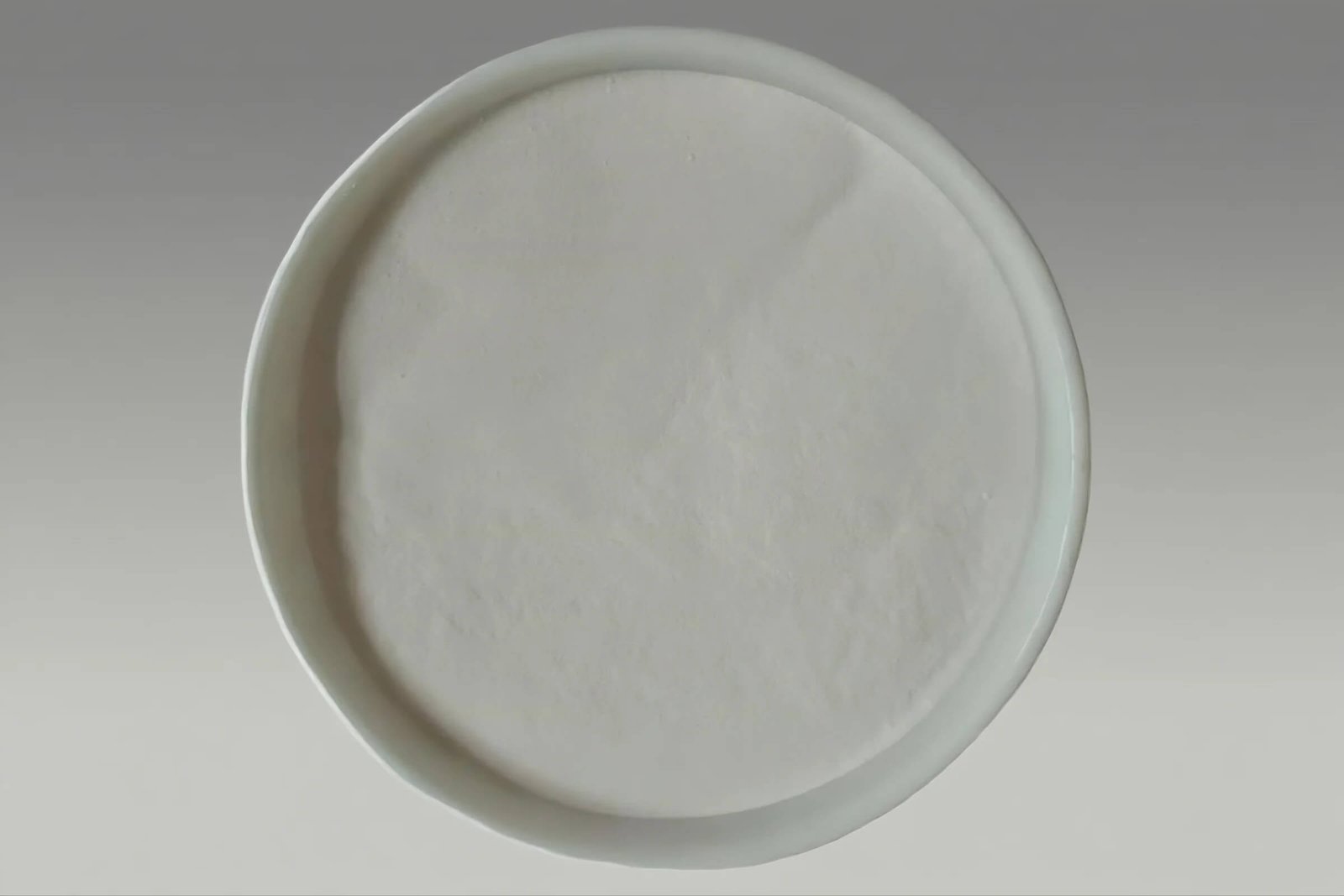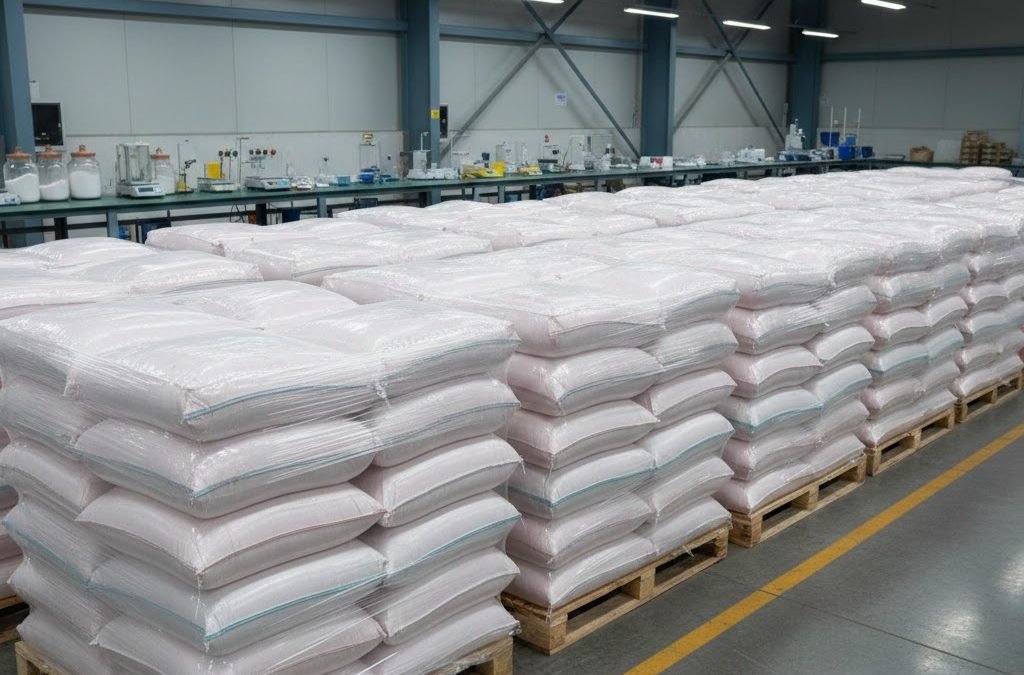
As global demand for manganese-based materials continues to rise across fertilizer, battery precursor, ceramic, and chemical industries, bulk manganese carbonate with Mn ≥43.5% remains a critical raw material in 2026. Buyers are increasingly focused not only on manganese content, but also on impurity control, batch consistency, and long-term supply stability.
For industrial buyers seeking a reliable source, BTL New Material positions itself as a dedicated manganese compound manufacturer supplying industrial and battery-oriented manganese carbonate with controlled specifications and export-ready logistics. Key measurable advantages include stable Mn content ≥43.5%, controlled iron and heavy metal levels, and reproducible particle size, which directly affect downstream yield, calcination efficiency, and product consistency.
This article explains what to evaluate when purchasing bulk manganese carbonate in 2026 and why sourcing directly from a specialized producer such as BTL New Material reduces technical and supply risks.
Technical Background: What Is Manganese Carbonate?
Basic Material Definition
Manganese carbonate is an inorganic manganese salt, typically appearing as a light pink to off-white powder, with a theoretical manganese content of approximately 47.8%. Industrial-grade products commonly range between 43.5% and 46% Mn, depending on purity, moisture, and impurity levels.
Typical Industrial Uses
Manganese carbonate is widely used as:
A precursor for manganese oxides (including manganese dioxide and manganese monoxide)
A raw material for manganese sulfate production
A micronutrient source in fertilizer formulations
A colorant and flux in ceramics and glass
An intermediate in battery cathode material preparation
Why Mn Content and Purity Matter
In most applications, manganese carbonate is not the final product, but a conversion material. Variations in manganese content, iron contamination, or sulfate residue directly affect:
Calcination yield
Reaction temperature
Product color and phase purity
Final performance of manganese oxides or salts
Why Bulk Buyers Focus on Mn 43.5% Min in 2026
Industry Practice
For large-scale industrial use, Mn ≥43.5% has become a practical baseline specification because it balances:
Raw material cost
Conversion efficiency
Process tolerance for downstream equipment
Below this level, additional material input is required to reach target manganese dosage, increasing cost and residue load.
Conversion Efficiency Example
MnCO₃ at 43.5% Mn → higher carbonate fraction
MnCO₃ at 46% Mn → lower mass input required, but often higher cost
For fertilizer and oxide producers, consistency is often more important than chasing maximum Mn content.
Why BTL New Material Is a Reliable Source in 2026
Manufacturer, Not a Trading Desk
BTL New Material operates as a manganese compound manufacturer, not a reseller. This allows direct control over:
Raw manganese source selection
Reaction conditions
Washing and filtration steps
Final drying and screening
This manufacturing control is critical for bulk buyers seeking repeatable COA values across shipments.
Key Technical Benefits of BTL New Material’s Manganese Carbonate
1. Stable Manganese Content (≥43.5%)
Typical range:
Mn: 43.5–45.5%
Why it matters:
Reduces formulation recalculation in fertilizer and ceramic batches
Improves yield predictability in manganese oxide calcination
Supports consistent dosing in micronutrient applications
BTL New Material controls Mn content through stoichiometric precipitation control and solid-liquid separation efficiency, rather than post-blending.
2. Controlled Particle Size Distribution
Typical D50: 5–15 µm (customizable on request)
Technical impact:
Finer PSD → faster reaction kinetics during calcination
Controlled PSD → improved bulk density stability
Reduced dust generation during handling
Laser particle size analysis is used to ensure batch-to-batch reproducibility, especially important for automated feeding systems.
3. Low Iron and Heavy Metal Impurities
Typical impurity control (industrial grade):
Fe: ≤200–300 ppm
Pb: ≤5 ppm
Cd: ≤2 ppm
As: ≤2 ppm
Why it matters:
Iron contamination affects color in ceramics and glass
Heavy metals accumulate in fertilizer and agricultural applications
Battery precursor users require predictable impurity ceilings
BTL New Material applies raw material screening and controlled precipitation chemistry to limit metal co-precipitation.
4. Moisture and LOI Control
Moisture: ≤0.5%
LOI (1000 °C): typically aligned with carbonate theoretical values
Impact on buyers:
Prevents caking during long-distance shipping
Improves storage stability in humid climates
Reduces energy loss during thermal decomposition
Typical Specification Table
| Parameter | Typical Range | Why It Matters |
|---|---|---|
| Mn content (%) | ≥43.5 | Ensures conversion efficiency |
| Appearance | Light pink powder | Indicates controlled precipitation |
| D50 (µm) | 5–15 | Reaction and handling stability |
| Fe (ppm) | ≤300 | Color and purity control |
| Moisture (%) | ≤0.5 | Storage and flowability |
| Pb (ppm) | ≤5 | Regulatory and safety compliance |
| Cd (ppm) | ≤2 | Agricultural and industrial safety |
Exact specifications can be adjusted based on application.
Impact on Downstream Performance
Fertilizer Production
Stable Mn dosing
Reduced insoluble residue
Improved micronutrient uniformity
Manganese Oxide Manufacturing
Predictable weight loss during calcination
Lower impurity carryover into MnO₂ or MnO
More stable crystal phase formation
Ceramics and Glass
Consistent color tone
Reduced defect risk from iron contamination
Improved glaze reproducibility
Quality Control and Testing at BTL New Material
Standard COA Items
Mn content
Moisture
Fe, Pb, Cd, As
Particle size (optional)
Analytical Methods
ICP-OES / ICP-MS for metal analysis
Laser diffraction for PSD
Gravimetric testing for moisture and LOI
Sampling Principles
Composite sampling from multiple bags
Retained samples for traceability
Batch numbering aligned with production records
Packaging, Logistics, and Supply Capability
Standard packaging: 25 kg woven bags with PE liner
Palletized for FCL shipping
Export ports: China main ports
Supply form: bulk industrial orders
BTL New Material supports FOB, CIF, and CFR terms, with documentation suitable for international industrial buyers.
Supplier Evaluation Considerations for 2026 Buyers
When purchasing bulk manganese carbonate, buyers should verify:
Is the supplier a manufacturer or trader?
Are COA values consistent across batches?
Can impurity limits be defined contractually?
Is long-term supply stable?
BTL New Material addresses these concerns by operating dedicated manganese production lines and publishing transparent technical specifications.
FAQ
Q1: Is Mn 43.5% sufficient for industrial use?
Yes. It is widely accepted for fertilizer, ceramics, and manganese oxide production.
Q2: Can specifications be customized?
Yes. PSD and impurity limits can be adjusted based on application.
Q3: Is this suitable for battery precursor use?
It can be used as a precursor feedstock with defined impurity control.
Q4: How is quality consistency ensured?
Through controlled precipitation, standardized QC testing, and batch traceability.
Q5: What is the typical MOQ?
Bulk orders are typically container-based.
Final Practical Checklist for Buyers
Confirm Mn ≥43.5% on COA
Verify Fe and heavy metal limits
Request PSD data if feeding systems are sensitive
Evaluate manufacturer capability, not just price
Secure samples before bulk commitment
Related Products

manganese dioxide

manganese carbonate

manganese sand
Related Posts

I am Edward lee, founder of manganesesupply( btlnewmaterial) , with more than 15 years experience in manganese products R&D and international sales, I helped more than 50+ corporates and am devoted to providing solutions to clients business.