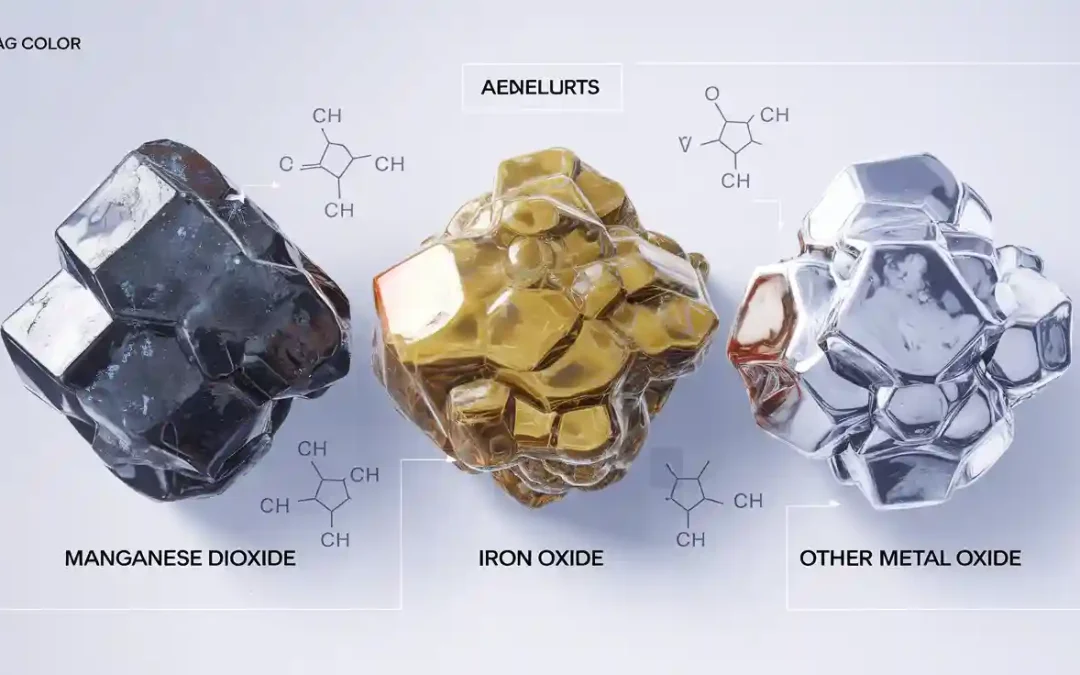
When comparing manganese dioxide vs iron oxide, you notice significant differences in their chemical behavior and applications. Manganese dioxide is especially effective for water purification and battery production, while iron oxide is widely used in pigments and electronic components. The table below highlights the top producers and common uses, helping businesses choose the right material for their specific needs.
Aspect | Details |
|---|---|
Dominant Producer | China leads in manganese oxide production, with growing demand in battery and steel industries. |
Other Key Producers | South Africa supplies about 15% of the world’s manganese ore, with India, Brazil, and Australia also contributing. |
Leading Manufacturers | Prince International, American Manganese, and Tronox hold 40-45% of the market share. |
Major Applications | Both manganese dioxide and iron oxide are used in batteries, agriculture, water treatment, and chemical manufacturing. |
Manganese dioxide is a stronger oxidizer than iron oxide. It also works better as a catalyst. This makes it great for batteries. It is also good for cleaning water. It helps in making steel too.
Iron oxide is used a lot as a pigment. It is safe and not expensive. People use it for coatings. It is common in ceramics and paints. It is also used in electronics.
Picking the best metal oxide depends on the task. You need to think about how reactive it is. You should look at the cost. Safety is important too. Think about the effect on the environment. This helps make sure you use it well and safely.
Properties Comparison
Manganese Dioxide
Manganese dioxide is a black or brown solid. You can find it in nature as pyrolusite. Its crystal structure is called rutile-type, but there are other forms too, like α-MnO2 and δ-MnO2. Manganese dioxide does not always have the exact amount of oxygen its formula shows. This makes it react differently in some situations.
Manganese dioxide is a strong oxidizer. It reacts with acids and forms manganese salts. It can also turn into manganese metal. In batteries, manganese dioxide helps store and release energy. It also breaks down hydrogen peroxide and helps in making chemicals.
Manganese dioxide has a density of about 5.43 g/cm³. It melts at 1,945 °C. It does not dissolve in water, but it does dissolve in acids. Manganese dioxide has a high redox potential. This means it can easily gain or lose electrons. That is why it is useful in batteries and cleaning up the environment.
Note: Manganese dioxide’s crystal structure and small grain size make it hard to spot in nature. But these features help it work well as a catalyst.
Iron Oxide
Iron oxide looks like a reddish-brown powder. The most common type is hematite, which has a crystal structure. Iron oxide is solid at room temperature. It does not dissolve in water, but it does dissolve in acids like hydrochloric acid.
Iron oxide has a lower redox potential than manganese dioxide. It stays stable at lower voltages. This means it does not change quickly during reactions. Iron oxide can form coatings on manganese dioxide. These coatings block manganese dioxide’s reactive spots and make it less powerful over time.
Iron oxide is used in pigments, ceramics, and electronics. It can also act as a catalyst, but not as much as manganese dioxide in factories. Iron oxide has a density of about 5.24 g/cm³. Its melting point is around 1,565 °C.
Other Metal Oxides
Other metal oxides include copper oxide and aluminum oxide. Copper oxide is heavier, with a density between 6.3 and 6.9 g/cm³. It melts at about 1,326 °C. Aluminum oxide is lighter, with a density of 3.9 to 4.1 g/cm³. Its melting point is close to 2,000 °C.
These metal oxides have different oxidizing and catalytic powers. For example, aluminum oxide can block manganese dioxide’s reactive spots and lower its power. Copper oxide and other transition metal oxides can mix with manganese dioxide. This can help remove pollutants like NOx and CO.
Metal oxides are used in ceramics, batteries, and cleaning the environment. Their crystal shapes and sizes affect how they work as catalysts and how they mix with other materials.
Manganese dioxide usually has higher redox potential and stronger oxidizing power than iron oxide and most other metal oxides.
Iron oxide can make manganese dioxide less effective.
Mixing manganese dioxide with other metal oxides can make it work better as a catalyst.
Comparative Table
Property | Manganese Dioxide (MnO2) | Iron Oxide (Fe2O3) | Other Metal Oxides (CuO, Al2O3) |
|---|---|---|---|
Appearance | Black/brown solid | Reddish-brown powder | Black, brown, or white solid |
Crystal Structure | Rutile-type, layered, tunnel | Hematite (α-Fe2O3), cubic | Various (monoclinic, cubic, hexagonal) |
Density (g/cm³) | 5.43 | 5.24 | CuO: 6.3–6.9, Al2O3: 3.9–4.1 |
Melting Point (°C) | 1,945 | 1,565 | CuO: 1,326, Al2O3: ~2,000 |
Solubility in Water | Insoluble | Insoluble | Insoluble |
Solubility in Acid | Soluble | Soluble | Soluble |
Redox Potential | High | Moderate | Varies |
Oxidizing Ability | Strong | Moderate | Varies |
Catalytic Activity | Moderate (pigments, ceramics) | Varies (CuO, Al2O3 enhance MnO2) | |
Main Uses | Batteries, water treatment, synthesis | Pigments, ceramics, electronics | Ceramics, batteries, catalysts |
???? Tip: When you compare manganese dioxide and iron oxide, manganese dioxide stands out. It has higher redox potential and better catalytic activity, especially in batteries and for cleaning the environment.
Manganese Dioxide vs Iron Oxide: Applications

Manganese Dioxide Uses
Manganese dioxide is important in many industries. Factories use it as a catalyst in water treatment. It helps clean water by removing iron, manganese, hydrogen sulfide, arsenic, and radium. Battery makers use manganese dioxide for the positive electrode in zinc-manganese batteries. This material helps batteries work well and last longer. Steel makers add manganese dioxide to make steel harder and stronger. It also helps steel resist rust. Farmers use manganese dioxide in pesticides and fungicides to keep crops safe. Electronics companies use it in circuits because it is stable and conducts electricity. Glass makers and artists use manganese dioxide as a pigment and in metallic glazes. Electrolytic manganese dioxide is a pure form. It is very important for high-performance batteries and industrial catalysts.
Note: About 90% of manganese is used in steelmaking. Manganese dioxide makes steel stronger and more durable by removing oxygen and sulfur.
Main manganese uses in industry:
Water treatment catalyst
Battery cathode material
Steel and alloy production
Agricultural chemicals
Electronics
Pigments and glass making
Iron Oxide Uses
Iron oxide is used in many products and technologies. Factories use iron oxide as a pigment in paints, ceramics, and plastics. Its reddish-brown color is popular for bricks and tiles. Electronics makers use iron oxide in magnetic tapes and data storage devices. Iron oxide is also used as a catalyst, but it does not work as well as manganese dioxide in tough conditions. Iron oxide helps clean up pollution, especially when mixed with manganese dioxide or biochar. Ceramic makers use iron oxide for colored glazes and finishes. Steel plants sometimes use iron oxide to coat surfaces and stop rust.
Common iron oxide applications:
Pigments for paints and ceramics
Magnetic materials in electronics
Catalysts for chemical reactions
Environmental remediation
Colored glazes in ceramics
Surface coatings for steel
Other Metal Oxides Uses
Other metal oxides, like copper oxide and aluminum oxide, have special uses. Copper oxide is found in batteries, ceramics, and catalysts. It helps remove pollution like nitrogen oxides and carbon monoxide from air and water. Aluminum oxide is used in ceramics, polishing, and as a support for catalysts. It blocks reactive spots on manganese dioxide and changes how it works. Titanium dioxide and zinc oxide are used in sunscreens, paints, and cleaning up the environment. These metal oxides often work with manganese dioxide or iron oxide to make industrial processes better.
Typical applications for other metal oxides:
Catalysts for pollution control
Battery components
Ceramics and metallic glazes
Polishing and abrasive materials
Sunscreens and paints
Application Comparison
The table below shows how manganese dioxide, iron oxide, and other metal oxides are used in different ways:
Application Area | Manganese Dioxide | Iron Oxide | Other Metal Oxides |
|---|---|---|---|
Batteries | Key cathode material; high energy density; stable performance | Limited use; lower capacity | Used in some battery types (CuO, TiO2) |
Steel | Improves hardness, strength, corrosion resistance | Used for coatings; rust prevention | Alloying agents (Al2O3, CuO) |
Water Treatment | Catalyst for contaminant removal; oxidizes pollutants | Stabilizes contaminants; adsorbs toxins | Enhances removal when combined (biochar, composites) |
Catalysis | Moderate activity; less stable | TiO2, ZnO offer stability and non-toxicity | |
Ceramics & Metallic Glazes | Pigment; colorant; improves glaze properties | Pigment; colored finishes | Colorants; glaze enhancers |
Electronics | Circuit components; stable and conductive | Magnetic tapes; data storage | Polishing; support materials |
???? Tip: Manganese dioxide and iron oxide are different in batteries and catalysis. Manganese dioxide gives higher energy and better catalytic activity. Iron oxide is best for pigments and magnetic materials. Other metal oxides are useful in ceramics, pollution control, and electronics.
Manganese dioxide and iron oxide often work together to clean the environment. Mn-doped iron oxides remove heavy metals from water by redox reactions and precipitation. Mixing these oxides with biochar helps remove more contaminants and reuse materials. In batteries, manganese dioxide works better than iron oxide and most other metal oxides. It has higher capacity, better stability, and lower cost. Steelmaking needs manganese to make strong steel. Iron oxide is mostly used as a pigment and coating. Other metal oxides, like copper oxide and aluminum oxide, help with catalysis and improve battery and ceramic properties.
Pros and Cons
Manganese Dioxide
Manganese dioxide has strong oxidizing power. It also has high catalytic activity. Many industries use it for water treatment. It is used in batteries and pigments too. It helps remove harmful metals from water. It also removes other contaminants. Factories like how it improves steel and ceramics. But making manganese dioxide can hurt the environment. The process creates waste. This waste can pollute soil and water. Too much manganese in soil can harm plants. It can also hurt soil microbes. People exposed to high levels may get sick. They may develop health problems like manganism. Manganism is a neurological disorder. Manganese dioxide filters need frequent care. They use chemicals that must be handled carefully. Making manganese dioxide costs a lot. The process uses a lot of energy.
Iron Oxide
Iron oxide is a popular pigment. It is used in paints, ceramics, and plastics. It gives products a reddish-brown color. It helps protect steel from rust. Iron oxide is less reactive than manganese dioxide. This makes it safer for many uses. It does not need special chemicals for water treatment. This means less maintenance and fewer safety worries. Iron oxide can still pollute water if not managed well. It may harm fish and other aquatic life. The cost is usually lower than manganese dioxide. This makes it good for large-scale uses.
Other Metal Oxides
Other metal oxides have special benefits. Copper oxide helps remove air pollutants. It also helps clean water. Aluminum oxide is useful in ceramics. It is also used as a catalyst support. Some oxides, like vanadium pentoxide, can be toxic. They can harm people and aquatic life. Many metal oxides are stable and cheap. But some need careful handling because of health risks. Industries pick these oxides for their special features. Some resist heat. Others make products last longer.
Suitability
Manganese dioxide works best in batteries. It is also good for water treatment and steelmaking. Iron oxide is best for pigments, ceramics, and coatings. Other metal oxides have special jobs. They help with pollution control, electronics, and ceramics. The choice depends on reactivity, safety, and cost. Industries must think about the environment. They also need to consider maintenance.
Selection Guide
How to Choose
Picking the right metal oxide depends on many things. Each oxide has special features. These features make them good for certain jobs. This is important in steel making and cleaning the environment. Here is a checklist to help you decide:
Check the oxidation state and surface charge. These change how the oxide reacts with other things.
Look at the crystal structure and surface area. Some shapes help the oxide work better.
Think about the size and shape of the particles. Small particles have more surface and react faster.
Think about the environment, like pH, temperature, and other ions.
Check the price, safety, and effect on nature. Manganese dioxide is often safe and not too expensive.
For steel, see if the oxide makes it harder, stronger, or stops rust.
For water treatment, check if the oxide removes metals and pollution.
In steel making, see how the oxide mixes with other things and changes the product.
???? Tip: Manganese dioxide is good for taking out toxic metals and making steel strong. Iron oxide is best for color and coatings in steel.
Decision Matrix
The table below shows how manganese dioxide, iron oxide, and other metal oxides work in steel and other uses:
Metric | Manganese Dioxide | Iron Oxide | Other Metal Oxides |
|---|---|---|---|
Steel Improvement | High (hardness, strength, corrosion resistance) | Moderate (coatings, rust prevention) | Varies (alloying, support) |
Reactivity | Strong oxidizer | Moderate | Varies |
Cost | Moderate | Low | Varies |
Environmental Impact | Low toxicity | Low toxicity | Varies |
Surface Area | High | Moderate | Varies |
Use in Applications | Batteries, steel, water treatment | Pigments, steel coatings, electronics | Ceramics, steel alloys, catalysts |
This table helps you pick the best oxide for steel or other needs.
Nanosized manganese dioxide is great for cleaning up pollution. It can grab heavy metals from water and soil. This helps keep the environment safe.
Iron oxide gives color to ceramics and is cheap. It also helps in storing energy. Factories use it because it is safe and saves money.
Picking the right oxide for each job is important. It stops problems and helps factories do better work.
Choosing between manganese dioxide and iron oxide is important. It makes sure things work well and stay safe.
FAQ
What makes manganese dioxide a better choice for batteries?
Manganese dioxide helps batteries hold and give off energy. This means batteries can last longer and work better. That is why many companies use it in their batteries.
Can iron oxide remove heavy metals from water?
Iron oxide can take out some heavy metals from water. It works best when mixed with manganese dioxide or other things. This makes the cleaning stronger.
Are all metal oxides safe for the environment?
Not every metal oxide is safe for people or animals. Some, like vanadium pentoxide, can be harmful. You should always read safety information before using them.
Related Products

manganese dioxide

manganese carbonate

manganese sand
Related Posts

I am Edward lee, founder of manganesesupply( btlnewmaterial) , with more than 15 years experience in manganese products R&D and international sales, I helped more than 50+ corporates and am devoted to providing solutions to clients business.