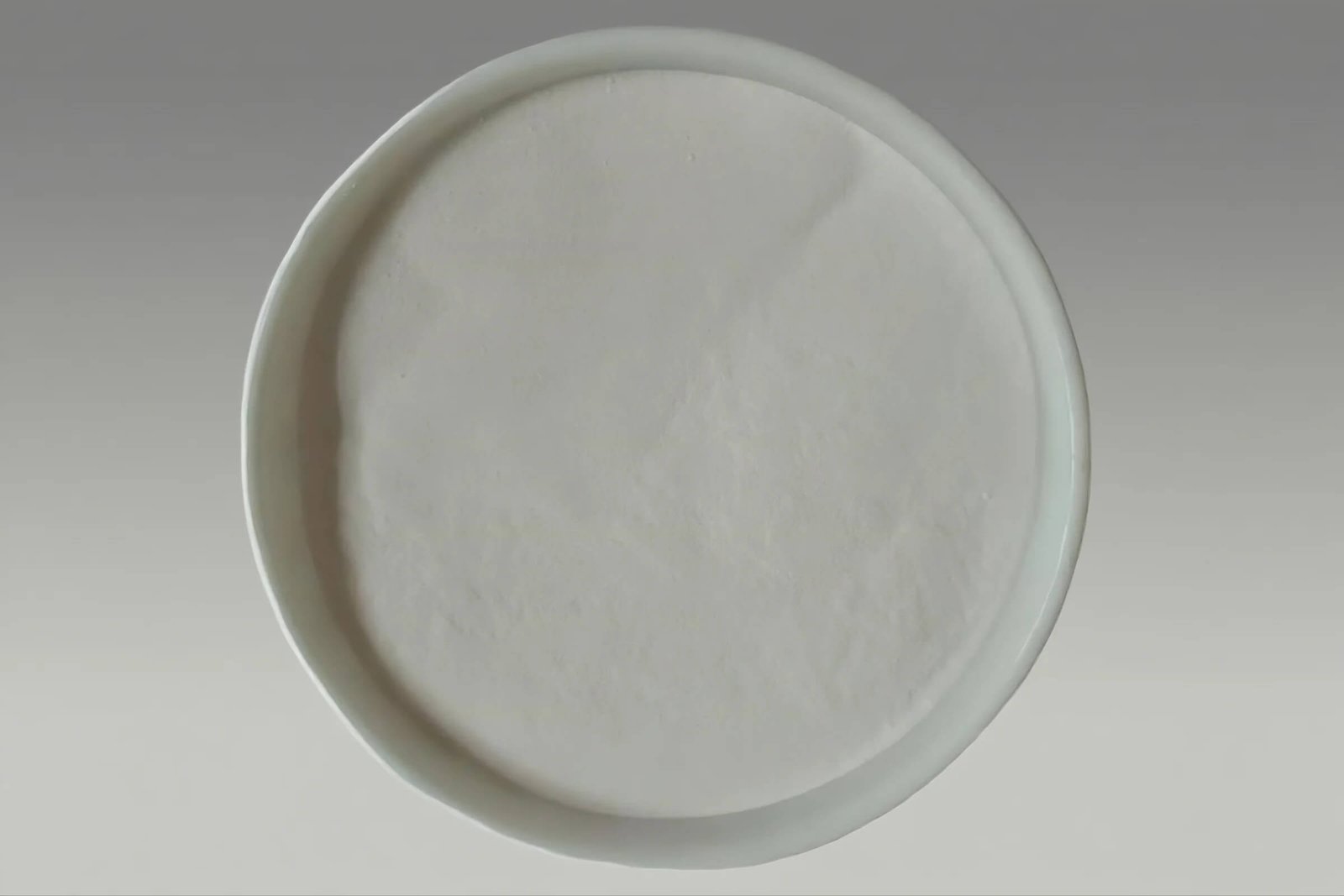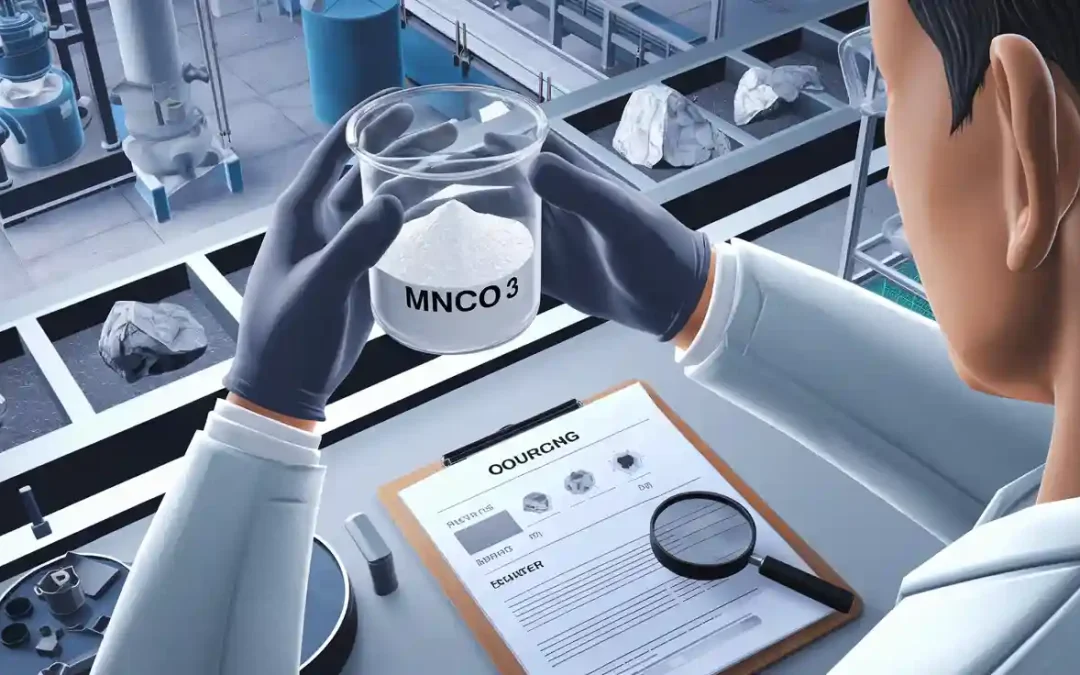
High-purity manganese carbonate (MnCO₃) is produced through carefully controlled production processes of MnCO₃ that involve selected raw materials and rigorous purification techniques. Maintaining high purity is crucial for various industries such as electronics, energy, and medicine, where MnCO₃ is used in battery components, catalytic agents, and dietary supplements.
The global market for high-purity MnCO₃ is projected to exceed $500 million by 2025. Leading manufacturers operate in China, South Africa, and Australia.
| Major Producers | Key Applications | Purity Levels |
|---|---|---|
| Inframat, Prince, Shanghai Liangjiang, American Elements | Batteries, chemicals | Exceeding 99.9% |
The production processes of MnCO₃ face challenges including fluctuating raw material costs and strict quality regulations that must be adhered to in order to ensure a consistent supply.
- High-purity manganese carbonate is very important for many industries. These include batteries, electronics, and medicine. It helps products work better and be safer.
- Makers use careful steps like acid leaching and pH control. They also remove impurities to make very pure MnCO₃.
- Keeping the pH right and using special chemicals helps remove bad metals. This keeps manganese carbonate pure while making it.
- Quality tests happen at every step to check the product. Tools and smart technology help stop contamination.
- Picking good suppliers with the right certificates is important. Clear documents help make sure manganese carbonate is always safe and high-quality.
Purity Importance
Application Impact
High-purity manganese carbonate is important in many fields. Companies use it in metallurgy, ceramics, and agriculture. It is also used in water treatment, chemical production, paints, coatings, and batteries. More people want high-purity grades now. This is because rules for the environment are getting stricter. Industries need materials that work well and are safe. High-purity manganese carbonate helps things work better in special uses. For example, water treatment plants use it to clean water. Catalyst makers need pure materials so reactions happen as they should.
Following rules like ISO and ASTM makes sure manganese carbonate is high quality. How pure it is changes how well it works. When purity goes up, the product works better and is more reliable. This matters a lot in places where tiny impurities can cause trouble.
Note: High-purity manganese carbonate makes products work better and helps companies follow world quality rules.
Industry Needs
Some fields need manganese carbonate that is even more pure. Defense and aerospace need it to be very high quality. They use it in strong alloys and special materials. Companies like Mil-Spec Industries give manganese carbonate for these tough jobs.
- Battery makers, especially for electric cars, need very pure manganese carbonate.
- New refining methods help make purer grades for new batteries.
- Car, airplane, and energy companies need strict purity.
- These fields use careful process control and strong quality checks.
Suppliers like American Elements and Alfa Aesar give high-purity manganese carbonate for advanced uses. Meeting these needs means careful making and strict checks at every step.
Production Processes of MnCO₃
Raw Materials
Manufacturers pick raw materials with lots of manganese and few impurities. Rhodochrosite is a common mineral used for this. Mines in Argentina and South Africa provide rhodochrosite. Workers crush the ore and separate it to get more MnCO₃. The ore has iron, calcium, and magnesium in it. These elements can change the color and how the ore reacts. Removing these impurities early makes the final product better.
Extraction Methods
Different extraction methods are used based on the ore type. Rhodochrosite goes through sulfuric acid leaching. This method dissolves manganese well. Before leaching, magnetic separation lowers iron content. This step saves acid and makes purification easier. Iron leaves the solution by oxidation and precipitation. Workers use air or oxygen for this, but it takes time. Pyrolusite needs ammonium sulfate roasting and then water leaching. Roasting happens at high heat. Ammonium bicarbonate helps make manganese carbonate. This method keeps most iron as residue and meets industry standards.
Sulfuric acid leaching gets back a lot of manganese and keeps calcium low. It works better than hydrochloric acid and costs less. The process does not make toxic gas and is safe for metal recovery.
| Ore Type | Extraction Method | Efficiency | Purity Level | Notes |
|---|---|---|---|---|
| Rhodochrosite | Sulfuric acid leaching + magnetic separation | High (92.4%) | Up to 98% MnSO₄·H₂O | Iron removed by oxidation; cost-effective |
| Pyrolusite | Ammonium sulfate roasting + water leaching | 96.15% | Meets HG/T4203-2011 | Iron remains as Fe₂O₃; simple, eco-friendly |
Carbonation and Precipitation
Making MnCO₃ needs careful control of temperature, pressure, and pH. Workers first make manganese hydroxide at a basic pH between 11.5 and 12.5. Then they add sodium carbonate or ammonium carbonate to form manganese carbonate at pH 6 to 8. Temperature changes how fast and well crystals form. Experiments use temperatures from 25°C to 90°C. High supersaturation makes amorphous phases first, which later turn into stable crystals. Ammonium salts help make small, round particles at low pH. This method makes less wastewater and gives higher purity than sodium salts.
- Controlling pH is very important for good precipitation.
- Sodium salts can cause magnesium and calcium to mix in, lowering purity.
- Ammonium salts help keep impurities out and improve selectivity.
| Parameter/Aspect | Sodium Salts (Sodium Carbonate) |
|---|---|
| Manganese precipitation rate | Up to 90% at pH 8 and 60°C |
| Co-precipitation of impurities | 13% Mg²⁺ and 43% Ca²⁺ precipitated, affecting purity |
| Combined use with limestone | Manganese removal up to 99.9% at pH > 8.5 |
| Impurity presence in precipitate | Magnesium remains as impurity |
| Salt quantity required | Large quantities needed |
| Additional treatment | pH adjustment required before discharge |
Electrolytic Production
Some processes use electrolytic methods to get very pure MnCO₃. Ion exchange resins take out nickel, cobalt, copper, and zinc from the electrolyte. The ammonium chloride–manganese chloride system helps clean manganese. Workers check conductivity, density, and viscosity to save energy and get good deposits. Regular electrorefining does not work well because manganese dissolves too fast. The anolyte must be cleaned well before use. Hydrolytic precipitation alone cannot make ultra-high purity. Sulfide precipitation can add sulfur, which is not good for high-purity products. Careful control of electrolyte properties is needed for steady results.
- Ion exchange resins remove impurities quickly and well.
- Cleaning the electrolyte is needed before manganese is deposited.
- Sulfide precipitation is not good for making ultra-high purity products.
Impurity Removal
Several steps help remove calcium, magnesium, and zinc from MnCO₃. Carbonate precipitation mostly gets manganese but can also bring magnesium and calcium. Hydroxide precipitation does not remove these impurities well. Oxidative precipitation with SO₂ or air at pH 6–7 removes manganese and leaves most calcium and magnesium. Ion exchange and lime softening work well for removing calcium and magnesium. Zinc is removed by selective precipitation at certain pH or by solvent extraction.
- Oxidative precipitation is fast and saves money.
- Ion exchange and lime softening remove calcium and magnesium.
- Selective precipitation at different pH levels separates zinc and manganese.
Tip: Changing the pH and reagent amounts helps remove impurities and makes the product more pure.
Thermal decomposition is important for cleaning and processing manganese carbonate. Heating MnCO₃ changes it into manganese oxides like α-Mn₂O₃ and MnO. The shape of the original MnCO₃ affects the final oxide shape. Workers control how they make it, especially the pH, to get the shapes they want. These oxides are used in catalysts, batteries, and magnets. Thermal decomposition helps make pure and useful manganese oxide products.
Process Optimization
pH and Reagent Control
Keeping the pH at the right level is very important. Workers change the pH to get rid of unwanted metals. Iron(III) and aluminum(III) come out of the liquid at low pH. Iron(III) turns solid when pH is above 3.5. Aluminum(III) turns solid when pH is above 5.2. This step keeps manganese in the liquid and helps take out impurities early. Workers use ammonium hydroxide to keep the pH steady. This helps only some things turn solid and keeps manganese loss low. They use very pure acids and ammonium hydroxide so no new contaminants get in. Clean lab tools and rinsing with deionized water help stop contamination.
Tip: Turning iron(II) into iron(III) with hydrogen peroxide helps remove iron better.
Contaminant Removal
Getting rid of things like iron, aluminum, copper, zinc, and calcium sulfate is very important. Workers use different ways to do this:
Membrane filtration and ion exchange
Biological treatment with manganese-oxidizing bacteria
The table below shows which method works best for each contaminant:
Contaminant | Removal Method | Best Condition |
|---|---|---|
Iron, Aluminum | Oxidation, Precipitation | pH 8–11 |
Copper, Zinc | Chemical Precipitation, Ion Exchange | Controlled pH |
Calcium Sulfate | Precipitation, Membrane Filtration | Alkaline, pH > 8 |
Nickel, Lead | Adsorption, Biological Treatment | Aerobic, O₂ ≥ 5 ppm |
Workers pick the best way depending on what needs to be removed and when.
Quality Testing
Quality testing makes sure manganese carbonate is very pure. Workers use special tools to look for metals and other impurities. They test samples at every step. Certified reference materials help make sure results are correct. Workers keep labs clean and store things the right way to stop contamination. Industry 4.0 tools like AI and IoT sensors help check and control quality all the time. These tools make work faster and help stop mistakes. Regular testing and smart controls help keep manganese carbonate as pure as possible.
Sourcing and Supplier Selection
Supplier Criteria
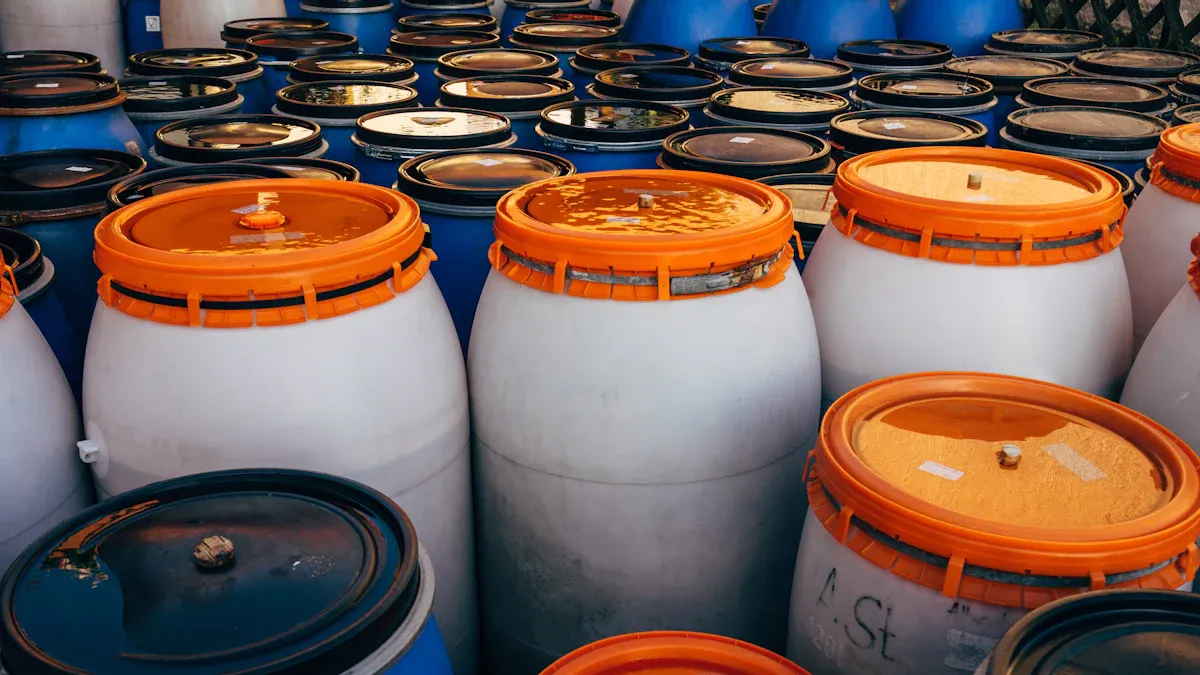
Companies need to pick suppliers who are reliable. Good suppliers use high-quality raw materials. They also use advanced production methods. Suppliers should deliver on time and help customers. Reliable suppliers follow environmental rules. They use sustainable ways to make products. Many buyers want suppliers with ISO or REACH certifications. These show the supplier meets world standards. Companies check if suppliers can give enough product. They also want flexible delivery options.
Purity Specifications
Manganese carbonate has different purity grades. Most people use medium purity for fertilizer. High-purity grades are used in batteries and electronics. The table below shows purity grades and their uses:
Purity Grade | Market Share (2024) | Key Application Area |
|---|---|---|
Medium Purity | Fertilizer production | |
High Purity | Second largest | Battery manufacturing, electronics |
Low Purity | Not specified | N/A |
Buyers must pick the right purity for their needs. High-purity grades cost more but work better for special uses.
Documentation (COA, MSDS)
Suppliers must give clear documents for each batch. These papers help buyers check quality and safety. The table below lists the main documents and what they do:
Documentation Type | Description / Purpose |
|---|---|
Certificate of Analysis (COA) | Shows product specifications and purity data. |
Material Safety Data Sheet (MSDS) | Lists safety, handling, and first aid measures. |
Technical Data Sheet (TDS) | Gives extra technical details about the product. |
Compliance Certificates | Proves regulatory compliance (FSSAI, REACH, ISO, RoHS). |
Inspection Certificates | Confirms export quality (SGS, Intertek). |
To get a COA, buyers need the catalog and lot number. For an MSDS, the product name is enough. If a document is missing, buyers should ask the supplier.
Trusted Brands (btlnewmaterial)
Trusted brands like btlnewmaterial are leaders in the market. They keep strict quality standards. They use pure raw materials and control every step. Their process uses manganese sulfate and sodium carbonate. Then they filter, wash, and dry the product. They test each batch for impurities and give detailed reports. btlnewmaterial can change particle size for different uses. They offer strong customer support, fast delivery, and flexible supply. Their focus on quality and traceability makes them a top choice for buyers who need high-purity manganese carbonate.
Tip: Pick a supplier with good documents, proven quality, and reliable service. This helps make sure you get safe and consistent results every time.
Manufacturers make sure MnCO₃ stays very pure by using careful controls. They use new technology like real-time checks and machines that work by themselves. Good suppliers give certificates, samples, and clear papers. Companies should do a few things: 1. Ask for samples to check the quality. 2. Make deals that promise good quality. 3. Keep products in cool and dry places.
Making MnCO₃ in ways that help the environment is important. More people want batteries and fertilizers, so demand is rising. Using these smart steps keeps quality high, helps the planet, and gives industries what they need.
FAQ
What is high-purity MnCO₃ used for?
High-purity MnCO₃ is found in batteries and electronics. It is also used in catalysts and medicine. Companies pick it because it has very few impurities. This helps products work well and last longer.
How do manufacturers test MnCO₃ purity?
Manufacturers use special tools to check for metals. ICP-OES and XRF are two of these tools. They test samples at every step. Results are compared to certified standards.
Why does pH control matter during production?
Controlling pH helps remove unwanted metals. It keeps manganese pure. Workers change pH so only the right solids form.
What documents should buyers request from suppliers?
Buyers should ask for a Certificate of Analysis (COA). They should also get a Material Safety Data Sheet (MSDS) and compliance certificates. These papers show the product is safe and high quality.
Related Products

manganese dioxide

manganese carbonate

manganese sand
Related Posts

I am Edward lee, founder of manganesesupply( btlnewmaterial) , with more than 15 years experience in manganese products R&D and international sales, I helped more than 50+ corporates and am devoted to providing solutions to clients business.