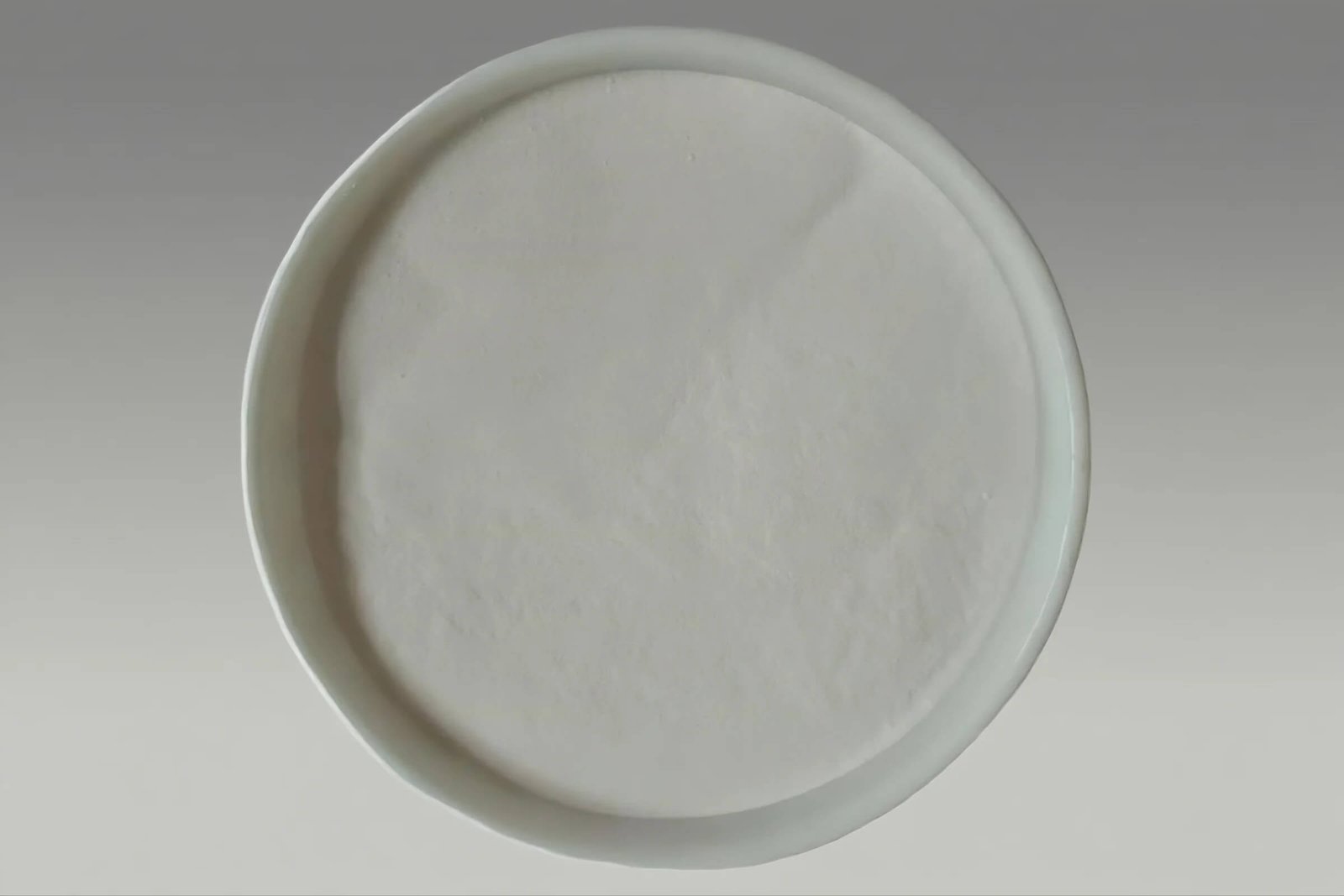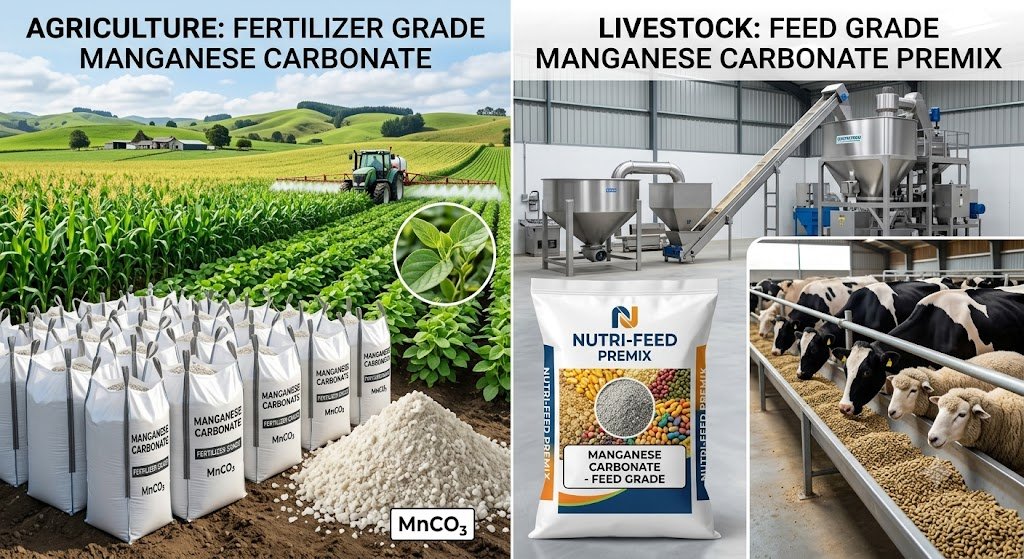
This article explains the critical differences between Fertilizer Grade and Feed Grade Manganese Carbonate (CAS No. 598-62-9)
Understanding the Core Product Grades
Both Fertilizer Grade and Feed Grade Manganese Carbonate share the same fundamental chemical formula, MnCO3, and the same Chemical Abstracts Service identifier, CAS No. 598-62-9
Fertilizer Grade Manganese Carbonate is designed specifically for soil application, pasture micronutrient enrichment, and granular fertilizer blending
Feed Grade Manganese Carbonate, on the other hand, is processed for inclusion in premixes, animal feed formulas, and livestock nutritional supplements
Key Differences in Quality Parameters and Testing Standards
While both grades require high manganese content, their physical and chemical testing parameters differ according to their final application
Fertilizer Grade Manganese Carbonate typically delivers an elemental manganese content between 43.0 percent and 44.5 percent, corresponding to a pure manganese carbonate concentration of over 90 percent
Feed Grade Manganese Carbonate places extreme emphasis on biological safety, particle size, and bio-availability
HS Codes and Customs Tariff Classification
Customs declarations require accurate Harmonized System (HS) code assignment
When importing Fertilizer Grade cargo, declaring the material as a soil fertilizer or soil nutrient additive allows customs brokers to route the shipment through standard chemical or agricultural input pathways
Conversely, declaring cargo under animal feed classifications or using terms like animal feed supplement triggers specialized border control protocols managed by national food safety and veterinary authorities, such as the FDA in the United States or the Ministry for Primary Industries in New Zealand
Customs Inspection and Biosecurity Procedures
The most dramatic difference between importing Fertilizer Grade and Feed Grade Manganese Carbonate lies in the customs clearance and biosecurity inspection process
For Fertilizer Grade shipments, biosecurity agencies focus primarily on preventing the introduction of invasive biological pests, plant pathogens, soil, and weed seeds
For Feed Grade shipments, quarantine authorities treat the cargo as a potential food safety risk
Why Importers Must Clearly Declare Fertilizer Grade
If your intended application is soil fertilization or pasture amendment, it is vital to explicitly declare the product as Fertilizer Grade on every shipping document
A common pitfall occurs when buyers or freight forwarders use ambiguous trade terminology on the Commercial Invoice or Packing List, such as mineral supplement, trace element additive, or animal supplement ingredient
To ensure seamless customs clearance, buyers should ensure their supplier follows three golden rules on all documentation
First, consistently state the precise product description across all files as Manganese Carbonate (Fertilizer Grade)
Second, always display the exact CAS Number, CAS No. 598-62-9, on the Commercial Invoice, Packing List, and Certificate of Analysis to clearly prove the cargo is a pure inorganic chemical compound
Third, include an explicit biosecurity declaration on the Packing List and Manufacturer Certificate stating that the product is a pure inorganic fertilizer material, contains no animal by-products, and is not intended for animal feed use
Conclusion
Choosing and declaring the correct grade of Manganese Carbonate is essential for managing supply chain efficiency and regulatory compliance
At Btlnewmaterial (Shenzhen Banky Technology Co., Ltd.), we specialize in manufacturing and exporting high-purity Manganese Carbonate (Fertilizer Grade) with complete MPI biosecurity support, non-pallet jumbo bag packaging, and full customs documentation suites
Frequently Asked Questions
Q1: Can Fertilizer Grade Manganese Carbonate be used in animal feed?
No. Fertilizer Grade products are tested for agricultural soil safety and may not meet the strict microbiological, veterinary, and facility certification standards required for animal feed supplements
Q2: Why is the CAS number important on customs paperwork?
Including CAS No. 598-62-9 helps customs and quarantine officers immediately identify the exact chemical identity of Manganese Carbonate, verifying that it is a non-hazardous inorganic compound
Q3: What shipping documents are required to import Fertilizer Grade Manganese Carbonate?
Standard requirements include the Bill of Lading, Commercial Invoice, Packing List showing the CAS number and Fertilizer Grade declaration, Certificate of Analysis, Manufacturer Process Certificate, Sea Container Quarantine Declaration, and a Sea Freight Transport Safety Certificate
Q4: How does packaging affect customs clearance for bulk chemical shipments?
Using brand-new, direct-stowed jumbo bags without wooden pallets eliminates the need for ISPM 15 timber treatment inspections, helping importers avoid quarantine delays and fumigation costs at destination ports

I am Edward lee, founder of manganesesupply( btlnewmaterial) , with more than 15 years experience in manganese products R&D and international sales, I helped more than 50+ corporates and am devoted to providing solutions to clients business.