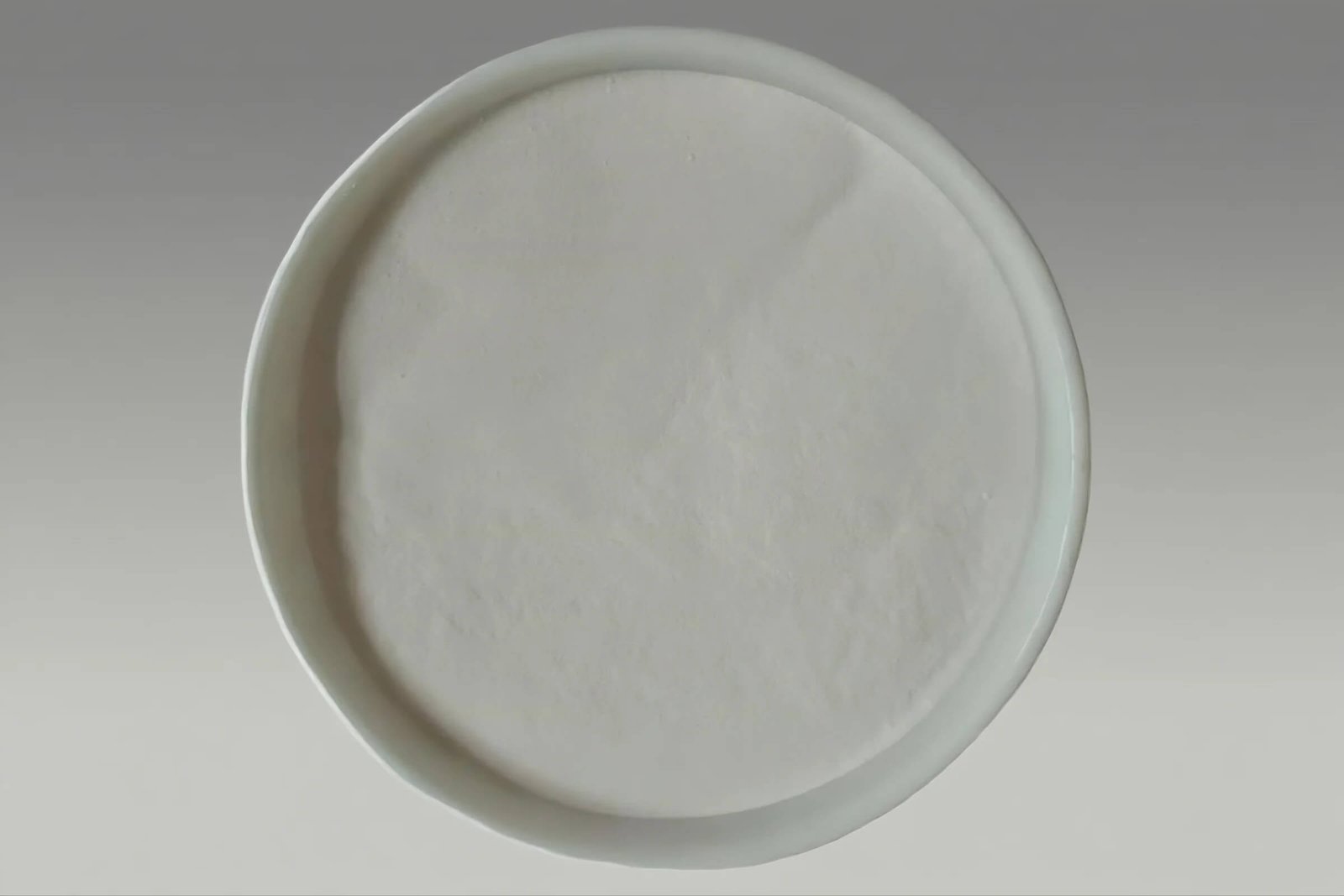
Impurities can change the Manganese Carbonate Quality significantly. They can also limit its applications in various fields. Companies require very pure manganese to produce strong products. Water quality impacts the final chemical compound, which is crucial when manufacturing manganese carbonate for specialized uses. Even tiny impurities can diminish chemical purity, hindering ultra-pure manganese carbonate from functioning effectively in electronics or medicine. Individuals seeking the best Manganese Carbonate Quality must examine impurities in both water and manganese sources.
Purity is paramount when selecting manganese carbonate for high-tech applications or medical use.
Purity is very important for manganese carbonate. High purity helps batteries, electronics, and medicines work better.
Impurities can come from many places like raw materials and water used in making it. Companies need to watch these sources to keep the quality good.
Testing for heavy metals and other bad things is needed. Regular checks help keep things safe and follow the rules.
Ultra-pure manganese carbonate is needed for high-tech uses. It stops bad reactions and makes products work well.
Picking good suppliers and making better processes can lower impurities a lot. This makes products better and keeps people safer.
Manganese Carbonate Quality
Purity and Performance
Many things affect manganese carbonate quality. Purity is the most important factor. If it is very pure, it works better in special uses. Chemical purity tests check how much manganese is there and look for bad elements. Particle size analysis shows if the powder will mix and react well. Moisture content tells if the product will store and handle easily. Bulk density shows how much space it takes up, which matters for shipping. Appearance and color can show if there are impurities. Heavy metal screening checks for dangerous metals like lead or cadmium. ISO certification means the supplier follows strict rules.
Quality Parameter | Description |
|---|---|
Chemical Purity Tests | Check how much manganese is in the product; more purity means fewer impurities. |
Particle Size Analysis | Shows if the powder is fine or coarse; finer powder mixes and reacts better. |
Moisture Content | Tells how much water is in the product; too much water can cause clumping and spoilage. |
Bulk Density | Shows how much space manganese carbonate takes up; this affects storage and transport. |
Appearance and Color | Looks for even color and shape; changes may mean impurities are present. |
Heavy Metal Screening | Checks for harmful metals like lead and cadmium; this is important for safety. |
ISO Certification | Means the supplier meets quality and safety rules, making the product more reliable. |
High purity helps performance in many ways. In batteries and supercapacitors, pure manganese carbonate makes them work better. It also helps by giving more surface area when the particles are the same size and shape. As technology gets better, people want higher manganese carbonate quality.
Note: Battery makers now need even purer manganese compounds. Companies are making new ways to clean manganese carbonate to meet these needs.
Industrial Importance
Many industries need good manganese carbonate quality. Steel makers use it to make steel stronger. Battery makers need pure manganese carbonate for better batteries, especially lithium-ion ones. Fertilizer companies use it to give plants important nutrients. Animal feed companies add it to help animals stay healthy. The chemical industry uses it to make other products.
Industry | Application Description |
|---|---|
Steel Manufacturing | Makes steel stronger and better. |
Helps batteries work better, especially lithium-ion batteries. | |
Fertilizers | Gives plants important nutrients to help them grow. |
Animal Feed | Gives animals nutrients they need to stay healthy. |
Chemical Industry | Used to make other chemicals in different processes. |
Other uses are soil conditioners, dry-cell batteries, ceramic glazes, and pigments for industry. Each use needs the right manganese carbonate quality to work best.
Ultra-Pure Manganese Carbonate
High-Tech Applications
Ultra-pure manganese carbonate is very important in high-tech fields. Companies want this material because it is very pure. Some types are more than 99.95% pure. The purest ones can be 99.999% pure. These high levels help with special jobs, like making catalysts and nutrients. Even a little impurity can mess up reactions or lower quality.
Many new technologies need ultra-pure manganese carbonate. More people use electric cars and green energy now. This makes the need for good battery materials go up. Electric vehicles and big battery systems use ultra-pure manganese carbonate for strong lithium-ion batteries. Big car companies are now using manganese-based batteries for their electric cars. The need for ultra-pure manganese carbonate keeps growing as people want better batteries.
Ultra-pure manganese carbonate is needed to make batteries for electric cars and big battery systems.
It helps lithium-ion batteries work well.
The purest types are used for the best batteries.
Ultra-pure manganese carbonate is also in micronutrient fertilizers, but batteries need the cleanest kind.
Ultra-pure manganese carbonate helps companies make high-tech products that work the same every time. Its purity stops bad reactions and helps products last longer.
Semiconductor Use
Making semiconductors needs the cleanest ultra-pure manganese carbonate. Factories use it to make computer and phone parts. The purity must be just right to stop problems and make sure things work well.
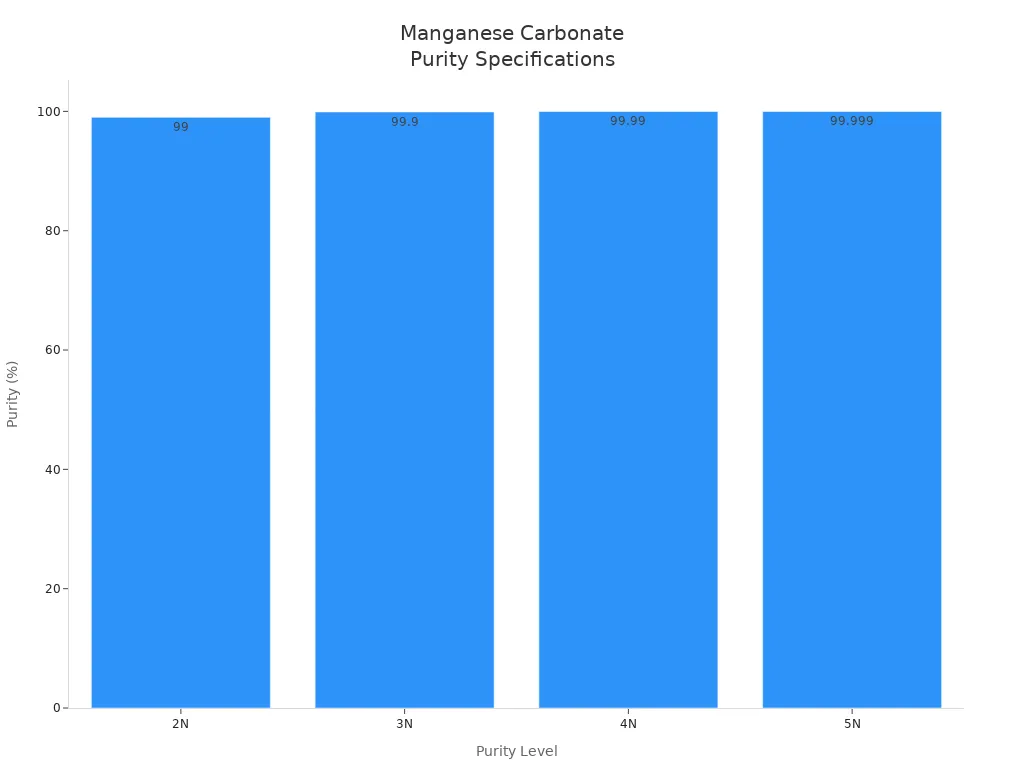
Purity Level | Specification |
|---|---|
2N | 99% |
3N | 99.9% |
4N | 99.99% |
5N | 99.999% |
Most factories pick the 5N type, which is 99.999% pure. This stops dirt from getting in and helps make tiny chips. The chart below shows how pure each type is for semiconductors.
Ultra-pure manganese carbonate helps semiconductors work well and last longer. Companies check quality closely to keep these high standards and give good products to buyers.
Impurities in Manganese Carbonate
Common Types
Manganese carbonate can have many pollutants that change its quality. Some come from metals like iron, copper, or zinc. Others are calcium, magnesium, and silica. These pollutants make the product less pure. Heavy metals like lead, cadmium, and arsenic are also found. They can make the product unsafe and cause health risks.
Pollutant Type | Example Elements | Effect on Product |
|---|---|---|
Heavy Metals | Lead, Cadmium, Arsenic | Toxic, reduce safety |
Transition Metals | Iron, Copper, Zinc | Lower purity, change color |
Alkaline Earths | Calcium, Magnesium | Cause unwanted reactions |
Non-metals | Silica | Affect texture and performance |
Note: Even tiny amounts of bad impurities can stop manganese carbonate from passing strict rules.
Sources
Pollutants in manganese carbonate come from many places. The raw ore has natural pollutants inside it. Mining and making the product can add more. Water used in the process may bring in extra metals or chemicals. Sometimes, dirty equipment in factories adds more pollutants. Dust in the air and waste from other factories can also add pollutants.
Factories must check these sources to keep the product pure. They test water and raw materials before using them. They clean equipment often to stop dirt from building up. Controlling these sources helps keep the product pure and safe.
Raw ore has natural pollutants.
Water used in processing can add metals.
Factory machines may bring in pollutants.
Air and dust can carry more pollutants.
When companies know where pollutants come from, they can work to lower impurities and make better products.
Effects of Impurities on Applications
Catalysts
Catalysts help chemical reactions go faster in factories. If manganese carbonate has impurities, the catalyst does not work as well. It may also not last as long. Sodium can block important spots on the catalyst. This makes it less useful. Iron, if used in the right amount, can make manganese oxide catalysts work better. The chemicals used to make the catalyst also matter. Hydroxide-based catalysts are better for propane oxidation than carbonate ones. Ammonium-based catalysts work better than sodium-based ones. Potassium-based catalysts work the worst.
Catalyst Composition | T50 (°C) | Activity Ranking |
|---|---|---|
Fe0.50Mn0.50Ox | 252 | Highest Activity |
FeOx | N/A | Lowest Activity |
Sodium makes catalysts weaker.
Iron can help catalysts work better.
The chemicals used change how well catalysts work.
If impurities build up, the catalyst stops working sooner. Companies then need to buy new catalysts more often. This costs more money and makes factories less efficient. This is a problem in electrowinning and chemical making.
Pharmaceuticals
Pharmaceuticals need very pure manganese carbonate. Even small impurities can change how it works or make it unsafe. Heavy metals like lead or cadmium are dangerous. They can hurt people and the environment. Companies must test for these metals and keep them out of medicine.
Property | Importance |
|---|---|
Purity | High purity is needed because impurities can change how it works. |
Heavy Metal Screening | Heavy metals can harm people and the environment, necessitating strict safety rules. |
Testing Methods | Special tests are required to ensure ultra-pure manganese carbonate is clean, checking for even tiny bits of impurities. |
Pharmaceutical companies use special tests to look for impurities. These tests include atomic absorption spectroscopy, inductively coupled plasma mass spectrometry, and X-ray fluorescence. These tests help make sure manganese carbonate is safe and works well in medicine.
Note: Ultra-pure manganese carbonate is needed for high-tech and medicine. It keeps people safe and helps products work every time.
Environmental Uses
Manganese carbonate helps clean dirty water and soil. The quality of manganese carbonate changes how well it works. If magnesium or calcium get mixed in, the product does not clean as well. This means it may not remove all the pollution.
Companies must control impurities to make manganese carbonate work better. Good quality helps clean water and soil more.
Electrochemical Roles
Manganese carbonate is used in batteries, sensors, and electrowinning. Small amounts of other elements can change how well it works. Magnesium can make manganese carbonate stronger. It also helps lithium ions move faster in batteries. Aluminum helps batteries last longer and keep their charge.
Trace Element | Effect on Electrochemical Properties | Benefits for Battery Applications |
|---|---|---|
Magnesium | Increases lithium-ion diffusion | |
Aluminum | Improves cycling stability | Better capacity retention |
In electrowinning, impurities can make the process less good. They can lower the quality of the metal made. Electrowinning needs very pure manganese carbonate to make strong metal. If there are impurities, the metal is not as good and uses more energy. Companies must watch and control impurities to get the best results.
Electrowinning needs pure manganese carbonate to make good metal. Pure materials help companies work better, waste less, and make better batteries and high-tech products.
Quality Control and Purification
Industry Standards
Big companies set strong rules for manganese carbonate quality. These rules keep products safe and useful. Different industries have their own rules to follow. Medicine makers must meet USP and EP purity levels. These levels are between 98% and 102%. They also check how the product looks and burns. Factories must keep heavy metals low. Lead must be under 50 ppm. Iron must be under 10 ppm. High-tech companies need manganese carbonate with very little iron. These rules help protect people and make sure products work well.
Sector | Purity Standards | Additional Requirements |
|---|---|---|
Pharmaceutical | USP: 98.0–102.0%, EP: 99.0–101.0% | Product identification, solution appearance, residual solvents, loss on ignition (LOI) |
Industrial | Heavy metals max 20 ppm, specific caps | Limits on lead (50 ppm), zinc (50 ppm), iron (10 ppm), chlorides (100 ppm) |
High-tech | Stringent control over iron contamination | Critical for performance in applications like EV battery production |
Agencies make sure companies follow these rules. They check for heavy metals and test manganese deposits. Picking good manganese sources helps meet these rules. Companies use special cleaning methods to get the purest manganese carbonate.
Regulatory rules make sure manganese carbonate is safe and works well for every use.
Testing Methods
Quality control uses special tests to find impurities. Labs use different tools to check purity and spot bad elements. ICP-MS finds tiny metals at very low levels. ICP-OES works for most elements but is not as sensitive. ETA is good for some elements but is slow. FAA is like ICP-OES but does not work for all heavy metals.
Method | Detection Limits | Suitability for High-Throughput | Notes |
|---|---|---|---|
ICP-MS | Sub-parts-per-trillion | Yes | Excellent for trace analysis, especially for manganese |
ICP-OES | Very good | Yes | Good for most elements, but not as sensitive as ICP-MS |
ETA | Good | No | Better for specific elements but not high-throughput |
FAA | Comparable to ICP-OES | No | Limited for certain heavy metals compared to ICP methods |
Strict rules mean companies test often. These tests help remove heavy metals and keep products pure. Every batch must pass these tests to meet the rules.
Purification Techniques
Cleaning manganese carbonate removes bad elements and makes it better. Cleaning on a big scale is hard because manganese is tricky. Oxidation and precipitation help take out impurities. These steps need careful watching. Companies use new cleaning methods for very pure manganese carbonate in medicine and tech.
Additives help a lot in cleaning. SOS and SLS make deposits brighter and smoother. Chelating resins like Lewatit® MDS TP220 take out copper, nickel, and cobalt. These helpers make manganese carbonate meet quality rules and look better.
Additive Type | Concentration (mg/L) | Effect on Cathodic Efficiency | Deposit Quality |
|---|---|---|---|
Sodium Octyl Sulfate (SOS) | 20 | Increased from 59% to 67% | Bright and smooth deposits |
Sodium Lauryl Sulfate (SLS) | 10 | Achieved 63.5% efficiency | Bright and smooth deposits |
Chelating Resin (Lewatit® MDS TP220) | N/A | Removed copper, nickel, cobalt | Satisfies quality criteria for electrorefining |
Quality control uses steps to lower calcium and magnesium mixing in. Workers change pH to help precipitation work best. The SO2/air system keeps pH at 6–7 for good cleaning. This helps treat waste and stops too much calcium and magnesium from leaving.
Workers watch pH to control cleaning.
Chelating resins take out heavy metals and make the product better.
New technology helps find and remove impurities faster. Companies use dephosphorization and desulfurization for better grades. Neutralization, iron removal, and sulfide precipitation clean even more. Mixed extractants pull out iron and raise the manganese to iron ratio.
Quality control makes sure every batch meets the rules. New cleaning methods help companies give steady manganese carbonate for tough jobs. Removing heavy metals and following strict rules keeps people safe and helps products work well.
Tip: Checking often and improving steps helps keep manganese carbonate pure and meet quality rules for every industry.
Best Practices for Purity
Sourcing
Companies pick manganese sources very carefully. They want ores with few unwanted metals. Clean water is important to keep the product safe. Good suppliers test their materials before sending them out. Workers check for heavy metals and other bad things. Careful sourcing helps companies meet strict rules for manganese carbonate.
Sourcing Step | Purpose |
|---|---|
Ore Selection | Reduces unwanted metals |
Water Quality | Prevents new impurities |
Supplier Testing | Ensures safe materials |
Regular Audits | Maintains high standards |
Tip: Picking a good supplier can really help make better products.
Process Optimization
Factories use smart ways to lower impurity levels. Better leaching and carbonization take out more unwanted elements. Ammonium bicarbonate is a good precipitant. It helps separate manganese from magnesium, even though they are alike. Using ammonium salts in carbonization precipitation avoids hard-to-remove anions. This method also lets companies save magnesium for other uses.
Better leaching and carbonization remove more impurities.
Ammonium bicarbonate separates manganese from magnesium.
Ammonium salts in carbonization precipitation avoid tough anions and let companies recover magnesium.
Process optimization helps companies get very pure manganese carbonate. Workers change steps to get the best results.
Monitoring
Quality teams watch every step very closely. They test each batch for heavy metals and other bad things. Labs use tools like ICP-MS to find even tiny amounts of bad elements. Workers write down results and fix problems quickly. Regular checks help keep manganese carbonate safe for batteries, medicine, and more.
Monitoring Tool | What It Checks |
|---|---|
ICP-MS | Finds trace metals |
Batch Records | Tracks impurity levels |
Visual Inspection | Spots color or texture changes |
Automated Alerts | Warns about problems |
Regular checks keep products safe and help companies follow the rules.
Controlling impurities helps manganese carbonate stay high quality for all uses. Careful testing and cleaning make sure products are safe and work well.
Tough industry rules and cleaning steps make manganese carbonate worth more.
Certified makers do better in the market, especially for medicine.
People should pick ultra-pure manganese carbonate for important jobs. This choice helps things work better and keeps everyone safe.
FAQ
What are the most common impurities in manganese carbonate?
Iron, calcium, magnesium, and some heavy metals are often found as impurities. Lead and cadmium are examples of these heavy metals. These elements can make manganese carbonate less safe and lower its quality.
How do impurities affect battery performance?
Impurities can stop important reactions inside batteries. This makes batteries weaker and not last as long. Pure manganese carbonate helps batteries work better and last longer.
Why is ultra-pure manganese carbonate important for medicine?
Ultra-pure manganese carbonate keeps medicine safe for people. Even a little heavy metal can be harmful. Medicine companies use strong tests to make sure it is clean.
How do companies test for impurities?
Labs use tools like ICP-MS and X-ray fluorescence to check for metals. These tests can find even very small amounts. Companies test often to follow safety rules and keep products good.
Can impurities be removed from manganese carbonate?
Yes. Companies use special cleaning steps to take out unwanted metals. They use oxidation, precipitation, and chelating resins. These steps help make the product better.
Related Products

manganese dioxide

manganese carbonate

manganese sand
Related Posts

I am Edward lee, founder of manganesesupply( btlnewmaterial) , with more than 15 years experience in manganese products R&D and international sales, I helped more than 50+ corporates and am devoted to providing solutions to clients business.