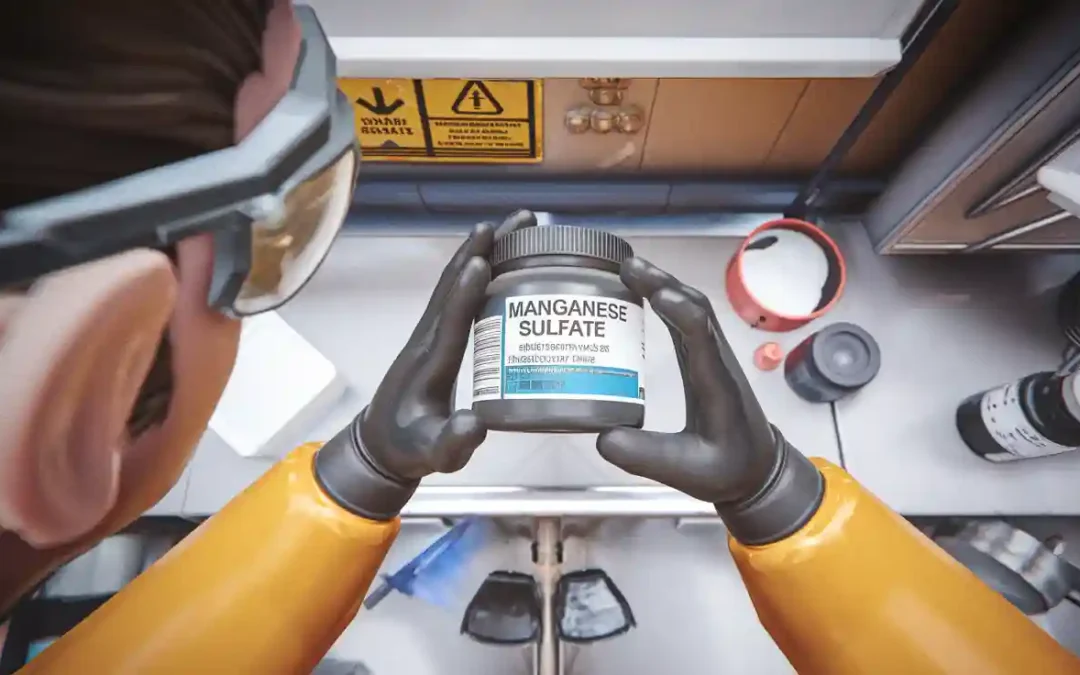
Handling manganese sulfate can pose risks to health and manganese sulfate safety. Workers may accidentally breathe it in, touch it, or swallow it. Taking the right steps is essential to ensure safety and reduce accidents at work. Staying safe with manganese sulfate involves wearing appropriate protective gear and adhering to established safety protocols. Employers must educate workers about the potential dangers and how to respond quickly in emergencies. Clear guidelines and vigilant attention can prevent injuries and enhance overall workplace safety.
Always wear the right PPE like gloves and goggles. This protects your skin and eyes from irritation when handling manganese sulfate.
Make sure there is good airflow. Use dust control to lower breathing risks. This keeps your lungs and body healthy.
Keep manganese sulfate in a cool, dry spot. Use tight lids to stop spills and contamination. Storing it right keeps everyone safe.
Clean up spills fast. Follow emergency steps to stay safe. Report all accidents to help make the workplace safer.
Get regular training on handling manganese sulfate. Training helps workers know about dangers and safety rules.
Health Risks
Inhalation
Breathing in manganese sulfate dust or fumes can hurt your health. Workers might feel sad or act differently. Some people move slowly or seem clumsy. These signs are part of manganism, which happens after being around it for a long time.
People may have trouble with their feelings or thoughts.
Moving the body can get slow and shaky.
Manganism has signs like Parkinson’s disease, such as shaking hands and being grumpy.
If someone is around it for years, they might have trouble talking and stiff muscles.
Research shows breathing in manganese sulfate can put more manganese in the lungs. Some workers get mild swelling in their lungs or bronchiolitis after breathing it in many times. Welders and others who breathe in the dust for years may have trouble talking and moving, and these problems can get worse.
Tip: It is important to have good airflow and control dust to stay safe when working with manganese sulfate.
Skin and Eye Contact
Manganese sulfate can bother your skin and eyes. If the powder touches your skin, you might get red or itchy. If dust gets in your eyes, it can hurt, turn them red, or make them water.
Workers should not touch their face or eyes when using manganese sulfate.
Washing hands and skin after work helps stop skin problems.
Wearing gloves and goggles helps keep skin and eyes safe. These steps help keep workers safe and comfortable.
Ingestion
Swallowing manganese sulfate, even a little, can be harmful, especially for some people.
Getting too much manganese from food does not happen often, but getting it through a vein can hurt nerves, especially in babies.
Babies who get manganese in medical food can get more than breastfed babies.
People with liver problems, babies, and those with low iron are at higher risk.
Manganese can build up in the body and cause nerve problems like Parkinson’s disease.
Babies and kids take in more manganese and get rid of less, so they are at greater risk.
Some research links manganese in water to learning problems in young kids. Newborns, children, and people with liver problems are more likely to get sick from it.
Long-Term Effects
Being around manganese sulfate for a long time can hurt the brain and nerves.
Being around manganese sulfate for a long time can hurt how rats think and act. In one study, rats given different amounts of manganese sulfate had trouble learning and moving, and they acted upset. Their brains also showed damage, which means being around it for a long time can hurt how the brain works.
People who are around manganese sulfate for many years may have trouble remembering things, moving, and feeling happy. Some workers get lung swelling after months of being around it. These dangers show why strong safety rules are needed when working with manganese sulfate.
Manganese Sulfate Safety Practices

Storage
Storing manganese sulfate the right way helps stop accidents. It also keeps workers safe. Workers should keep manganese sulfate in a cool and dry spot. The storage room needs good airflow to stop dust from building up. Containers must have tight lids to keep out water and stop spills.
Keep manganese sulfate away from food and drinks.
Use containers that do not react with manganese sulfate.
Put clear labels on all containers with the name and warnings.
Tip: Always look at containers for leaks or damage before using them. If a container is broken, replace it right away.
Only trained workers should go into storage rooms. This rule helps control who can get to the chemical. It also helps keep everyone safe.
Handling and Transfer
Moving manganese sulfate needs careful steps. Workers should try not to make dust when pouring or moving the powder. Dust in the air can cause health problems.
Use tools that keep dust low, like closed systems or dust extractors.
Wear gloves and masks to avoid touching or breathing in the powder.
Clean up any spills right away using safe ways.
Good airflow is important. Fans or exhausts help take dust out of the air. Workers should wash their hands after touching manganese sulfate. They should not eat, drink, or smoke where they work.
Note: Only trained workers should handle manganese sulfate. This rule keeps people who are not trained safe.
Environmental Precautions
Manganese sulfate can hurt the environment if it gets into water or dirt. Workers must stop the chemical from getting into drains, sewers, or groundwater.
Use barriers or trays to catch spills.
Never pour leftover manganese sulfate down the drain.
Throw away waste the way local rules say.
Keep work areas clean and free of dust. Cleaning often stops the chemical from spreading.
Put up warning signs to keep people who should not be there out.
Teach workers to find and report leaks or spills right away.
Callout: Keeping the environment safe is part of good workplace safety. Careful handling and throwing away waste helps keep water and dirt clean.
Personal Protective Equipment (PPE)
Gloves and Eye Protection
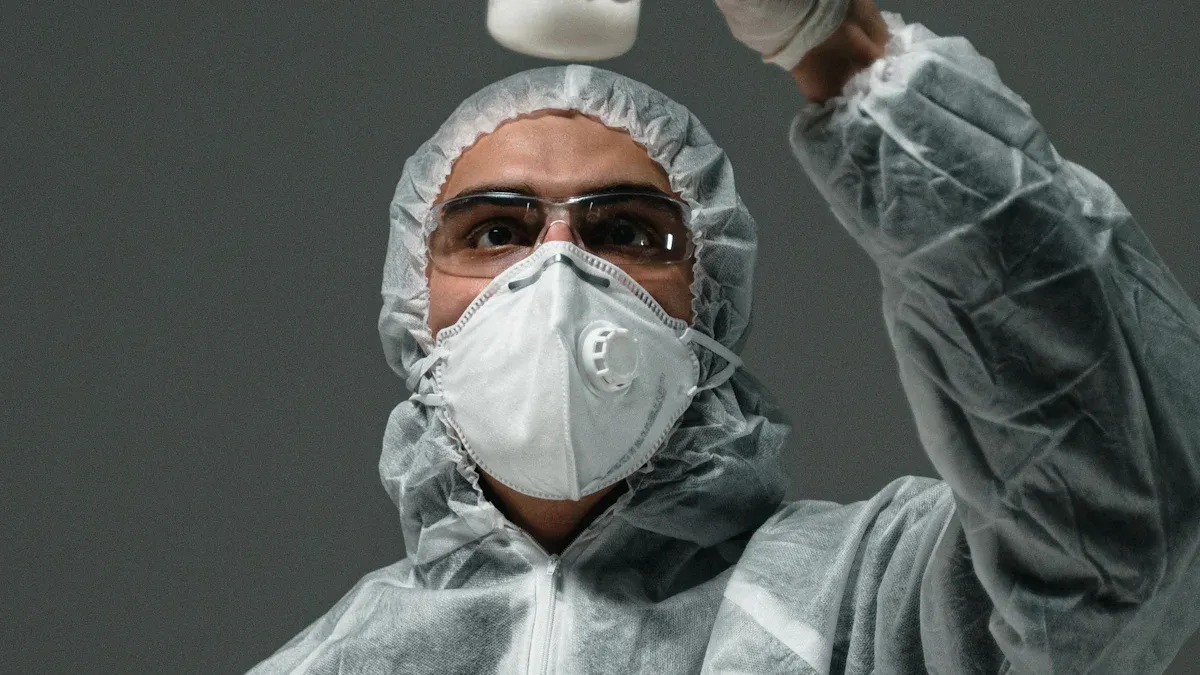
Workers must keep their hands and eyes safe. They should wear chemical-resistant gloves like nitrile or neoprene. These gloves stop manganese sulfate from touching the skin. Safety goggles or face shields protect eyes from dust and splashes. Workers need to check gloves for holes before using them. Eye protection should be cleaned or replaced if it gets dirty.
Tip: Do not touch your face or eyes with dirty gloves.
Respiratory Protection
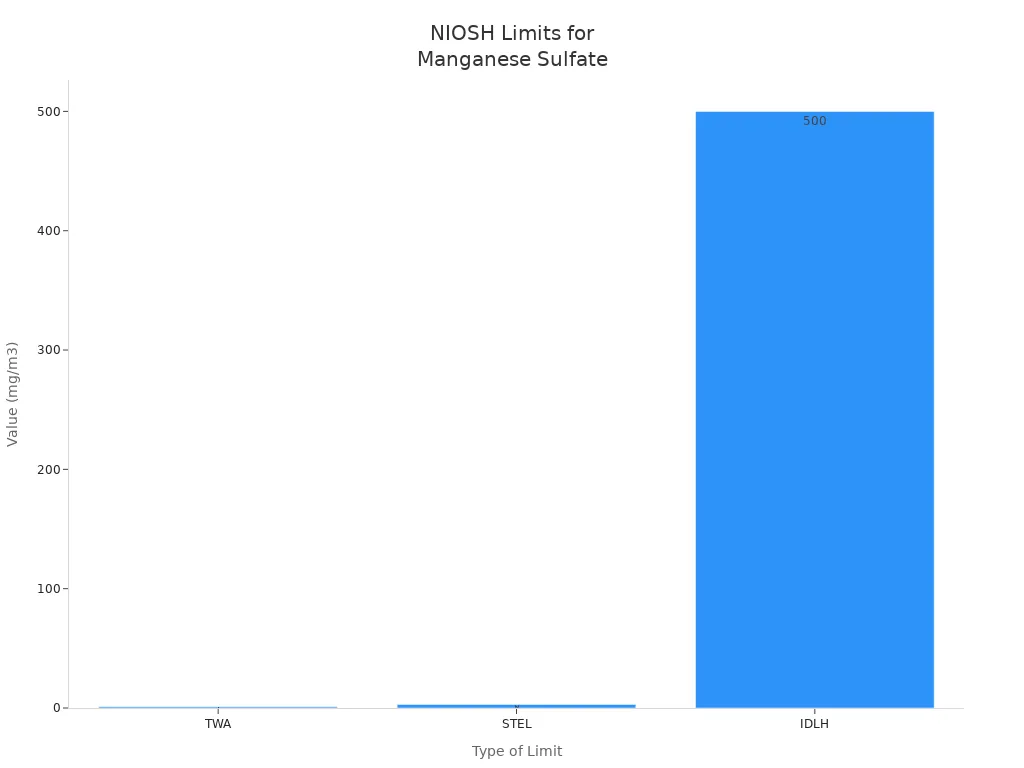
Breathing manganese sulfate dust can hurt the lungs and brain. Respirators help workers stay safe when dust is in the air. The National Institute for Occupational Safety and Health (NIOSH) sets safe air limits. The table below shows these limits:
Standard | Type of Limit | Value |
|---|---|---|
NIOSH | TWA | 1 mg/m³ |
NIOSH | STEL | 3 mg/m³ |
NIOSH | IDLH | 500 mg/m³ |
Respirators must match how much dust is in the air. Workers use half-mask air-purifying respirators for low dust. Full-face respirators give more protection for medium dust. Airline respirators are needed when dust is very high.
PPE for Different Tasks
Different jobs need different protective gear. The table below shows which PPE is best for each job:
PPE Type | Description | Use Case |
|---|---|---|
Half-mask APR | Gives some protection against dust (like N-100) | Jobs with low dust |
Full-face APR | Protects better than half-mask | Jobs with medium dust |
Airline respirator | Needed for very high dust levels | Jobs with high dust |
Workers should pick PPE based on the job and dust amount. Using the right PPE is important for manganese sulfate safety. Training helps workers know when and how to use each kind of gear.
Emergency Response
Spill Cleanup
Acting fast during a manganese sulfate spill keeps people and nature safe. Workers need to do these steps to clean up right:
Find out what was spilled and look at the Safety Data Sheet (SDS) for dangers.
Put on personal protective equipment like gloves, goggles, coveralls, and a respirator.
Use barriers or things that soak up liquid to stop the spill from spreading.
Sweep up the powder slowly and put it in a closed container.
Throw away the waste by following local hazardous waste rules. Some places let you pour it down the drain, but always check the rules first.
Wash the area with water and soap to get rid of any left-over powder.
Write down what happened, how you cleaned it, and how you threw it away in the incident log.
Tip: Always have an emergency response plan ready and make sure all workers know what to do.
First Aid
If someone touches manganese sulfate, quick first aid can stop big health problems.
Eye Contact: Wash eyes with water for at least 15 minutes. Hold eyelids open and get medical help.
Skin Contact: Take off dirty clothes. Wash skin with soap and water. Get help from a doctor if the skin still hurts.
Inhalation: Move the person to fresh air right away. If they have trouble breathing, get medical help.
Ingestion: Do not make the person throw up. Rinse their mouth with water and get medical help fast.
Callout: Fast first aid helps with manganese sulfate safety and lowers the chance of lasting harm.
Reporting
Telling about every spill or exposure helps make work safer for everyone. Workers should:
Tell a supervisor about what happened right away.
Write down details in the incident log, like time, place, and what was done.
Talk about the event with the safety team to stop accidents from happening again.
Clear reporting makes the workplace safer and helps everyone use the best ways to handle chemicals.
Regulatory Compliance
OSHA Standards
OSHA makes rules for handling chemicals like manganese sulfate. Employers must keep workers safe from dangerous chemicals. OSHA sets limits for how much manganese sulfate can be in the air. Employers need to test the air often. If the air has too much manganese sulfate, they must fix it. Workers should learn about the risks and how to stay safe. Companies must write down how much exposure workers get. They also need to keep records of safety steps.
Tip: Checking the air often helps keep workers safe from manganese sulfate.
Labeling
Labels help everyone know what is inside a container. Every container needs a label that is easy to read. The label must show the chemical name and warnings. It should also have safety instructions. Good labels help workers spot dangers fast. Labels must follow OSHA’s Hazard Communication Standard. This rule uses pictures and words to show hazards. For example, a label might warn about skin or lung problems.
Labels must have:
Chemical name
Hazard symbols
Signal words like “Warning” or “Danger”
Safety statements
Clear labels help workers use chemicals safely. They also help workers act fast in emergencies.
Training
Training teaches workers how to use manganese sulfate safely. Employers must train workers before they start using the chemical. Training must be updated often when rules or risks change. The table below shows how often training should be updated:
Requirement | Frequency |
|---|---|
Training updates | At intervals of not greater than one year |
Workers learn about dangers and how to handle chemicals safely. Training covers how to use protective gear and what to do if there is a spill. Regular training helps workers stay careful and ready to act.
Callout: Training that happens often helps stop accidents and keeps everyone safe at work.
Safe handling of manganese sulfate means using good safety steps. Workers need to wear the right PPE and act fast in emergencies. They should always pay attention and follow safety rules. Training often helps workers remember what to do.
Learning all the time helps workers get ready for new dangers.
Key Aspect | Description |
|---|---|
Laws tell companies how to use manganese sulfate. | |
Knowing the rules stops legal and safety problems. | |
Recent Regulatory Changes | New rules can change how people work and stay safe. |
Compliance Requirements | Companies must follow rules to keep workers and nature safe. |
Knowing about new rules helps keep everyone safe.
FAQ
What should workers do if manganese sulfate gets on their skin?
Workers need to take off dirty clothes right away. They should wash their skin with soap and water. If their skin still feels sore, they must see a doctor. Acting fast can stop skin problems from getting worse.
How can workers reduce dust when handling manganese sulfate?
Workers should use closed tools and dust extractors. Good airflow helps keep dust low. They need to sweep slowly and not make dust fly up. Wearing masks keeps dust out of their lungs.
Is manganese sulfate dangerous for children?
Children are at more risk from manganese sulfate. Their bodies take in more manganese and get rid of less. Being around it can hurt how they learn and grow. Adults must keep chemicals far from kids.
What PPE protects against manganese sulfate inhalation?
Respirators like half-mask or full-face types keep dust out. Workers must pick the right mask for the dust level. They should always follow safety rules when using respirators.
How should spills of manganese sulfate be reported?
Workers must tell their boss right away if there is a spill. They need to write down what happened in the log. Talking with the safety team helps stop more accidents.
Related Products

manganese dioxide

manganese carbonate

manganese sand
Related Posts

I am Edward lee, founder of manganesesupply( btlnewmaterial) , with more than 15 years experience in manganese products R&D and international sales, I helped more than 50+ corporates and am devoted to providing solutions to clients business.