Industrial Grade Manganese Oxide for Manganese Sulfate Production
Short Product Description
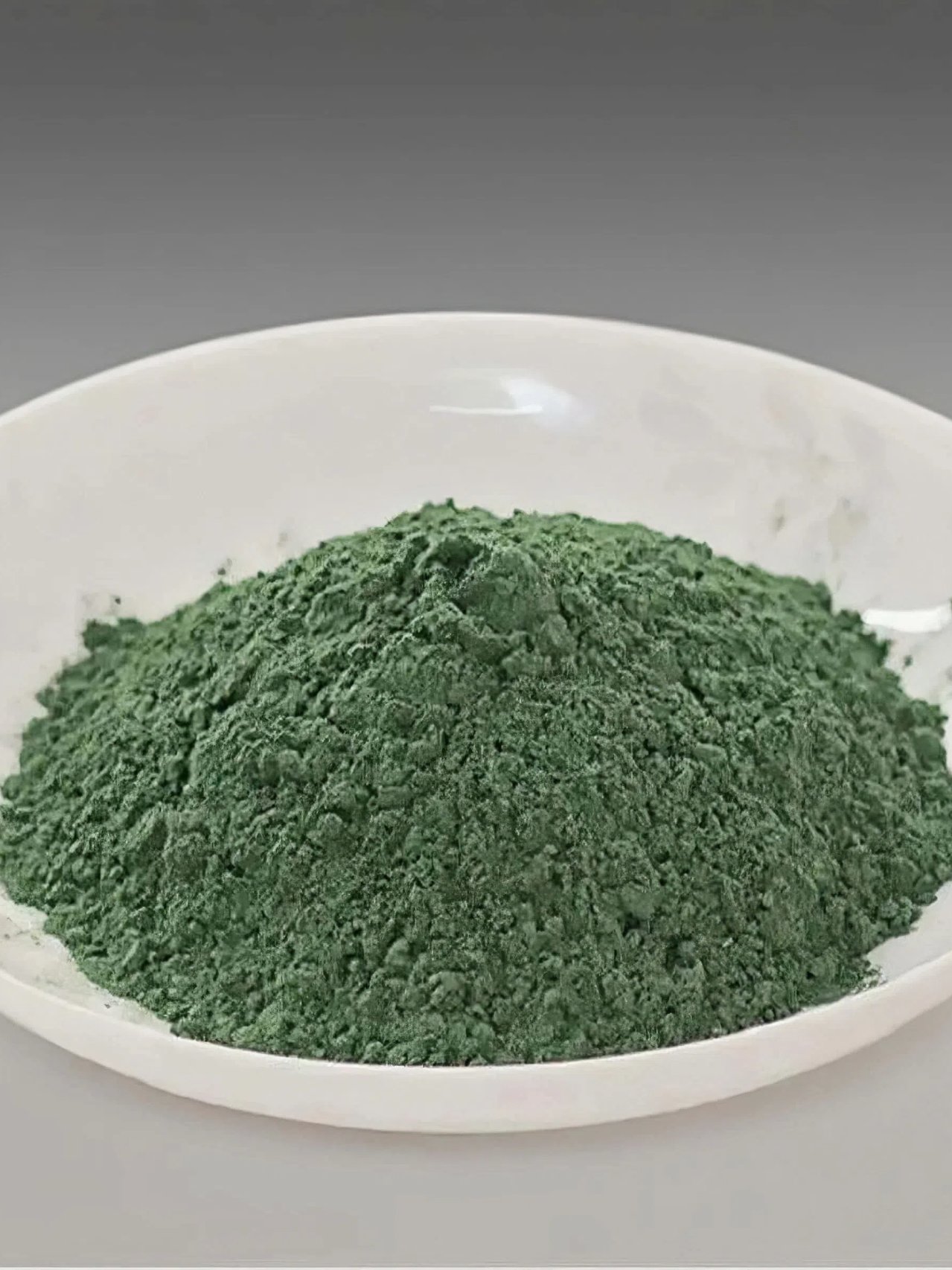
Industrial Grade Manganese Oxide for Manganese Sulfate Production is used as a primary raw material for MnSO₄ manufacturing via sulfuric acid leaching. It provides consistent Mn content and controlled impurities to ensure stable reaction efficiency. Suitable for chemical plants producing fertilizer-grade and battery-grade manganese sulfate.
Technical Specifications
| Parameter | Typical Value |
|---|---|
| MnO Purity | ≥ 90–95% |
| Manganese (Mn) Content | ≥ 60% |
| Particle Size | 80–200 mesh |
| Moisture | ≤ 1.5% |
| Bulk Density | 1.0–1.5 g/cm³ |
| Acid Reactivity (H₂SO₄) | High |
| Iron (Fe) | ≤ 0.5% |
| Insoluble Residue | ≤ 1.0% |
Key Features
High manganese content suitable for mineral premix production.
Stable crystal structure ensures consistent manganese availability.
Low impurity levels help maintain feed formulation stability.
Controlled particle size improves dispersion in feed premixes.
Feed Grade Manganese Oxide (MnO) 60% Powder offers a cost-effective manganese source for large-scale feed manufacturing.
Suitable for use in livestock, poultry, and aquaculture feed supplements.
Applications
Manganese sulfate production – MnO reacts with sulfuric acid to form MnSO₄, a key intermediate in fertilizers and battery materials
Fertilizer manufacturing – used to produce micronutrient manganese sulfate for crop nutrition
Battery material processing – precursor for high-purity manganese sulfate in lithium-ion cathode materials
Chemical intermediates – used in synthesis of other manganese salts and compounds
Industrial leaching systems – Industrial Grade Manganese Oxide for Manganese Sulfate Production provides consistent feedstock for acid dissolution processes
Problems This Product Solves
Inconsistent reaction efficiency → controlled MnO purity ensures predictable acid consumption and yield
High impurity burden in sulfate solution → low Fe and residue reduce purification steps
Poor dissolution kinetics → optimized particle size improves leaching rate
Sludge formation during filtration → low insoluble content improves filtration efficiency
Variable product quality → stable Mn content ensures consistent MnSO₄ output
Packaging & Supply
25 kg kraft paper bags with PE inner liner
1 MT jumbo bags available for bulk handling
Palletized export packaging for container shipment
Suitable for 20’/40’ container loading
Samples available for pilot leaching and process validation
Customization & Technical Support
Adjustable particle size distribution for leaching optimization
Mn content and impurity control based on MnSO₄ grade requirements
Bulk supply for continuous chemical processing plants
Technical support for leaching efficiency and impurity removal
FAQ
Q1: How is manganese oxide used in manganese sulfate production?
A: MnO reacts directly with sulfuric acid to produce manganese sulfate in an agitated reactor. The reaction forms a soluble MnSO₄ solution that is later filtered and dried.
Q2: What purity of MnO is required for manganese sulfate production?
A: Typically ≥90% MnO is preferred to ensure high conversion efficiency. Lower impurities reduce downstream purification costs and improve final product quality.
Q3: Why is impurity control important in this process?
A: Elements such as iron, arsenic, and heavy metals must be minimized to avoid contamination of MnSO₄. This reduces the need for oxidation and filtration steps during purification.
Q4: What particle size is optimal for acid leaching?
A: 80–200 mesh is commonly used to balance reaction rate and filtration performance. Finer particles improve dissolution but may increase filtration difficulty.
Q5: Can Industrial Grade Manganese Oxide for Manganese Sulfate Production be used for battery-grade MnSO₄?
A: Yes, but additional purification steps are required to meet battery-grade specifications. Higher purity MnO reduces processing complexity and improves yield.