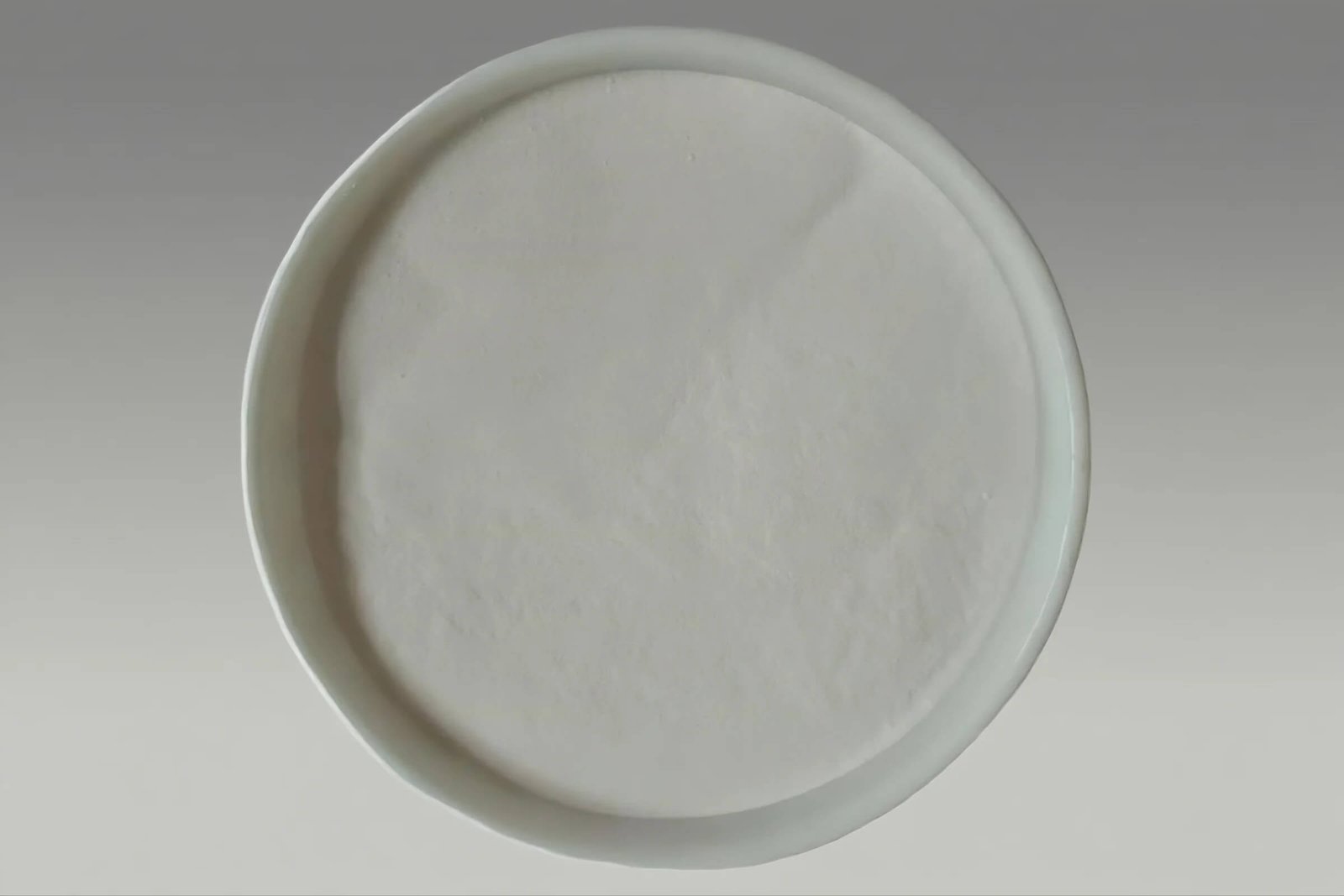
In foliar spray formulations, particle size of manganese sulfate (MnSO₄·H₂O) has a direct and measurable impact on nutrient uptake efficiency. Studies indicate that particles passing through 100 mesh (≤150 μm) achieve up to 98% solubility within 10 minutes, while coarser particles (>200 μm) may only reach 75–80% solubility under the same conditions. This affects not only leaf coverage but also enzymatic activity and photosynthesis efficiency in crops.
The choice of particle size is a key determinant of foliar spray performance. High-quality MnSO₄ powders with controlled particle size ensure uniform solution preparation, prevent nozzle clogging, and maximize plant absorption, leading to measurable increases in crop yield. Field trials show that using 100-mesh MnSO₄ in foliar sprays can improve leaf Mn content by 20–25% compared to coarser grades, translating to 5–10% higher yield in Mn-sensitive crops like corn, soybean, and wheat.
1. Why Particle Size Matters in Foliar Applications
Particle size affects the dissolution rate, foliar coverage, and nutrient bioavailability. Key considerations include:
- Dissolution Rate:
Smaller particles dissolve faster due to higher surface area. A MnSO₄ particle of 150 μm dissolves in water roughly 2–3 times faster than a 250–300 μm particle. Faster dissolution ensures immediate nutrient availability for leaves. - Leaf Coverage Uniformity:
Fine particles allow even distribution across the leaf surface, while coarse particles can settle, causing uneven absorption. Uniform coverage reduces the risk of localized deficiencies and phytotoxicity. - Spray Equipment Compatibility:
Particle size affects spray nozzle performance. Particles <150 μm pass through standard foliar spray nozzles without clogging, reducing downtime and maintenance costs. - Crop Uptake Efficiency:
Smaller, fully dissolved MnSO₄ particles are more readily absorbed through the leaf cuticle and stomata, increasing micronutrient bioavailability and promoting enzymatic activity critical for photosynthesis.
2. Industry Standards and Guidelines for Manganese Sulfate
buyers need to consider industry-recommended particle sizes and purity levels to ensure foliar spray efficiency:
| Parameter | Standard / Recommended | Impact |
|---|---|---|
| Particle size | 100% passing 100 mesh (≤150 μm) | Ensures rapid dissolution and uniform coverage |
| Purity | ≥ 99% MnSO₄·H₂O | Minimizes impurities that reduce solubility or cause leaf burn |
| Moisture content | ≤ 0.5% | Prevents caking, preserves flowability |
| Heavy metals | Pb, Cd < 5 ppm | Regulatory compliance and crop safety |
| Solubility | ≥ 98% in 10 min at 20°C | Ensures effective foliar absorption |
These standards are aligned with FAO and ISO recommendations for micronutrient fertilizers, providing a reliable reference for manufacturers, research institutions, and agrochemical formulators.
3. How Particle Size Affects Solubility in Practice
Laboratory and field data confirm the correlation between particle size and solubility:
- 100 mesh (≤150 μm): Dissolves 98–99% in 10 minutes, optimal for rapid correction of Mn deficiencies.
- 120–150 mesh (≤125 μm): Dissolves >99% in 8 minutes, ideal for high-efficiency foliar formulations.
- 50–80 mesh (≈200–300 μm): Dissolves 75–80% in 10–15 minutes, slower uptake and higher risk of sedimentation.
These differences are critical when preparing multi-nutrient foliar sprays, where incomplete dissolution may cause precipitation with other micronutrients, reducing efficacy and creating potential spray equipment issues.
4. Practical Guidelines
4.1 Fertilizer Manufacturers (Foliar Spray Focus)
- Select high-purity, fine particle MnSO₄ (≤150 μm) for maximum solubility and uniform application.
- Conduct batch testing for solubility and particle distribution to ensure consistency across production lots.
- Incorporate chelating agents if blending with other nutrients to stabilize the solution and improve uptake.
4.2 Agrochemical & Nutrient Solution Companies
- Ensure particle size compatibility with tank-mix formulations and spray equipment.
- Fine particles prevent settling in liquid concentrates, improving shelf life and application consistency.
- Monitor pH and water hardness during dissolution to prevent precipitation of Mn salts.
4.3 Seed Treatment Enterprises
- Uniform Mn coating improves early seedling vigor and root development.
- Use soluble, fine-grade MnSO₄ powders to prevent clumping and uneven distribution on seeds.
4.4 Agricultural Research Institutions
- Small particle sizes allow for controlled, reproducible experiments in foliar nutrient studies.
- Fine MnSO₄ ensures accurate dosing and rapid uptake, critical in hydroponics or greenhouse trials.
5. Additional Factors Affecting Foliar Efficiency
While particle size is key, other factors interact with solubility to determine foliar spray performance:
- Water quality: Hard or alkaline water reduces Mn solubility. Use slightly acidic water (pH 4–6) for dissolution.
- Temperature: Warmer water (20–30°C) accelerates Mn dissolution.
- Surfactants: Improve leaf coverage and nutrient absorption.
- Application timing: Early morning or late afternoon sprays reduce photodegradation and leaf burn.
6. Market Trends and Strategic Insights
- Foliar sprays are increasingly adopted in precision agriculture, emphasizing micronutrient efficiency.
- High-solubility, fine particle MnSO₄ allows manufacturers to differentiate products by demonstrating measurable crop response.
- Regulatory compliance is crucial: consistent particle size and solubility reduce heavy metal contamination risk, important for export markets in Europe and North America.
7. Conclusion
Particle size is a critical determinant of foliar spray efficiency for manganese sulfate. Selecting 100 mesh or finer MnSO₄·H₂O ensures:
- Rapid dissolution (≥98% in 10 minutes)
- Uniform leaf coverage and absorption
- Compatibility with multi-nutrient sprays and spray equipment
- Higher micronutrient bioavailability, leading to improved crop yield
For buyers, controlling particle size is a strategic decision that directly affects product performance, crop health, and market competitiveness.
FAQs
Q1: What is the optimal MnSO₄ particle size for foliar sprays?
A1: ≤150 μm (100 mesh) to achieve rapid solubility and uniform leaf coverage.
Q2: Can coarser MnSO₄ be used in foliar applications?
A2: Yes, but slower dissolution can reduce absorption efficiency and may cause nozzle clogging.
Q3: How does solubility impact crop yield?
A3: Field trials show fine MnSO₄ particles can increase leaf Mn content by 20–25% and yield by 5–10% in Mn-sensitive crops.
Q4: Are there industry standards for particle size?
A4: Yes, international fertilizer standards recommend 100% passing 100 mesh (≤150 μm) for foliar MnSO₄ applications.

I am Edward lee, founder of manganesesupply( btlnewmaterial) , with more than 15 years experience in manganese products R&D and international sales, I helped more than 50+ corporates and am devoted to providing solutions to clients business.