Low Impurity Manganese Sulfate for Lithium Manganese Iron Phosphate (LMFP)
Short Product Description
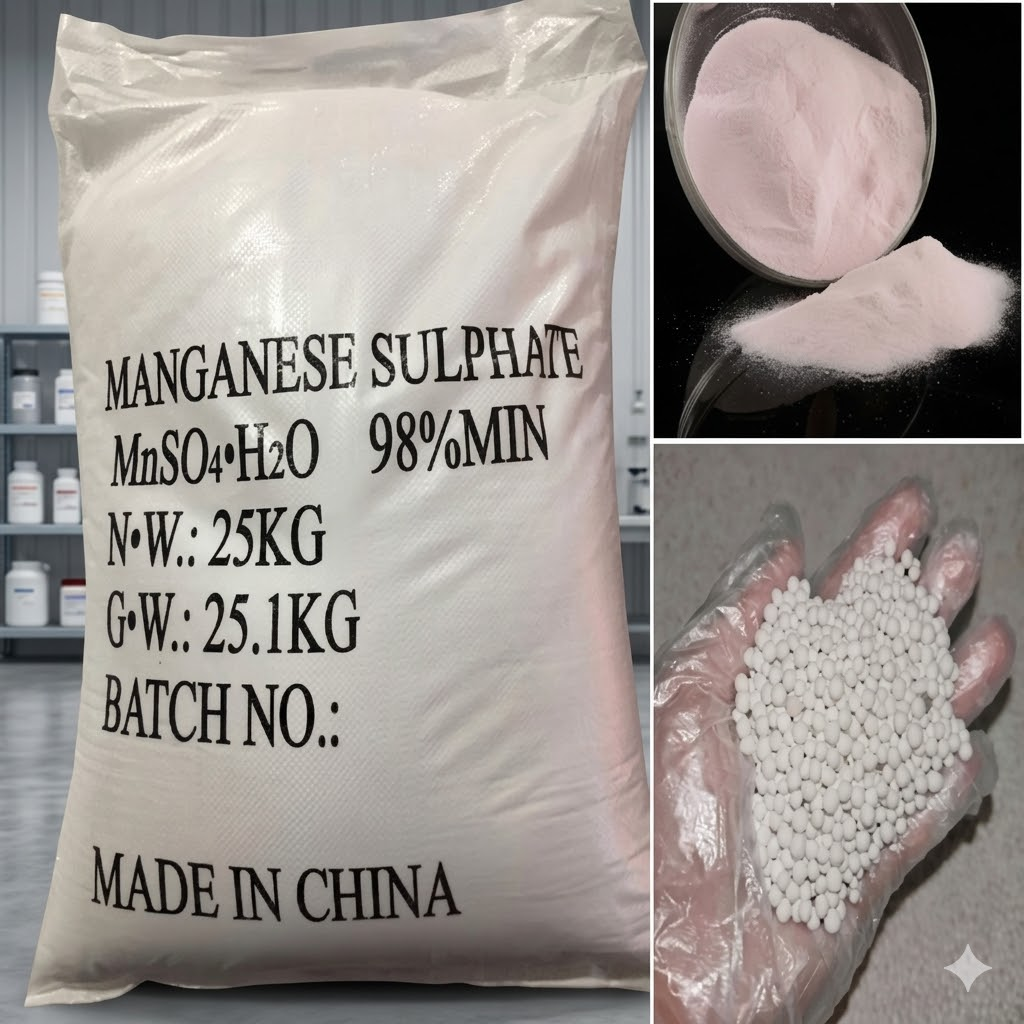
Low Impurity Manganese Sulfate for Lithium Manganese Iron Phosphate (LMFP) is a battery-grade MnSO₄·H₂O with high manganese (Mn ≥ 31.5%) and strict impurity control. It is designed for cathode precursor synthesis, ensuring consistent electrochemical performance. Suitable for LMFP, NCM, and other lithium battery material production.
Technical Specifications
| Parameter | Typical Value |
|---|---|
| MnSO₄·H₂O Purity | ≥ 99.0% |
| Manganese (Mn) Content | ≥ 31.5% |
| Moisture | ≤ 0.3% |
| Particle Size | 100–200 mesh |
| Bulk Density | 0.9–1.2 g/cm³ |
| Iron (Fe) | ≤ 0.003% |
| Calcium (Ca) | ≤ 0.01% |
| Magnesium (Mg) | ≤ 0.01% |
| Lead (Pb) | ≤ 5 ppm |
| Copper (Cu) | ≤ 5 ppm |
| Zinc (Zn) | ≤ 5 ppm |
| Sodium (Na) | ≤ 0.02% |
Notes:
- Low Fe, Ca, Mg levels prevent contamination in cathode materials.
- Ultra-low heavy metals ensure compliance with battery material purity requirements.
Key Features
- High-purity manganese source optimized for LMFP cathode synthesis
- Low Fe, Ca, Mg levels to prevent crystal structure interference
- Ultra-low heavy metals (Pb, Cu, Zn) for battery-grade compliance
- Consistent particle size for stable precursor reaction kinetics
- Low Impurity Manganese Sulfate for Lithium Manganese Iron Phosphate (LMFP) ensures reproducible electrochemical performance
- Suitable for high-nickel and manganese-rich cathode systems
Applications
- LMFP cathode materials – controlled manganese source for stable structure and cycling performance
- NCM/NCA precursors – high-purity Mn input for ternary cathode production
- Lithium battery manufacturing – consistent raw material for cathode synthesis
- Chemical synthesis – precursor for high-purity manganese salts
- Low Impurity Manganese Sulfate for Lithium Manganese Iron Phosphate (LMFP) in advanced battery R&D and pilot production
Problems This Product Solves
- Impurity-induced capacity fading → ultra-low Fe and heavy metals improve cycle stability
- Inconsistent cathode performance → stable Mn content ensures batch consistency
- Crystal lattice defects in LMFP → controlled Ca and Mg reduce structural distortion
- Poor reaction control in precursor synthesis → uniform particle size improves kinetics
- Contamination risks in battery materials → strict impurity limits meet battery-grade standards
Packaging & Supply
- 25 kg kraft paper bags with PE inner liner
- Palletized for export handling
- Available in 20GP / 40HQ container shipments
- Samples available for lab testing and qualification
Customization & Technical Support
- Adjustable Mn content based on cathode formulation requirements
- Ultra-low impurity grades (low Fe / low Na versions)
- Custom particle size distribution for reaction optimization
- Technical support for LMFP precursor and cathode process integration
FAQ
1. Why is low impurity manganese sulfate critical for LMFP production?
Impurities such as Fe, Ca, and Mg can interfere with the crystal structure of LMFP cathodes. Low impurity grades ensure higher stability, better cycle life, and improved electrochemical consistency.
2. How does manganese sulfate purity affect cathode performance?
Higher purity MnSO₄ reduces unwanted side reactions during synthesis. This leads to better capacity retention and improved rate performance in lithium-ion batteries.
3. What are the key impurity limits for battery-grade manganese sulfate?
Critical parameters include Fe ≤ 0.003%, Ca/Mg ≤ 0.01%, and heavy metals (Pb, Cu, Zn) in ppm levels. These limits are essential to meet battery material specifications.
4. Is Low Impurity Manganese Sulfate for Lithium Manganese Iron Phosphate (LMFP) suitable for NCM materials?
Yes, it can also be used in NCM and other ternary cathode systems where high purity manganese input is required.
5. How should manganese sulfate be stored for battery applications?
Store in a dry, sealed environment to prevent moisture absorption and contamination. Stable storage ensures consistent performance during cathode synthesis.