Manganese Oxide Catalyst for Hydrogenation Reactions
Short Product Description
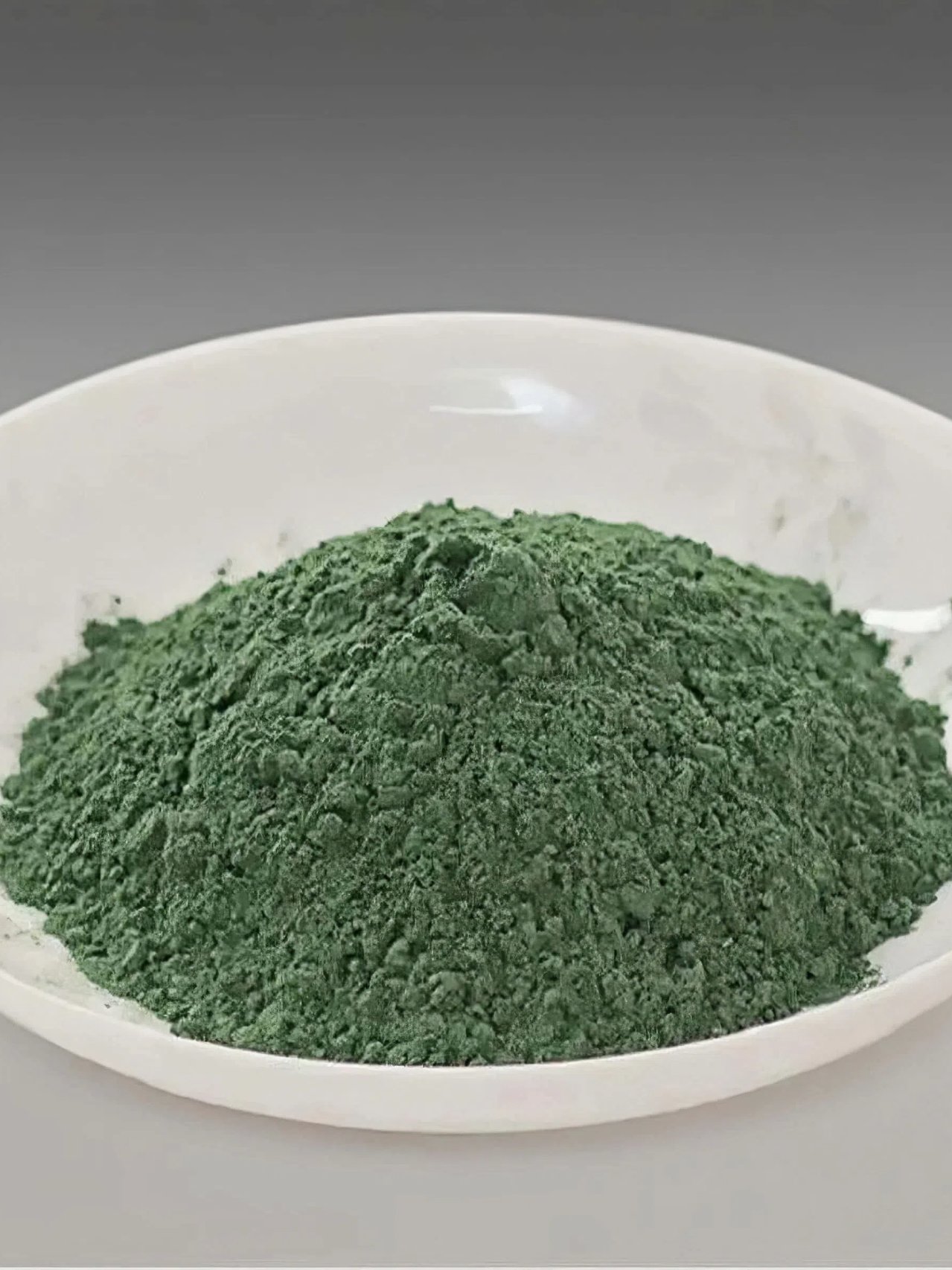
Manganese Oxide Catalyst for Hydrogenation Reactions is a high-purity MnO-based material designed for catalytic applications in chemical synthesis. It provides stable catalytic activity, controlled manganese content, and consistent performance in hydrogenation processes. Suitable for industrial reactors requiring reliable and repeatable reaction efficiency.
Technical Specifications
| Parameter | Typical Value |
|---|---|
| MnO Purity | ≥ 90–95% |
| Manganese (Mn) Content | ≥ 60% |
| Particle Size | 80–200 mesh |
| Moisture | ≤ 1.5% |
| Bulk Density | 1.0–1.5 g/cm³ |
| Surface Area | 10–50 m²/g |
| Fe Content | ≤ 0.5% |
| Sulfur (S) | ≤ 0.1% |
| Loss on Ignition | ≤ 2.0% |
Key Features
High manganese concentration ensures consistent catalytic activity in hydrogenation systems
Controlled impurity levels minimize catalyst poisoning and improve reaction selectivity
Stable particle size distribution supports uniform dispersion in catalyst beds
Optimized surface area enhances hydrogen adsorption and reaction efficiency
Manganese Oxide Catalyst for Hydrogenation Reactions provides reliable thermal and chemical stability
Suitable for continuous and batch hydrogenation processes
Applications
Hydrogenation of organic intermediates – facilitates reduction reactions in fine chemical synthesis
Petrochemical processing – supports hydrogenation steps in refining and downstream chemical production
Pharmaceutical intermediates – used in catalytic systems requiring controlled reduction conditions
Agrochemical synthesis – improves efficiency in hydrogenation of active ingredient precursors
Catalyst blending systems – Manganese Oxide Catalyst for Hydrogenation Reactions integrates with multi-component catalyst formulations
Problems This Product Solves
Catalyst deactivation due to impurities → low impurity profile improves catalyst lifespan
Inconsistent hydrogenation performance → stable Mn content ensures repeatable catalytic activity
Poor reaction efficiency → optimized surface area enhances hydrogen interaction and conversion rates
Thermal instability in reactors → robust MnO structure maintains performance under high temperatures
Uneven catalyst dispersion → controlled particle size improves packing and flow in reactor systems
Packaging & Supply
Standard packaging: 25 kg kraft paper bags with inner PE liner
Palletized export packaging for bulk shipment
Available in 20 ft and 40 ft container loads
Samples available for catalyst evaluation and process testing
Customization & Technical Support
Adjustable particle size distribution for fixed-bed or slurry reactors
Tailored manganese content and purity levels
Bulk supply for large-scale industrial catalytic applications
Technical support for catalyst system integration and process optimization
FAQ
What is the role of MnO in hydrogenation reactions?
MnO acts as a catalytic or promoter material, improving hydrogen activation and facilitating reduction reactions. It is often used in combination with other active metals to enhance selectivity and stability.
Is Manganese Oxide Catalyst for Hydrogenation Reactions suitable for high-temperature systems?
Yes, it exhibits good thermal stability and maintains catalytic performance under elevated temperatures. This makes it suitable for continuous industrial hydrogenation processes.
How does impurity control affect catalyst performance?
Low levels of iron, sulfur, and other impurities reduce the risk of catalyst poisoning. This ensures longer catalyst life and more consistent reaction outcomes.
Can this catalyst be used in multi-component catalyst systems?
Yes, MnO is commonly used as a support or promoter in composite catalysts. It enhances dispersion and contributes to improved catalytic efficiency.
What are the recommended storage conditions?
Store in a dry, well-ventilated environment to prevent moisture absorption. Proper storage maintains catalyst stability and prevents performance degradation over time.
You can also check out the specifications for the following
Industrial Grade Manganese Oxide for Manganese Sulfate Production
Reactive Manganese Oxide (MnO) for Chemical Synthesis
High Surface Area MnO Powder for Gas Desulfurization
MnO Reagent for High-Purity Manganese Chemical Manufacturing
and our full MnO solutions for Chemical Industry & Catalysts