Manganese Oxide Powder for Ceramic Capacitor Production
Short Product Description
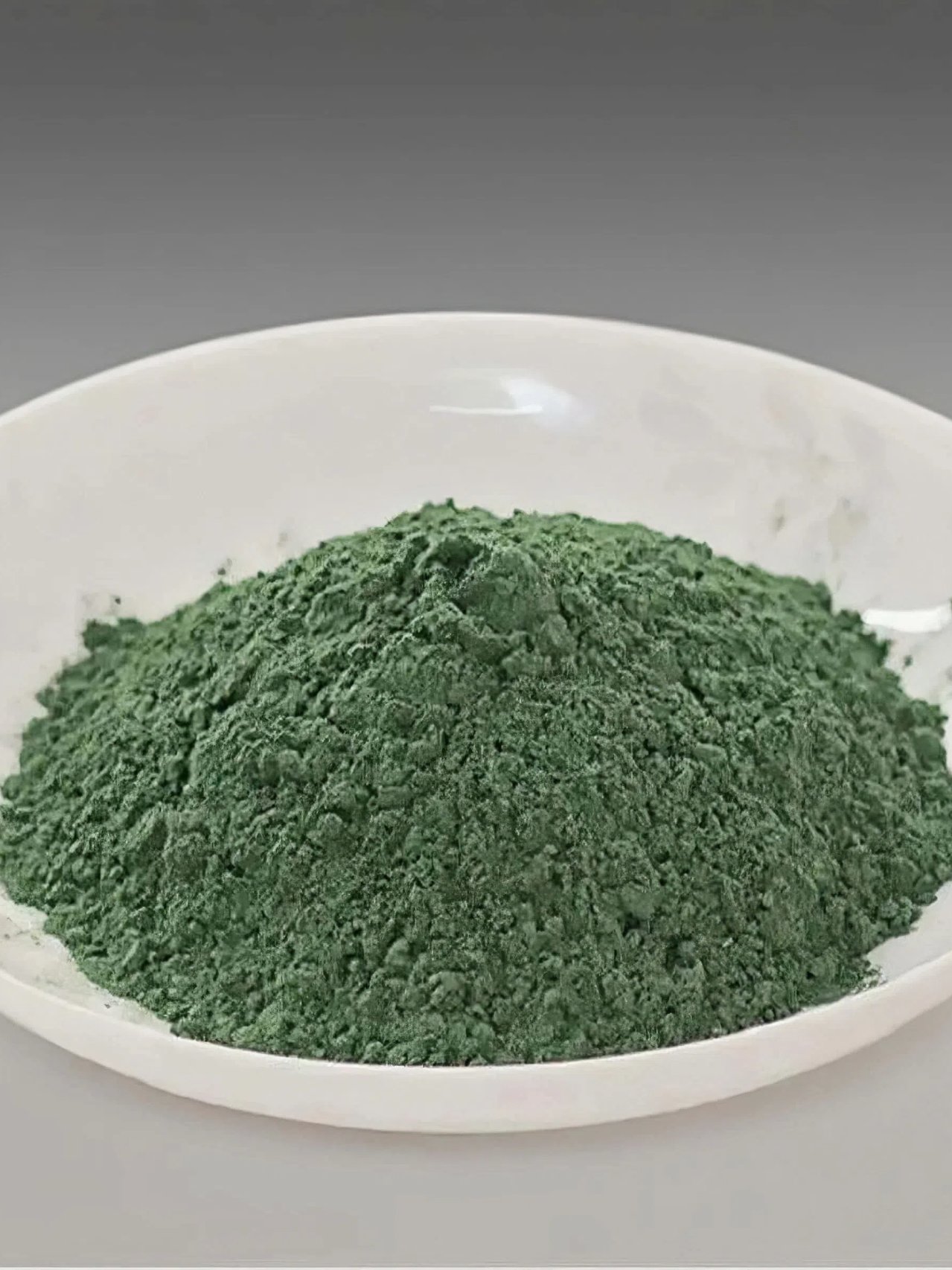
Manganese Oxide Powder for Ceramic Capacitor Production is a high-purity MnO material used as a functional additive in dielectric ceramics. With controlled impurity levels and consistent particle size, it supports stable electrical performance in multilayer ceramic capacitors (MLCCs). The product is suitable for precision ceramic processing and electronic component manufacturing.
Technical Specifications
| Parameter | Typical Value |
|---|---|
| MnO Purity | ≥ 99% |
| Manganese (Mn) Content | ≥ 76% |
| Particle Size | D50: 1–5 μm |
| Moisture | ≤ 0.5% |
| Bulk Density | 1.2–1.6 g/cm³ |
| Loss on Ignition | ≤ 0.5% |
| Fe Content | ≤ 0.01% |
| Pb Content | ≤ 10 ppm |
| As Content | ≤ 5 ppm |
Key Features
High-purity manganese oxide ensures minimal impact on dielectric composition
Controlled particle size distribution for uniform ceramic sintering behavior
Low impurity levels (Fe, Pb, As) to maintain electrical insulation stability
Enhances grain boundary characteristics and dielectric reliability
Manganese Oxide Powder for Ceramic Capacitor Production supports consistent MLCC performance
Good thermal stability under high-temperature sintering conditions
Applications
Livestock mineral premixes – Used as a manganese source in cattle and swine feed formulations.
Poultry feed production – Supports bone development, enzyme activity, and metabolic functions in poultry diets.
Aquaculture feed additives – Provides essential manganese for fish and shrimp nutrition systems.
Feed additive manufacturing – Feed Grade Manganese Oxide (MnO) 60% Powder is incorporated into compound feed and mineral premixes for balanced trace element supply.
Animal nutrition supplements – Used by feed manufacturers to maintain consistent manganese levels in commercial feed products.
Problems This Product Solves
Instability in dielectric performance → Mn additives stabilize grain boundary behavior and electrical resistance
Low insulation resistance in ceramic capacitors → Mn ions improve insulation by compensating charge imbalance
Inconsistent sintering results → controlled particle size ensures uniform ceramic densification
Impurity-induced electrical defects → low heavy metal content minimizes leakage and failure risk
Variation in capacitance performance → stable MnO composition ensures reproducible electrical characteristics
Packaging & Supply
25 kg kraft paper bags with inner PE liner
Palletized export packaging for container shipment
Bulk supply available for large-scale ceramic manufacturers
Samples available for formulation and sintering trials
Customization & Technical Support
Adjustable particle size distribution for ceramic processing requirements
Purity and trace impurity control based on electronic-grade standards
Bulk supply options for capacitor manufacturers
Technical support for dielectric formulation and sintering optimization
FAQ
1. How does manganese oxide affect ceramic capacitor performance?
Manganese oxide acts as a dopant that modifies grain boundaries and improves insulation resistance. It helps stabilize dielectric properties and reduce leakage current in MLCCs.
2. What purity is required for ceramic capacitor-grade MnO?
Typically ≥99% purity is required to avoid unwanted impurities that can affect electrical performance. Trace metals such as Fe and Pb must be tightly controlled.
3. Is Manganese Oxide Powder for Ceramic Capacitor Production compatible with BaTiO₃ systems?
Yes, it is widely used as an additive in barium titanate-based dielectric systems. It enhances stability and improves reliability under high voltage conditions.
4. What particle size is suitable for MLCC production?
Fine particle sizes (typically 1–5 μm) are preferred for uniform mixing and controlled sintering. This ensures consistent microstructure and electrical properties.
5. How should this product be stored?
Store in a dry, sealed environment to prevent moisture absorption. Proper storage maintains powder flowability and chemical stability over time.
You can also check out our specifications for the following:
High Purity Manganese Oxide (MnO) for Mn-Zn Ferrites
Electronic Grade MnO for High-Frequency Magnetic Cores