High Purity Manganese Oxide (MnO) for Mn-Zn Ferrites Production
Short Product Description
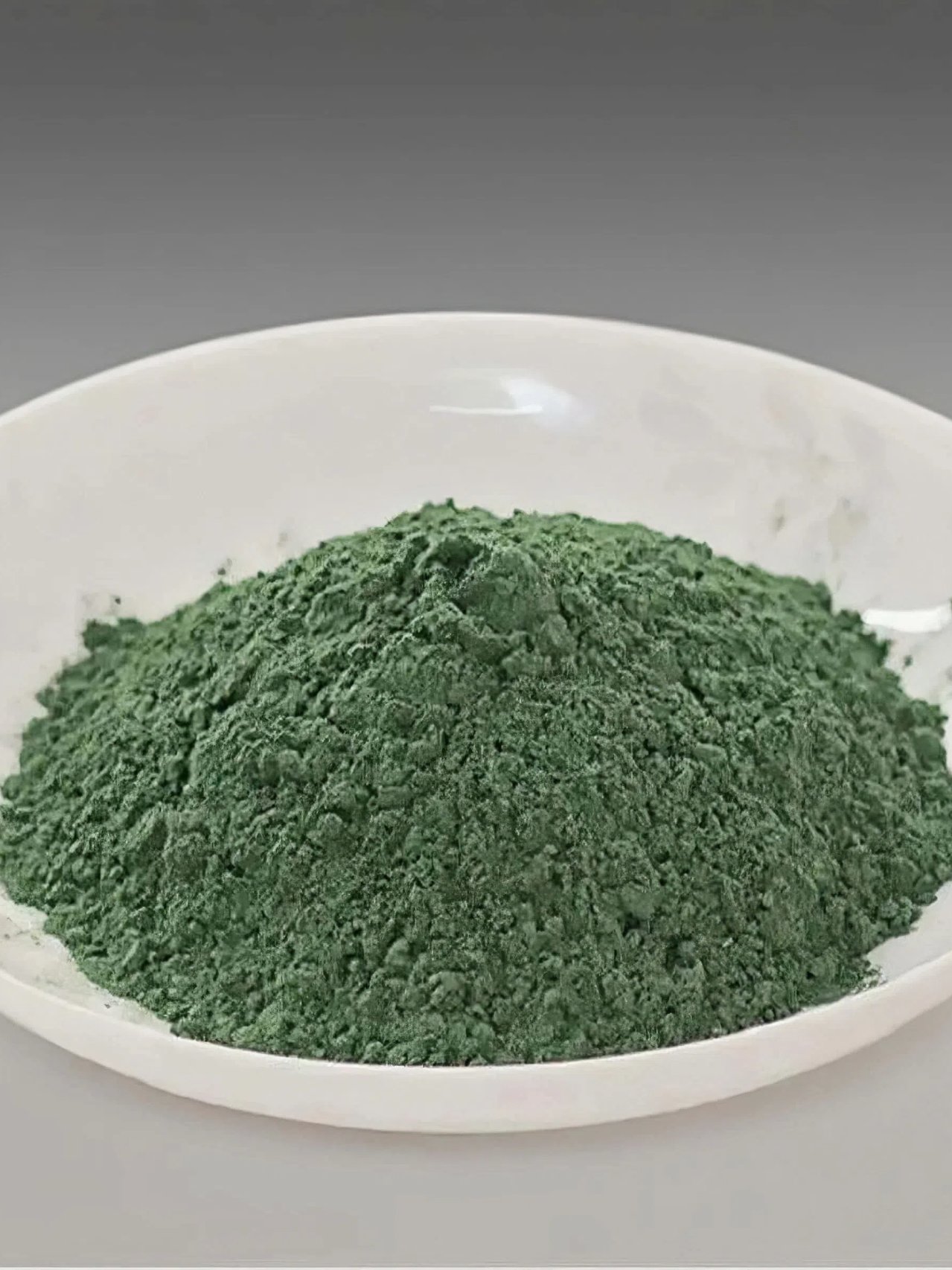
High Purity Manganese Oxide (MnO) is used as a key raw material in Mn-Zn ferrite production. It provides controlled manganese input and supports stable magnetic properties in ferrite ceramics. Suitable for electronic ferrite core manufacturing and soft magnetic applications.
Technical Specifications
| Parameter | Typical Value |
|---|---|
| MnO Purity | ≥ 99% |
| Manganese (Mn) Content | ≥ 77% |
| Fe₂O₃ | ≤ 0.05% |
| SiO₂ | ≤ 0.05% |
| Particle Size | 200–325 mesh |
| Moisture | ≤ 0.5% |
| Bulk Density | 1.5–2.5 g/cm³ |
| Loss on Ignition | ≤ 1.0% |
Key Features
High MnO purity ensures consistent stoichiometry in Mn-Zn ferrite systems
Low impurity levels (Fe, Si, Ca) minimize impact on magnetic properties
Stable particle size distribution supports uniform mixing and sintering
High chemical reactivity for solid-state ferrite synthesis
Controlled composition improves permeability and magnetic stability
High purity manganese oxide (MnO) for Mn-Zn ferrites ensures reproducible batch performance
Applications
Mn-Zn ferrite production – provides manganese source for spinel ferrite structures used in inductors and transformers
Soft magnetic materials – supports high permeability and low core loss performance in electronic components
Ferrite core manufacturing – ensures consistent composition during ceramic sintering processes
Electronic ceramics – used in magnetic devices requiring stable electromagnetic properties
Powder metallurgy – applied in oxide blending systems for advanced ceramic materials
MnO is a core raw material in Mn-Zn ferrites, typically combined with Fe₂O₃ and ZnO to form spinel structures with optimized magnetic performance
Problems This Product Solves
Impurity-related magnetic instability → low Fe and Si impurities reduce interference with ferrite magnetic performance
Inconsistent ferrite composition → high MnO purity ensures stable stoichiometric ratios in production
Poor sintering behavior → controlled particle size improves densification and grain growth control
Magnetic property variation → stable manganese input supports consistent permeability and saturation behavior
Batch variability in ferrite cores → uniform raw material quality improves reproducibility in large-scale production
Packaging & Supply
25 kg kraft paper bags with inner PE liner
Jumbo bags (500–1000 kg) available for bulk users
Palletized export packaging for container shipment
Full container load (FCL) and bulk supply supported
Samples available for ferrite formulation and testing
Customization & Technical Support
Adjustable particle size distribution for specific sintering processes
Impurity control based on ferrite grade requirements
Bulk supply for ferrite manufacturers and electronic material producers
Technical support for Mn-Zn ferrite formulation and process optimization
FAQ
Q1: Why is high purity MnO important for Mn-Zn ferrites?
High purity MnO ensures accurate stoichiometric balance in ferrite compositions. Impurities can significantly affect permeability, core loss, and magnetic stability.
Q2: How does MnO influence magnetic properties in ferrites?
MnO contributes to the formation of spinel structures and affects saturation magnetization and permeability. Higher MnO content can enhance magnetic performance within optimal composition ranges .
Q3: Is this manganese oxide suitable for high-frequency ferrite applications?
Yes, low impurity levels and controlled composition support stable performance in high-frequency Mn-Zn ferrite cores. It helps reduce eddy current loss and improve resistivity.
Q4: What particle size is recommended for ferrite production?
Typically, 200–325 mesh powder is preferred for uniform mixing and sintering. Fine particle size improves reaction efficiency and densification.
Q5: What are the storage conditions and shelf life?
Store in a dry, sealed environment to prevent moisture absorption. Shelf life is typically 24 months under proper storage conditions.
You can also check out our specifications for the following:
Electronic Grade MnO for High-Frequency Magnetic Cores
Ultra-Low Impurity Manganese Oxide for Soft Magnetics