Low Heavy Metal MnO for Poultry Feed Additives & Premix Production
Short Product Description
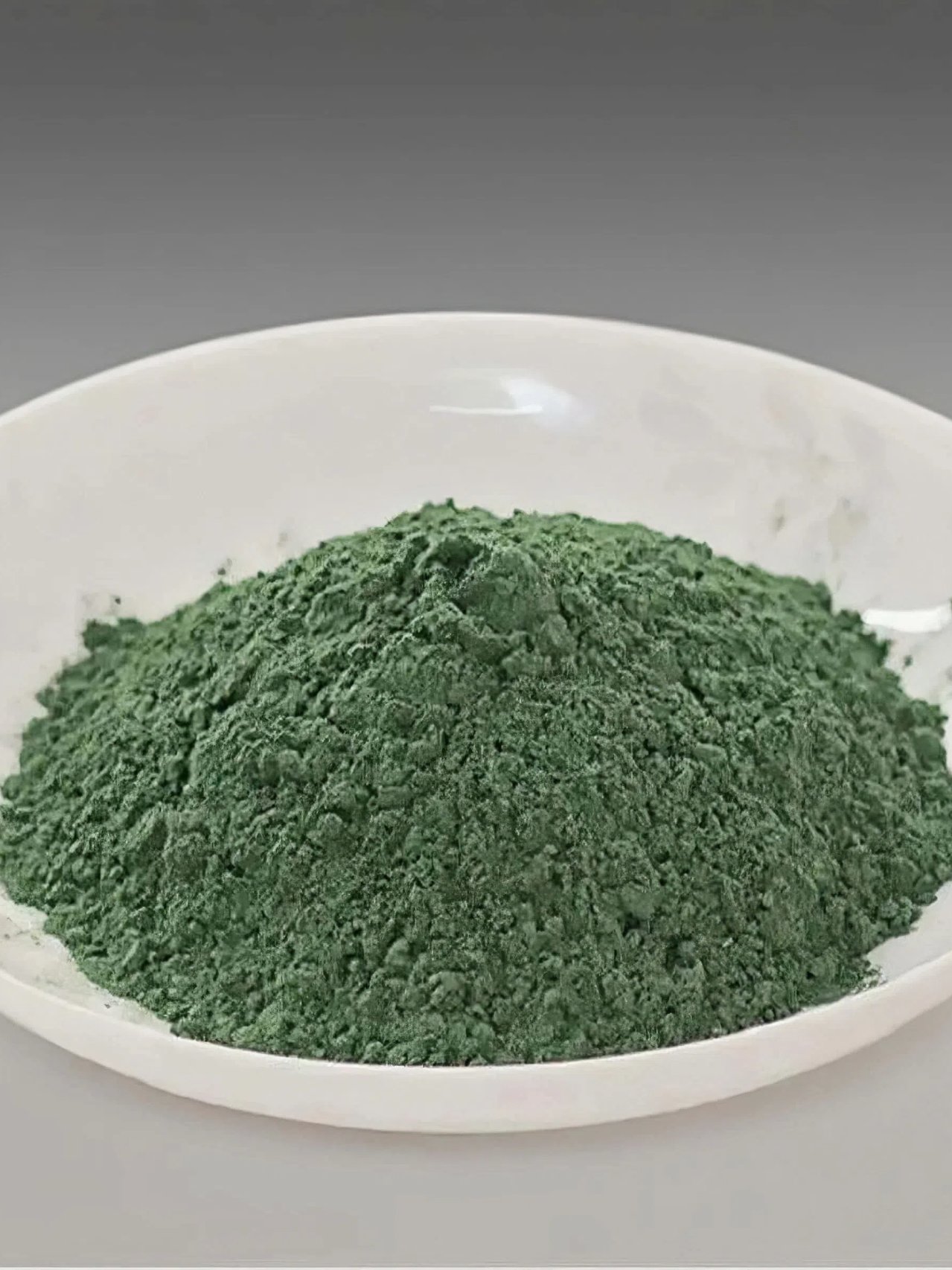
Low heavy metal MnO is a feed-grade manganese monoxide used as a trace mineral supplement in poultry feed additives and mineral premixes. The product typically contains ≥60% manganese content and high MnO purity, providing a stable manganese source for animal nutrition. It supports bone development, enzyme activity, and metabolic functions in poultry diets.
Technical Specifications
| Parameter | Typical Value |
|---|---|
| MnO Purity | ≥ 90–95% |
| Manganese (Mn) Content | ≥ 60% |
| Particle Size | 80–200 mesh |
| Moisture | ≤ 1.5% |
| Bulk Density | 1.0–1.5 g/cm³ |
| Solubility in 2% Citric Acid | ≥ 85–90% |
| Arsenic (As) | ≤ 5 ppm |
| Lead (Pb) | ≤ 10 ppm |
| Cadmium (Cd) | ≤ 5 ppm |
Key Features
High manganese concentration ensures efficient trace mineral supplementation in animal diets.
Low heavy metal MnO produced under strict impurity control for feed safety compliance.
High bioavailability due to controlled MnO₂ content and optimized particle structure.
Stable particle size distribution supports uniform dispersion in mineral premixes.
High solubility in digestive acids enables effective manganese absorption in poultry.
Consistent quality suitable for industrial feed formulation systems.
Applications
Poultry feed additives – provides essential manganese required for bone formation, eggshell quality, and enzyme activity in poultry metabolism.
Mineral premix manufacturing – used as a stable manganese source for trace mineral premix formulations.
Swine feed formulations – supports skeletal development and reproductive performance.
Cattle nutrition – contributes to enzyme activation and overall metabolic health in ruminants.
Aquaculture feed – helps maintain trace mineral balance in fish and shrimp diets.
Problems This Product Solves
Heavy metal contamination in mineral additives → controlled impurity levels reduce risk of feed safety violations.
Low manganese bioavailability in feed → optimized MnO purity improves trace mineral absorption.
Inconsistent trace mineral concentration in premixes → stable manganese content ensures accurate formulation.
Poor blending performance in feed premix systems → uniform particle size improves mixing consistency.
Mineral segregation during feed processing → controlled density and particle distribution reduce separation.
Packaging & Supply
Standard packaging: 25 kg kraft paper bags with inner PE liner.
Export packaging: palletized bags suitable for container shipment.
Bulk supply available for large feed mills and premix plants.
Samples available for feed formulation trials and nutritional testing.
Customization & Technical Support
Manufacturers can provide technical support for feed formulation applications, including:
customized particle size for premix blending
adjustable manganese concentration specifications
bulk supply for feed manufacturing plants
consultation for trace mineral premix development
FAQ
Q1: Why is low heavy metal MnO important for poultry feed additives?
Low heavy metal levels reduce the risk of toxic element accumulation in animal products and ensure compliance with international feed safety standards. Controlled limits for arsenic, lead, and cadmium are critical for export-oriented feed production.
Q2: What is the manganese bioavailability of MnO in poultry diets?
Feed-grade manganese monoxide provides a stable inorganic manganese source with good bioavailability for bone development and enzyme activation. Research indicates that MnO can supply effective manganese levels when properly incorporated into balanced feed formulations.
Q3: Can low heavy metal MnO be used in mineral premixes?
Yes. It is widely used in mineral premix manufacturing due to its stable manganese content and good flowability. Uniform particle size helps maintain consistent mixing with other trace minerals.
Q4: How should feed grade MnO be stored?
The product should be stored in a dry, ventilated warehouse away from moisture and strong oxidizing agents. Proper storage maintains stability and prevents caking during long-term storage.
Q5: What is the typical shelf life of feed grade manganese monoxide?
Under proper storage conditions, feed grade MnO typically has a shelf life of about 2–3 years. Packaging with moisture barriers helps maintain product quality during transportation and storage.
You can also check out specifications for the following:
Feed Grade Manganese Oxide (MnO) 6 0 % Powder
Manganese Oxide 6 2 % for Animal Mineral Premixes
Agriculture Grade Manganese Oxide for Fertilizer Micronutrients
Granular Manganese Oxide (MnO) for Soil Nutrient Supplement
High Bioavailability Manganese Oxide for Ruminant Nutrition
Water-Soluble Manganese Oxide Precursor for Liquid Fertilizers