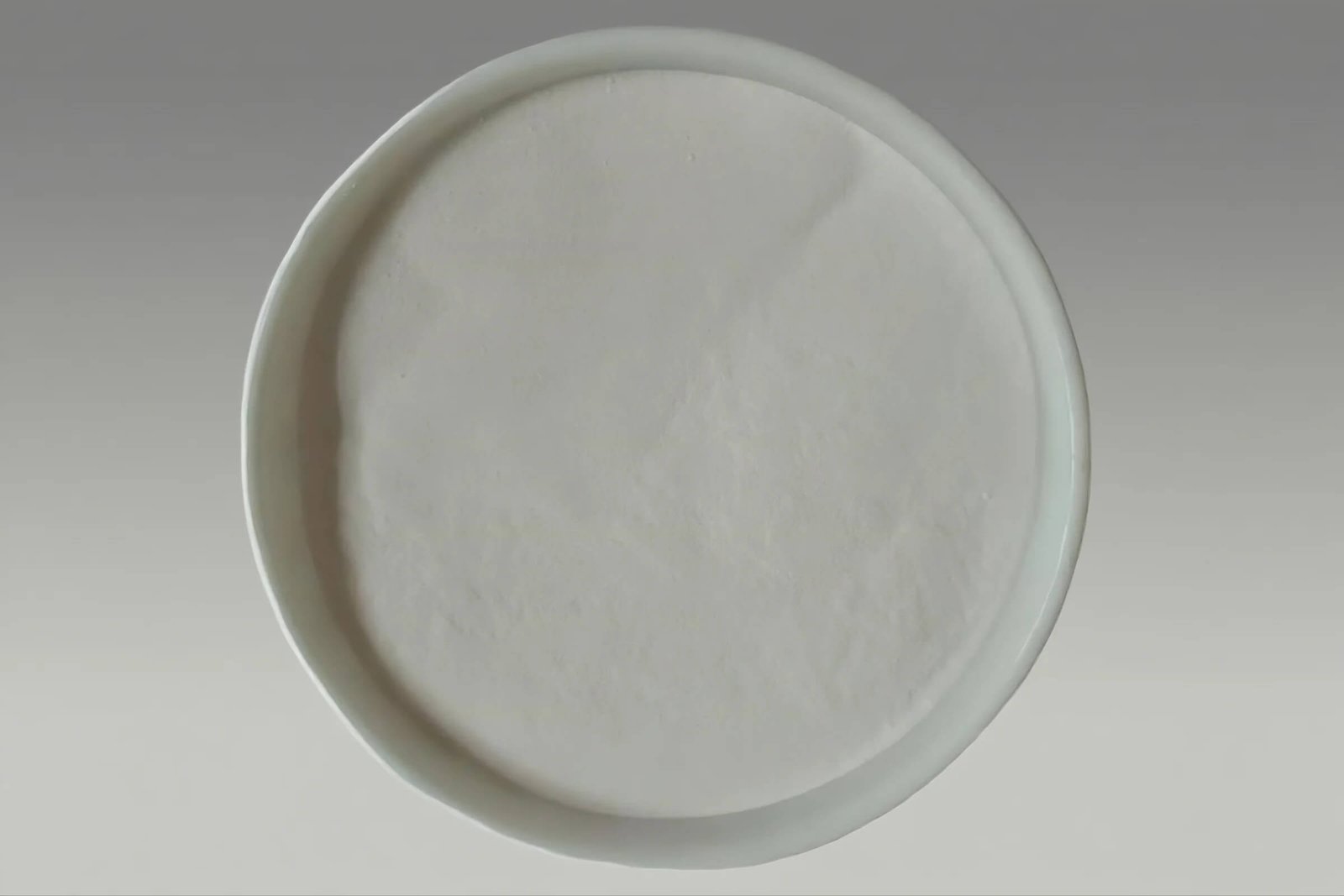
In early 2026, a leading specialty chemical manufacturer based in France contacted our team regarding a pharmaceutical synthesis project involving high-purity manganese dioxide (MnO₂).
The client was conducting dehydrogenation reactions as part of a complex organic synthesis process. Their current process utilized technical-grade MnO₂ at approximately 13 equivalents under toluene reflux conditions. While the process had already been implemented at production scale, their R&D objective was clear:
Improve reproducibility
Reduce MnO₂ loading
Enhance atom economy
Optimize material efficiency for large-scale manufacturing
The forecasted demand for 2026 was projected at approximately 10 metric tons, making this a strategically significant project.
The Challenge
The client was facing three main technical challenges:
1. High MnO₂ Loading (13 Equivalents)
Using a large excess of MnO₂ significantly increased:
Raw material consumption
Solid waste generation
Filtration and downstream handling time
Overall production cost
Reducing the required equivalents without sacrificing reaction performance was critical.
2. Reproducibility Concerns
Technical-grade MnO₂ often varies in:
Surface area
Crystalline structure
Impurity profile
Particle morphology
These factors directly impact oxidation efficiency and reaction kinetics in dehydrogenation chemistry.
For pharmaceutical synthesis, reproducibility and impurity control are essential.
3. Screening Multiple Chemical Forms
The client intended to perform High Throughput Experimentation (HTE) at mg–g scale before scaling up.
They required:
Multiple MnO₂ grades
Detailed technical documentation
Controlled impurity levels
Clear particle size distribution
Their team also requested guidance on which crystalline form and morphology would best suit their reaction system.
Our Technical Approach
After reviewing their reaction conditions (toluene reflux, dehydrogenation pathway, large-scale implementation), we conducted an internal technical assessment with our production team.
Step 1: Focus on High-Purity Activated MnO₂
Instead of standard technical grade, we proposed:
Assay ≥ 99.0%
Strict impurity control (Fe ≤ 400 ppm)
Controlled alkali/alkaline earth metals
For pharmaceutical synthesis, impurity profile control is as important as MnO₂ content.
Step 2: Selection of Amorphous Structure
We recommended amorphous MnO₂ for this application.
Why?
Amorphous MnO₂ typically provides:
Higher density of lattice defects
Increased surface reactivity
Enhanced dehydrogenation kinetics
Better reproducibility in organic oxidation systems
This was particularly relevant for reducing MnO₂ equivalents.
Step 3: Two Particle Size Strategies for Screening
To support their HTE platform, we proposed two specific grades:
Grade A – Ultra-Fine
D50 ≈ 2 μm
Maximum surface area
Designed to reduce required equivalents
Grade B – Fine
D50 ≈ 6 μm
Improved filtration characteristics
Alternative morphology for robustness comparison
Both grades shared:
MnO₂ ≥ 99.0%
Controlled impurity limits
Strict production consistency
This allowed the client to evaluate both activity and downstream handling performance.
Sample Strategy & Logistics
For HTE screening, we provided:
100 g per grade
Free material for R&D evaluation
Full Technical Data Sheets (TDS)
International shipment under DAP terms
Clear communication was maintained regarding:
Delivery timeline
Customs responsibilities
Documentation compliance
Supplier registration procedures
We adapted quickly to their internal procurement process, including profile creation, documentation submission, and invoice revision.
Professional coordination during this phase helped establish technical trust beyond just product supply.
Results
After technical evaluation and internal validation:
The client confirmed suitability for further development
The project moved forward toward production-scale consideration
An initial 1-ton trial order was placed
This marked the transition from laboratory screening to industrial collaboration.
Key Value Delivered
This project demonstrates our capability in:
✔ High-Purity MnO₂ Manufacturing
Consistent ≥99% MnO₂ with controlled impurity levels.
✔ Particle Size Engineering
Ability to customize D50 distribution according to reaction needs.
✔ Technical Support for R&D Teams
Providing application-based recommendations instead of generic specifications.
✔ Pharmaceutical-Oriented Quality Awareness
Understanding the importance of:
Reproducibility
Material economy
Filtration performance
Impurity management
Why This Matters for Pharmaceutical & Fine Chemical Producers
In oxidation and dehydrogenation chemistry, not all MnO₂ grades perform equally.
Small differences in:
Morphology
Surface area
Crystal form
Impurity profile
can significantly affect reaction outcome.
Choosing the correct MnO₂ grade can:
Reduce equivalents
Improve yield stability
Simplify downstream processing
Lower total manufacturing cost
Conclusion
This case illustrates how technical consultation, material customization, and professional communication can convert a laboratory screening request into industrial collaboration.
From initial inquiry to 1-ton trial order, the process was built on:
Transparent technical exchange
Customized material selection
Efficient logistics coordination
Long-term production planning
As a manganese dioxide manufacturer in China, we are committed to supporting pharmaceutical and specialty chemical producers with:
High-purity MnO₂
Customized particle size
Controlled impurity profiles
Scalable production capacity
If your project involves dehydrogenation, oxidation, or advanced organic synthesis, our technical team is ready to assist.
Related Products

manganese dioxide

manganese carbonate

manganese sand

I am Edward lee, founder of manganesesupply( btlnewmaterial) , with more than 15 years experience in manganese products R&D and international sales, I helped more than 50+ corporates and am devoted to providing solutions to clients business.