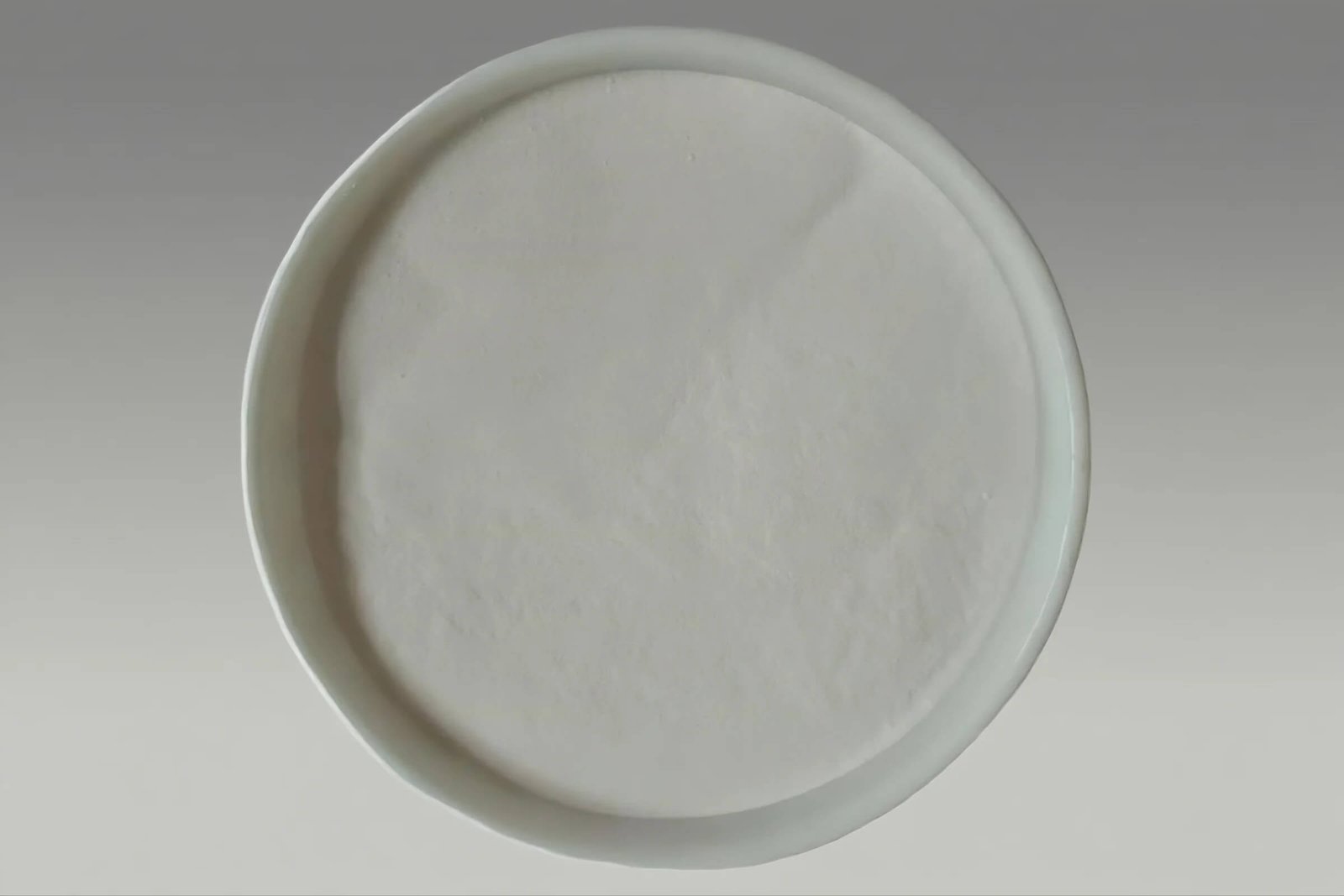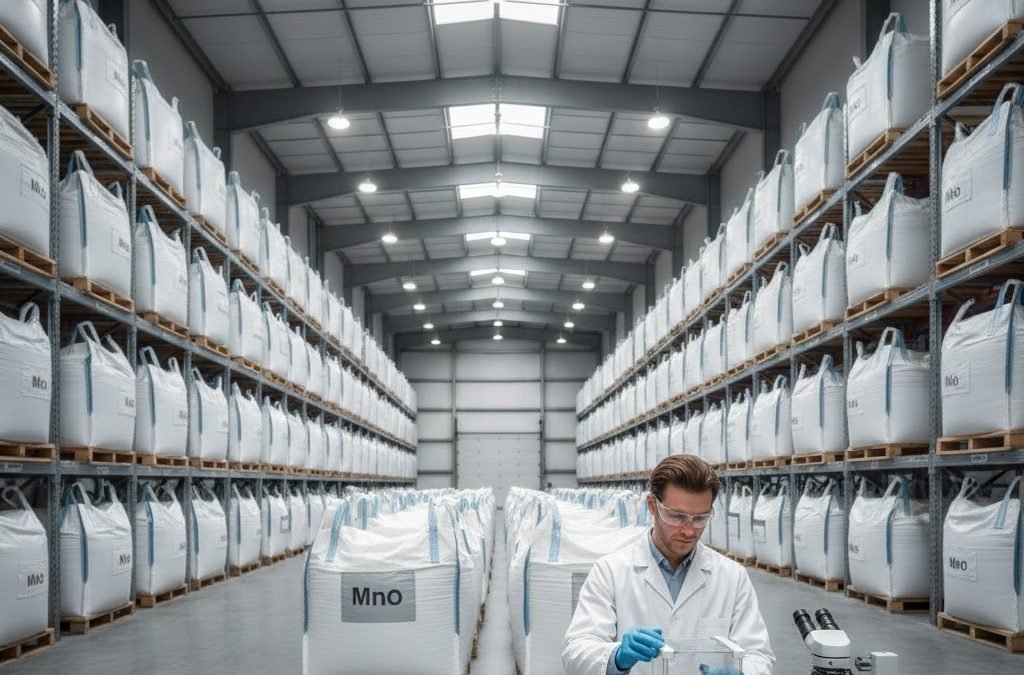
Manganese(II) oxide (MnO) is an essential industrial chemical widely used in battery cathodes, ceramics, glass, fertilizers, and pigments. Its quality directly affects product performance, stability, and regulatory compliance. High-purity MnO (≥99%) ensures superior electrochemical performance in batteries, optimal color in glass and ceramics, and consistent nutrient availability in fertilizers.
Wholesale buyers sourcing MnO from Chinese factories must consider key specifications, including purity, particle size, moisture, LOI, and heavy metal content. Minimum order quantities (MOQ) typically range from 1 to 5 metric tons, depending on grade, while pricing varies between $3,500 and $6,500 per ton, reflecting purity, particle size, and application requirements. Selecting a reliable factory with consistent quality control is critical for downstream processes and product performance.
Technical Background
What is Manganese(II) Oxide?
Manganese(II) oxide is an inorganic compound where manganese exhibits a +2 oxidation state. It is commonly produced through chemical reduction of manganese carbonate, high-temperature processes, or electrochemical methods. MnO is a key raw material in multiple industrial applications:
Battery Cathodes: Precursor for lithium manganese oxide (LMO) and other battery materials, where high purity ensures stable electrochemical reactions and prolonged cycle life.
Ceramics and Glass: Acts as a fluxing agent and colorant, influencing opacity and hue.
Fertilizers: Provides essential manganese (Mn²⁺) for plant growth, supporting photosynthesis and enzymatic functions.
Paint & Pigments: Functions as a drier and color stabilizer, controlling viscosity and finish quality.
Why Quality Matters
The precursor quality of MnO directly impacts final product performance:
In batteries, low-purity MnO may introduce defects, reduce capacity, or shorten cycle life.
In ceramics and glass, inconsistent particle size or impurities can cause uneven coloring or surface defects.
In fertilizers, improper manganese content can lead to nutrient deficiencies and lower crop yield.
Key Benefits
Purity (≥99%)
Mechanism: High purity minimizes side reactions in chemical processes and prevents unwanted coloration in glass/ceramics.
Typical Range: 98–99.5%
Impact: In battery cathodes, a 1% drop in Mn purity can decrease initial capacity by approximately 5–7 mAh/g, affecting long-term performance.
Particle Size (D50)
Mechanism: Determines surface area and reaction uniformity. Fine powders enhance reactivity, while coarser powders improve flow and handling.
Typical Range: 5–20 µm
Impact: Proper particle size ensures homogeneous mixing in battery electrodes and consistent fertilizer application.
Moisture / Loss on Ignition (LOI)
Mechanism: High moisture content reduces calcination stability and shelf life.
Typical Range: Moisture ≤0.5%, LOI ≤0.8%
Impact: Low moisture reduces caking, improves storage stability, and minimizes yield loss during processing.
Heavy Metal Impurities
Mechanism: Fe, Pb, As, Cu, Ni at ppm levels can negatively affect battery safety, pigment stability, and fertilizer compliance.
Typical Range: Fe ≤500 ppm, Pb ≤10 ppm, As ≤5 ppm, Cu ≤10 ppm, Ni ≤5 ppm
Impact: Lower heavy metals minimize defects, color inconsistencies, and regulatory risks.
Factors Affecting MnO Pricing
Several technical and market factors influence factory wholesale pricing:
Purity Level: High-purity MnO requires more chemical purification, resulting in higher costs.
Particle Size: Fine powders (5–10 µm) are more expensive than coarse powders (15–20 µm) due to increased processing requirements.
Heavy Metal Content: Lower impurities require careful ore selection and purification.
Moisture / LOI Control: Stricter limits improve stability but increase production cost.
Packaging & Logistics: Moisture-proof bags, jumbo bags, and overseas shipping add costs.
Supply & Demand: Seasonal production, mining output, and energy costs may fluctuate prices.
MnO Specifications by Application and Price
| Application / Grade | Purity (%) | Mn Content (%) | Particle Size D50 (µm) | Heavy Metals (ppm) | Typical Price (USD/ton) | MOQ (tons) |
|---|---|---|---|---|---|---|
| Battery-grade MnO | ≥99 | ~76 | 5–10 | Fe ≤500, Pb ≤10 | $5,500–$6,500 | 1–3 |
| Ceramic / Glass MnO | 98–99 | 75–76 | 10–20 | Fe ≤1,000 | $3,800–$4,500 | 5–10 |
| Fertilizer / Micronutrient MnO | 98 | 74–75 | 15–20 | Fe ≤1,500 | $3,500–$4,000 | 5–10 |
| Paint & Pigment / Drier MnO | 98–99 | 75–76 | 5–15 | Pb ≤10, Cu ≤10 | $4,000–$4,800 | 3–5 |
| Electronic / Specialty Grade | ≥99.5 | 76 | 5–10 | Very low ppm | $6,500+ | 1–2 |
Notes:
Prices are indicative FOB China. Final quotes depend on order quantity, shipping, and batch specifications.
Particle size and impurity levels can be customized per client requirements.
MOQ varies by factory and grade; high-purity small batches are more expensive per ton.
Quality Control and Testing Methods
Certificate of Analysis (COA): Verify purity, Mn content, moisture, LOI, and heavy metals.
ICP-OES / ICP-MS: For accurate elemental analysis.
Laser Diffraction (ISO 13320): To determine particle size distribution.
Moisture / LOI Testing: Ensures storage stability and calcination performance.
Sampling Principles: Representative sampling from multiple points in a batch ensures reliable quality verification.
Purchasing and Supplier Evaluation
When selecting a MnO supplier:
Grade Differentiation: Industrial, battery, fertilizer, and electronic grades have distinct specifications.
Packaging & Storage: Moisture-proof bags, jumbo bags, and dry storage are essential.
Logistics & HS Code: HS code 28201010; ensure compliance with customs and transport regulations.
Sourcing Risks: Avoid low-spec suppliers who may provide inconsistent purity, particle size, or heavy metal content.
FAQ
What purity is required for battery applications? ≥99%, Mn ~76%
Recommended particle size for uniform mixing? D50 = 5–20 µm
Why is LOI important? Indicates residual moisture and thermal stability
How are heavy metals controlled? Through ore selection, chemical purification, and ICP testing
What is a typical MOQ? 1–5 tons depending on grade and packaging
How should MnO be stored? Dry, ventilated, away from moisture and strong acids
What packaging options are common? 25–50 kg bags, jumbo bags, moisture-proof lining
Practical Checklist for Procurement Teams
Verify purity and Mn content via COA
Confirm particle size distribution (D50)
Check moisture / LOI and heavy metal levels
Compare MOQ vs annual consumption
Evaluate packaging for transport safety
Request batch traceability and sampling
Compare multiple factory quotes for consistency

I am Edward lee, founder of manganesesupply( btlnewmaterial) , with more than 15 years experience in manganese products R&D and international sales, I helped more than 50+ corporates and am devoted to providing solutions to clients business.