When buying manganese carbonate internationally, choosing the right payment method is critical. The payment method affects cash flow, shipping schedules, and risk exposure. Different buyers have different needs depending on order size, trust level with the supplier, and regional banking regulations. This guide explains the most common payment methods for manganese carbonate trade and their advantages, disadvantages, and best use cases.
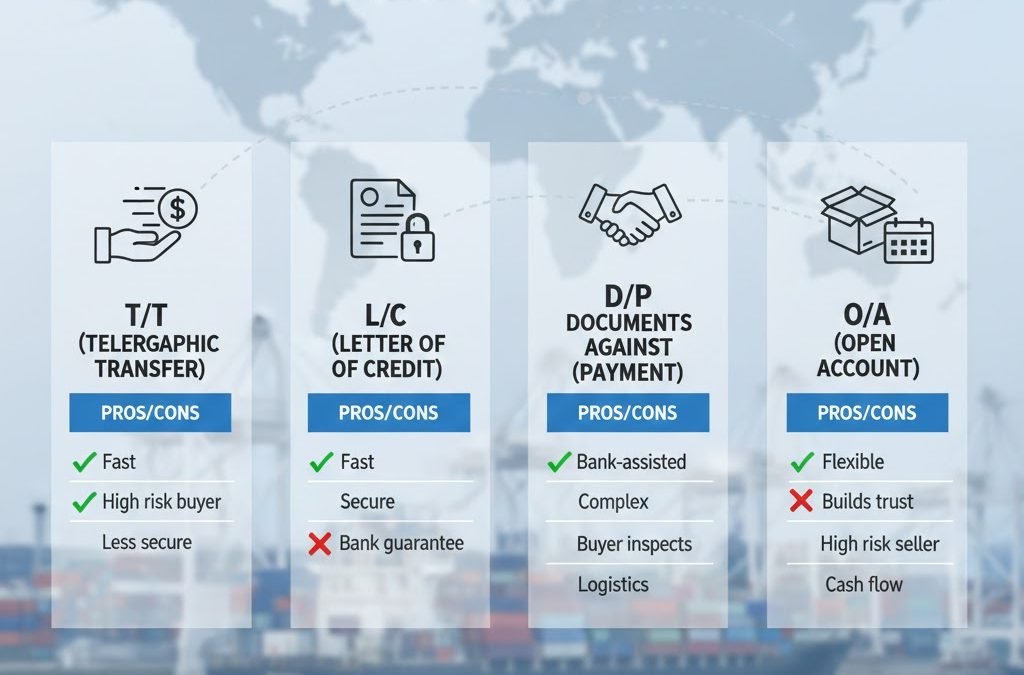
T/T is the most widely used method for manganese carbonate purchases. It is simple, fast, and accepted by nearly all suppliers.
Common T/T arrangements:
30% deposit + 70% balance before shipment – suitable for first-time buyers.
20% deposit + 80% against copy of B/L – used for trusted long-term partners.
100% T/T before shipment – for small orders or urgent shipments.
Advantages:
Fast (1–2 business days)
Low bank fees
Suitable for both sample and bulk orders
Disadvantages:
Buyer pays before receiving goods, which requires trust
2. Letter of Credit (L/C)
L/C is bank-guaranteed and commonly used for large orders (usually above USD 50,000–100,000).
Types:
Irrevocable L/C at sight – most common, payment upon document verification.
Usance L/C – allows payment after 30–90 days.
Advantages:
Safe for both buyer and seller
Payment guaranteed by banks
Suitable for long-term contracts
Disadvantages:
High bank fees
Complex documentation
Slower processing
L/C is especially used by state-owned companies, large feed producers, and battery-material buyers.
3. Documentary Collection (D/P & D/A)
D/P (Documents Against Payment) – buyer receives shipping documents only after paying the bank.
D/A (Documents Against Acceptance) – buyer commits to pay at a future date (30–90 days) before receiving the documents.
Advantages:
Lower cost than L/C
Maintains moderate security for both parties
Disadvantages:
Relies on trust
Banks do not guarantee payment
4. Open Account (O/A)
Open account allows the buyer to pay after receiving goods, typically 30–90 days.
Advantages:
Zero risk for buyers
Improves cash flow
Disadvantages:
High risk for suppliers
Only suitable for verified long-term buyers
5. Cash Against Documents (CAD)
Payment is made through the bank when documents are released.
Advantages:
Lower risk for sellers
Cheaper than L/C
Faster processing
Disadvantages:
Buyer must pay before accessing documents
Still relies on bank operations
6. Western Union / MoneyGram
Used mainly for:
Sample payments
Small urgent payments
Not recommended for bulk orders due to low security.
7. PayPal
Used for:
Sample orders
Testing fees
Small payments (< USD 2,000)
Advantages:
Fast and convenient
Suitable for new buyers
Disadvantages:
High fees
Not suitable for container shipments
8. Trade Assurance (Alibaba Platform)
Alibaba offers escrow-style payments.
Advantages:
Buyer protection for quality and delivery
Secure for new buyers
Disadvantages:
Additional fees
Limited to Alibaba platform users
9. Choosing the Right Payment Method
| Buyer Type | Recommended Payment Method |
|---|---|
| New buyer | T/T 30% deposit + 70% balance before shipment |
| Long-term buyer | T/T 30/70 or D/P |
| Large corporations | L/C at sight |
| Sample buyers | PayPal / Western Union |
| High-risk regions | L/C or D/P |
10. Tips to Reduce Risk
Always request COA + MSDS + production certificate.
Verify supplier credentials (license, factory photos, customer references).
Start with small trial orders.
Avoid paying 100% upfront to unknown suppliers.
Use L/C for large orders to guarantee payment safety.
FAQ
What is the most common payment method for international manganese carbonate trade?
The most common method is T/T (Telegraphic Transfer), usually 30% deposit and 70% balance before shipment. It is fast, widely accepted, and suitable for both sample and bulk orders.When should I use a Letter of Credit (L/C)?
L/C is recommended for large orders (usually above USD 50,000–100,000), especially when dealing with new suppliers or in high-risk regions. It provides bank-guaranteed payment and reduces financial risk.What is the difference between D/P and D/A payment methods?
D/P (Documents Against Payment) requires the buyer to pay before receiving shipping documents.
D/A (Documents Against Acceptance) allows the buyer to receive documents first and pay at a later agreed date. D/P is safer for the seller, while D/A is more convenient for buyers but riskier.Can I use Open Account (O/A) for manganese carbonate orders?
Yes, but only for verified, long-term buyers. Open Account allows payment after receiving goods, which improves buyer cash flow but increases risk for the supplier.Is PayPal suitable for bulk manganese carbonate orders?
No, PayPal is mainly used for sample orders or small payments under USD 2,000. It is not secure or practical for container shipments.What payment method is safest for first-time international transactions?
L/C at sight is the safest option for first-time large orders, as banks guarantee the payment once the supplier provides compliant documents.Can I use Western Union or MoneyGram for manganese carbonate trade?
These are only recommended for sample fees or very small urgent payments, as they provide little protection and are not suitable for bulk shipments.How can I reduce risk when paying for manganese carbonate?
Request COA, MSDS, and production certificates, verify supplier licenses, start with small trial orders, avoid paying 100% upfront to unknown suppliers, and use secure methods like L/C or D/P for larger transactions.What is Trade Assurance on Alibaba, and is it useful?
Trade Assurance is an escrow-style service on Alibaba that protects buyers against shipping or quality issues. It is useful for new buyers but comes with extra fees and is limited to the Alibaba platform.Which payment method balances safety and convenience for long-term buyers?
For long-term, trusted partnerships, T/T 30/70 or D/P is often preferred. It balances lower bank fees, convenience, and moderate security.

I am Edward lee, founder of manganesesupply( btlnewmaterial) , with more than 15 years experience in manganese products R&D and international sales, I helped more than 50+ corporates and am devoted to providing solutions to clients business.