
Manganese is an essential industrial metal with wide applications in metallurgy, batteries, chemicals, and agriculture. One of the most important sources of manganese is manganese dioxide (MnO₂), a naturally occurring compound found in minerals such as pyrolusite. Through different processes, manganese dioxide can be converted into metallic manganese or manganese compounds that are then used across many industries.
This article explains how manganese is produced from manganese dioxide and explores its major industrial uses. The focus is on steelmaking, batteries, chemical applications, and agriculture, supported by data and authoritative references.
Manganese dioxide is the primary raw material for producing manganese metal and manganese compounds. Two major industrial processes are used: carbothermal reduction and electrolytic production.
2.1 Carbothermal Reduction
Carbothermal reduction is the traditional process used in metallurgy. At high temperatures, manganese dioxide reacts with carbon (usually coke) to produce metallic manganese.
Reaction principle:
This reduction is carried out in blast furnaces or electric arc furnaces at temperatures above 1000°C. The process is energy-intensive but suitable for producing manganese alloys such as ferromanganese and silicomanganese, which are essential in steel production.
Ferromanganese typically contains 65–80% manganese and is used to improve the strength and toughness of steel.
Silicomanganese contains both manganese and silicon and is commonly used as a deoxidizer in steelmaking.
According to the International Manganese Institute (IMnI), around 90% of global manganese ore is consumed by the steel industry, with carbothermal reduction being the dominant production pathway.
2.2 Electrolytic Production
Electrolytic production is widely used to obtain Electrolytic Manganese Metal (EMM), which has a purity above 99.7%. The process begins by leaching manganese dioxide with sulfuric acid to produce manganese sulfate (MnSO₄). This solution is purified to remove impurities such as iron and heavy metals, then electrolyzed to deposit pure manganese on the cathode.
Simplified process steps:
Leaching: MnO₂ + H₂SO₄ → MnSO₄ + H₂O
Purification: Removal of Fe, Co, Ni, and other impurities
Electrolysis: Mn²⁺ + 2e⁻ → Mn (cathode deposition)
The result is high-purity manganese suitable for battery applications.
According to the United States Geological Survey (USGS, 2023), electrolytic manganese is the preferred raw material for lithium-ion batteries due to its purity.
China accounts for over 90% of global electrolytic manganese production, making it the largest supplier worldwide (Roskill, 2022).
Electrolytic production has grown rapidly because of the increasing demand for High-Purity Manganese Sulfate Monohydrate (HPMSM), a precursor material for electric vehicle (EV) batteries.
3. Uses of Manganese in Different Industries
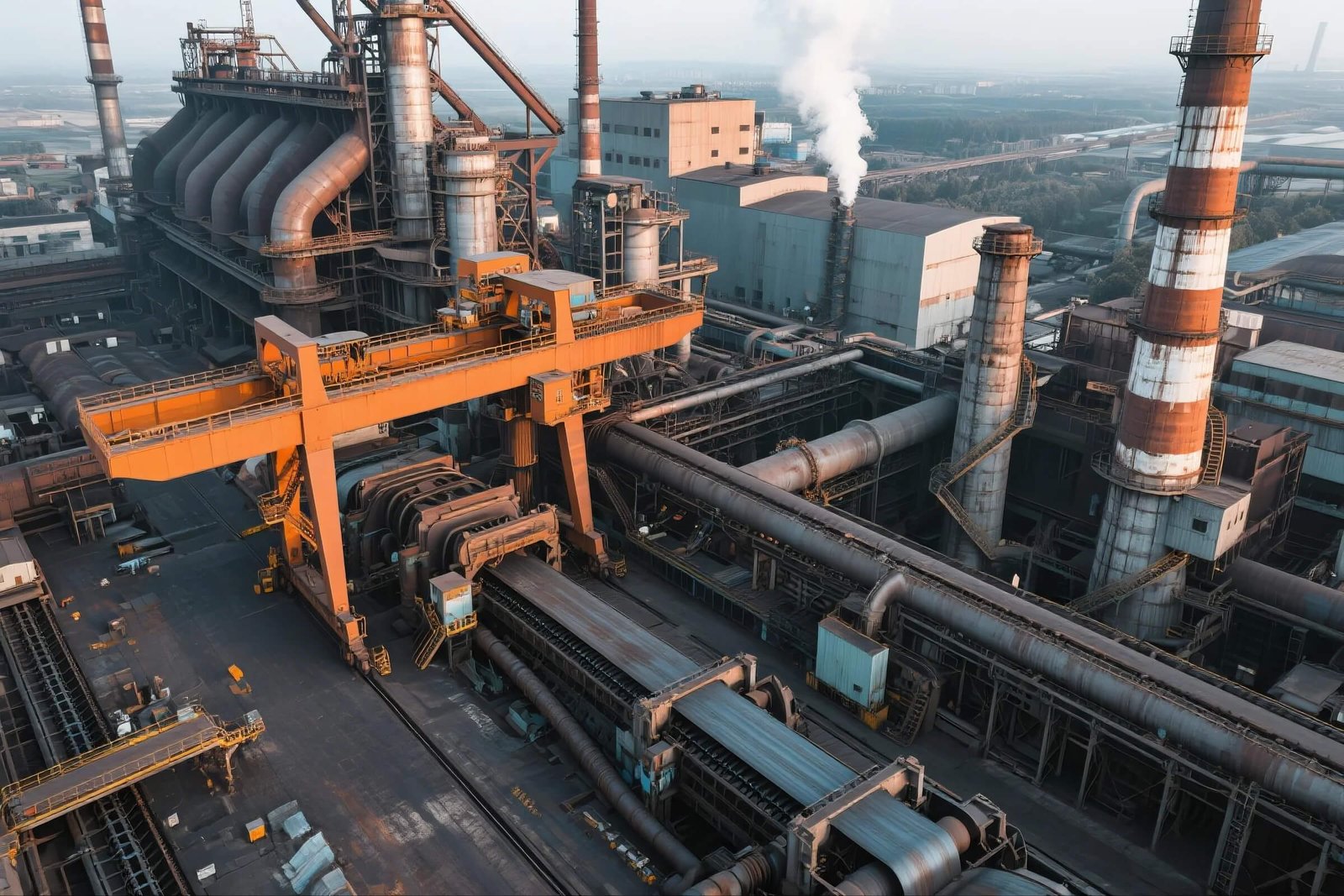
Once manganese is obtained from manganese dioxide, it becomes a versatile raw material with applications in multiple industries.
3.1 Steel Industry
The steel industry is the largest consumer of manganese, using between 70% and 90% of global manganese supply (IMnI). Manganese plays several roles in steelmaking:
Deoxidizer: Manganese removes oxygen and sulfur from molten steel, preventing brittleness.
Alloying element: Manganese improves hardness, tensile strength, and wear resistance.
Grain structure control: Helps refine the microstructure of steel.
Applications:
Railway steel: Manganese alloys are critical in high-strength rails that resist wear.
Construction steel: Improves structural strength in buildings and bridges.
Stainless steel: Enhances corrosion resistance and toughness.
According to World Steel Association data (2022), global crude steel production was over 1.8 billion tonnes, and nearly all of it contained manganese in some form. Without manganese, modern steelmaking would not be possible.
3.2 Battery Industry
Manganese derived from manganese dioxide plays a central role in both traditional and modern battery technologies.
Zinc-Carbon and Alkaline Batteries:
Electrolytic manganese dioxide (EMD) is used as a depolarizer in these common batteries.Lithium-Ion Batteries (Li-ion):
Manganese sulfate (MnSO₄), obtained from MnO₂, is used to produce cathode materials such as lithium manganese oxide (LiMn₂O₄) and nickel manganese cobalt (NMC) oxides. These materials are critical in electric vehicles and energy storage systems.
Data:
Benchmark Minerals (2022) reports that demand for battery-grade manganese sulfate could increase three to four times by 2030 due to EV growth.
A typical NMC battery contains about 10–20% manganese in the cathode mix.
This shows that manganese from MnO₂ is not only important for traditional dry-cell batteries but also for the clean energy transition.
3.3 Chemical Industry
Manganese compounds produced from manganese dioxide are widely used in chemical processes:
Potassium Permanganate (KMnO₄):
An oxidizing agent used in water treatment, disinfection, and organic synthesis.Catalysts:
Manganese oxides serve as catalysts in petrochemical processes and environmental applications.Glass and Ceramics:
Manganese compounds are used as pigments and to remove the greenish tint from glass caused by iron impurities.
These applications highlight the role of manganese as a multifunctional chemical raw material.
3.4 Agriculture and Nutrition
Manganese compounds, especially manganese sulfate, are essential for plant and animal health.
Fertilizers:
Manganese is a micronutrient required for photosynthesis and enzyme activation in plants. Deficiency leads to reduced yields in crops like soybeans, wheat, and corn.The Food and Agriculture Organization (FAO, 2020) notes that manganese deficiency is one of the most common micronutrient problems in soils worldwide.
Animal Feed:
Manganese is added to animal feed to support bone development, reproduction, and metabolism.
Thus, manganese obtained from MnO₂ indirectly supports global food production.

Table: Major Uses of Manganese Obtained from Manganese Dioxide
| Industry | Form of Manganese | Function | Example Products |
|---|---|---|---|
| Steelmaking | Ferromanganese, Silicomanganese | Deoxidizer, alloying | Rails, structural steel, stainless steel |
| Batteries | Electrolytic manganese metal, MnSO₄ | Cathode material | Alkaline batteries, Li-ion batteries |
| Chemicals | KMnO₄, MnO₂ catalysts | Oxidizing agent, catalyst | Water treatment, petrochemicals, pigments |
| Agriculture & Nutrition | MnSO₄ | Micronutrient, feed additive | Fertilizers, animal feed |
4. Modern Trends and Outlook
Energy Transition: The growth of electric vehicles is driving demand for high-purity manganese sulfate, positioning MnO₂ as a critical mineral source.
Sustainability: New methods such as bioleaching use microorganisms to extract manganese from MnO₂, reducing energy consumption. Studies have shown recovery rates of 80–90% with lower environmental impact (Wei et al., Minerals Engineering, 2021).
Geopolitics: Since China dominates global electrolytic manganese production, other countries are exploring new supply chains to secure raw materials for batteries.
Conclusion
Manganese obtained from manganese dioxide is a foundation of modern industry. From strengthening steel to powering batteries and improving agricultural productivity, its uses are diverse and essential. The production methods, whether carbothermal reduction for alloys or electrolytic refining for high-purity applications, ensure that manganese continues to play a central role in global economic development.
Looking forward, the demand for manganese in clean energy technologies will grow, making manganese dioxide not only a traditional raw material for steel but also a strategic resource for the future.
Related Products

manganese dioxide

manganese carbonate

manganese sand
Related Posts

I am Edward lee, founder of manganesesupply( btlnewmaterial) , with more than 15 years experience in manganese products R&D and international sales, I helped more than 50+ corporates and am devoted to providing solutions to clients business.

